Editor’s note: This is a guest post from Jarrett Haley and Tim Chilcote.
Gentlemen, let’s face it: Hemingway is dead. Likewise with Faulkner, Mailer, Updike, Cheever, Miller, Carver, and the rest of the greats who made a living writing the stories of men in the golden age. But just because the big men of letters have fallen doesn’t mean that letters for men have gone down with them. There’s plenty of manly literature outside the icons, and plenty of writers still making books for the male mind. Here’s a sampling of living, breathing authors to look out for the next time you’re in need of a manly read:
Cormac McCarthy
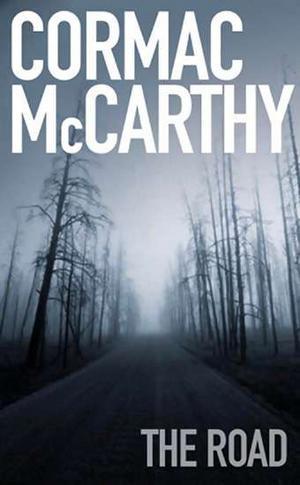
We’ll start with the obvious choice, because chances are if you haven’t read his books you’ve at least seen one adapted for the screen, from All the Pretty Horses to the blockbusters No Country for Old Men and The Road. Good movies, sure, but nothing compares to the man’s way with words. Most of his early books are set in backwoods Tennessee, but that was before he was branded master of the dark, gruesome West. Brutality peaks with Blood Meridian, and as for The Road, don’t let Oprah’s Book Club endorsement scare you off — never has a book more savagely examined the dedication of a father for his son.
Wells Tower
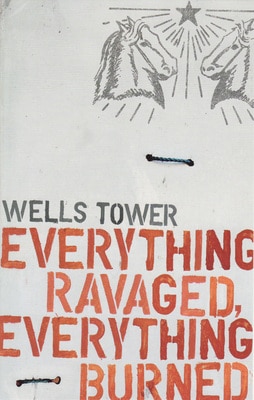
Wells Tower’s Everything Ravaged, Everything Burned, a collection of nine short stories, is a world inhabited by down-on-their-luck narrators, men trying in vain to forge a new path through contemporary life. Tower often likes to end his stories with an explosive catastrophe, one that leaves the reader probing for meaning inside, say, a rotting moose carcass or a shattered aquarium. Ever gone through a rough patch in life? Ever battled to reinvent yourself? Read this book.
Padgett Powell
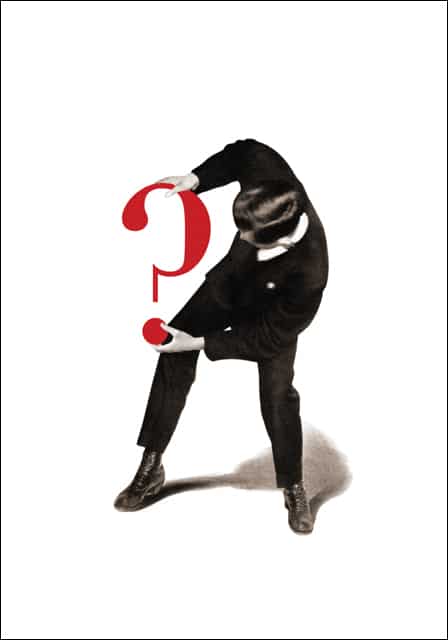
Padgett Powell’s work has to be the hardest to nail down here, but he’ll surely trump any on this list for the seat at the wacky end of the spectrum, owing mostly to his latest book, The Interrogative Mood, comprised entirely of questions. You couldn’t get much farther from Hemingway in terms of style, but when he marries “Have you ever used a torque wrench?” with “Do you have any friends?” the effect is just as understated and profound. Look out also for the collected stories in Aliens of Affection, one of which can be read here.
Adam Schuitema
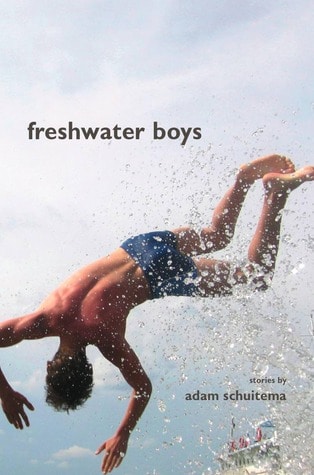
Adam Schuitema’s debut story collection, Freshwater Boys, brings the classic coming-of-age model to the beach towns of the Lake Michigan coast. Schuitema is a throw-back storyteller, conjuring voices that crackle with enough spirit you’d think you’re sitting round a campfire. His forthcoming novel, Haymaker, is set farther north in Michigan’s rugged Upper Peninsula, and rumor has it he’s cloistered himself in a Lake Superior cabin to finish. Prepare for a dust jacket head-shot with grizzled beard and plenty of flannel.
Philipp Meyer
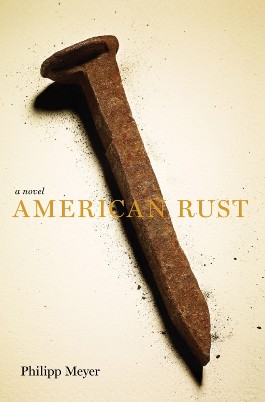
The main characters of Philipp Meyer’s first novel, American Rust, expertly show how the two sides of manhood are actually part of the same coin. The author gives us Isaac English, a quiet academic, and star athlete Billy Poe, then flips their roles in a cruel test of man’s ability to endure. What results is shocking violence and gut-wrenching struggles of loyalty and friendship. For the thinking man up against the odds, this book explores the fight or flight instinct and exposes the animal waiting inside each of us.
Bonnie Jo Campbell

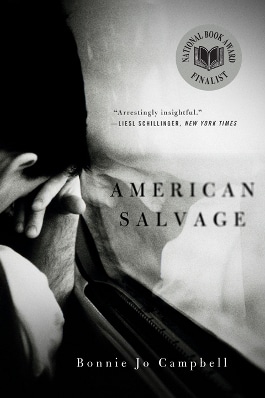
A good man can recognize when a woman does it better, and for gritty Midwestern color, violence, and working-class realism, very few do it better than Bonnie Jo Campbell. Her American Salvage, for which she was a National Book Award finalist, is a spot-on testimony of life in these dour economic times. When jobs and stability are gone, Campbell shows us the backbone, or lack thereof, inside people scrounging to survive.
Harry Crews
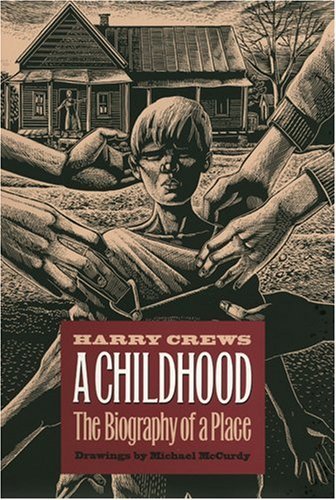
Is Harry Crews still alive? If you’ve read anything of his autobiography, A Childhood, or his novels Scar Lover or All We Need of Hell among many others, you’d know why we might think to ask. Reading any one of the man’s sentences often feels like a royal ass-kicking.
Finally, a special nod to those who just missed being on this list proper — Barry Hannah, who died this March, and fellow gone-too-soon Mississippian Larry Brown, who passed away suddenly at the age of 53. Both were masters of capturing the reaches of the contemporary South, and both left behind posthumous works — Brown’s A Miracle of Catfish, and Hannah’s forthcoming Sick Soldier at Your Door.
There you have it, gents: 9 good reasons to get reading. What other authors should today’s man be reading?
__________________________________________________
Co-authors Jarrett Haley and Tim Chilcote are the men behind BULL: Fiction For Thinking Men . Follow them on Twitter @BULLMensFiction and @TimChilcote.


← Previous Comments
I agree with mtts, I find McCarthy’s storylines to be monotonous and his style to be boderline annoying. I promised myself I would not read another of his novels after slogging through The Road. Call me crazy, but I prefer punctuation in a book…And the movie version of No Country For Old Men is eons better than the book.
As a father of two boys, I read The Road and ut ruined me fir weeks. I’ve been on a steady diet of Ian Flemming 007 books to lighten the mood.
I’m surprised I only noticed one other person mention Larry McMurtry. Lonesome Dove must be one of the best stories ever about adult male friendship.
W.E.B. Griffin, as he has done a few huge series on war, heroes and the lives of the men living it. Fiction, of course, but I believe that he captures the ‘Classic American Man’ very well, giving today’s men something to aspire to in behavior, relationships and more personal aspects such as courage, your word, etc.
Patrick O’Brian, author of Master and Commander series, does a great job capturing men of valor of the 1800s. If you liked the movie with Russell Crowe, pick up the series and give it a read at your local library.
Remember the Joseph Rosenberger series The Death Merchant?
Love it or hate it, the series is coming back!
TheDeathMerchant.com
Sam
III
Wow. I just added a ton of good stuff to an already really long list of books to read. Thanks for all the good suggestions.
Alright, guys, I know he’s not the most contemporary author, but I have to insist that the novels of Jack Schaefer be added to the list. His westerns are among the best ever written, and I say that as a great devotee of the genre. Almost all of his central charcters are men of principle and courage that hold their ground in the face of all odds. Trust me when I say that you need to read “Shane” at least once in your life; “First Blood” and “Monte Walsh” are equally fine.
Tim Winton ‘Breath’ or ‘Dirt Music’….but especially ‘Breath’ is already an Australian modern classic
I don’t know. . . I’m still stuck on Carlos Ruiz Zafon. Shadow of the Wind was so awesome. Putting Pablo Neruda in a modernly written Dickens tale is so great. I recommend that. I was currently reading Shadow of the Wind.
The question I’m wondering is:
“Where can I find great fictional blogs online???”
James Lee Burke, especially the Robicheaux series.
Some good ideas.
For real men-William J Kennedy(Ironweed)
………… Gabriel Garcia Marquez(One Hundred Years of Solitude)
If you have the proper men equipment…..Tim Dorsey.(Start with the first one).
These kinds of articles (arbitrary) are great…. for generating comments.
check out Exley by Brocke Clarke. A little crazy but manly enough for our purposes
C McCarthy is our only living master. Blood Meridian is only masterpiece composed and published by an American sentence writer since the midcentury. Blood Meridian will stand equal to any literature in the world against which you weigh it. The passage of time will prove this, it is not to be worried over. McCarthy has long passed his period of masterwork, this period stretching across the books Suttree, Blood Meridian, and All the Pretty Horses. No country for old men is garbage. The Road is absolute garbage. The only indication one ought require as evidence to this is its having won a pulitzer. To have one’s work sullied with pulitzer recognition is the greatest insult available. To be awarded a pulitzer one knows he has written badly, and toward the lowest possible elements. And then, of course, should the pulitzer fall short of adequate indication, there is the Oprah prize as well.
One ought not bother with reading new fiction these years. Those masters which would in other times be working in sentences these years are writing for films and in music. Lars Von Trier, Paul T Anderson, J Newsom. These are our masters, now working. In another time, these would have written in sentences.
I personally can make no claims to the other languages. There may be important works being composed and published in the oriental languages. But in english, no.
Thanks WC for giving me the best laugh I’ve had all week. Though I can only assume you are joking in writing in such a ridiculously pompous tone, I agree with most of what you are saying. I think both of McCarthy’s last two novels are very good, but Blood Meridian is completely amazing and it blows those out of the water. Nevertheless, I doubt I would have been able to appreciate it as much without first reading his recent, more accessible work, in addition to classics like Moby Dick, which it parallels. The simple fact that McCarthy is as well-known as he is is encouraging, especially since modern literature is so littered with crappy writing (case in point: the compelling but shamelessly smutty and poorly-written millenium trilogy).
Hey No one mentioned Benjamin Percy, that guy writes some manly good stuff.
Steven Pressfield. His novel Gates of Fire practically defines manliness. His entire body of work is excellent.
Without going in to too great a detail,
Jim Harrison. His poetry is terrific; his essays, well-crafted; and in his novels, he puts light on the printed page.
Ian Rankin. The story arc of the Inspector Rebus series, set in Edinburgh, Scotland, is a marvelous mix of character and duty. Rebus actually matures, cleans up, and becomes a mentor.
James Galvin. One slim book of fiction and several poetry collections. He projects a terrific sense of place in his novel (novellas?), The Meadow.
Others, without elaboration: Harry Middleton, Pressfield, RW White, Stephen Hunter, Ivan Doig, Rick Bass…heck, and those are just the first few I could think of that are on my shelves.
Good start to some great reading suggestions in the comments. Notice how many of these authors are recognized because of writing a series character?
Wild at Heart by John Eldridge. Talk about a book for men! Its not fiction but its about finding your manliness in a present world stripped of it. Great read!
I normally do not comment on Art of Manliness posts, but I was just excited to see Bonnie Jo Campbell on the list. She recently left the English department at my school Kalamazoo College. I was able to listen to one of the excerpts of the book American Salvage. She is such a great lady. Definitely check it out.
Also, I just want to say I love this website. Learning a lot of things. When I mentioned that I read on this website frequently to friends, they are quite skeptical, since you should not need a manual to be a man. However, I disagree with that, hence why I continue reading the articles. Keep up the good work. Cheers
This is an awesome blog! Just discovered it yesterday. As a female activist for men’s rights and an appreciator of manly-men I applaud what you are doing here.
I have read McCarthy’s Blood Meridian and it knocked my socks off. But don’t pass by the dead guys just because they’re dead. There’s still much in their writing that rings true today, from those listed above, as well as Steinbeck, Jack London, W. M Thackeray, and many others. Thackeray’s portrayals of 19th century females as lying, hysterical, mean-spirited, mercenary bitches is still spot-on today
And if you don’t mind me referring to the comments about Ukrainian Kozaks in the November 12, 2010 entry on “Appearance:” Someone name eitan said “Mentioning the Cossacks as exemplary and “understanding history’ in the same article is a joke…understanding history would bring to light that the Cossacks fought with the Nazis…”
Like many others who don’t know Ukrainian history, eitan confuses Ukrainian KOZAKS with Russian Cossacks. The Ukrainian Kozak Zaporozhian Sich essentially ceased to become a military entity in the late 1700- early 1800s. The Russian Cossacks remained as a military unit through WWII as a division of the USSR military.
But many descendants of the Ukrainian Kozaks still maintained their love of liberty and became fighters for Ukrainian freedom, particularly from the USSR. It was the freedom fighters that initially fought with the Nazis to gain liberation from the despotic USSR pigs. However, when the Nazis eventually revealed their true colors the Kozaks fought ferociously against the Nazis. Unfortunately, some ethnic groups continue to spread this lie about Ukrainian “Cossacks” perhaps in an attempt to solidify their claim as the only victims of WWII. As a descendant of Ukrainian Kozaks I can tell you we hated the Nazis with a violent passion. Just about as much as I hate feminatzis…
Here is another nod for Bernard Cornwell. He may not be the renowned prize-winner McCarthy is, but Cornwell’s books are well researched and tons of fun. The Saxon Series is incredible. Start with “The Last Kingdom” and you’ll be hooked instantly.
Ken Follet is another one. From ‘Eye of the Needle’ to the new ‘Fall of Giants’ to one of my all time favorites ‘Pillars of the Earth’, his books are rich in history and storytelling.
@ Jonathon Manor :
“Shadow of the Wind was so awesome.”
Seconded. I’ve never read anything quite like it and it was such a complete experience. I’m amazed at how much I enjoyed that book as it was so different from my usual fare.
So glad to see Harry Crews on this list. I’ve read many of his books and feel like he’s never received his propers.
123 comments and 1 mention (unless I missed some) for Tom Clancy? Just finished Rainbow Six, and it was riveting.
The Road was indeed a powerful book. See here:
http://drpaleophd.blogspot.com/2010/02/book-review-road-by-cormac-mccarthy.html
+1 for Clancy!
James Carlos Blake.
Stephen Pressfield is a fantastic author who is famous for his historical fiction. ‘Gates of Fire,’ about the famous Spartan 300 and the battle of Thermopylae is Winnie his most notable works. Awesome story telling and mind boggling when you think of the research that went into it. I also recommend ‘Tides of War,’ and ‘The Afghan Campaign.’ If you love war stories and actually learning something you will enjoy Mr. Pressfield.
I apologize for my typo in the above post. Please substitute, “one of” for “Winnie.” Again my apologies.
Larry McMurtry is at the top of my list. Augustus McCrea and Capt. Call, Texas Rangers.
Everything by Tobias Wolff is amazing. Try his memoir “This Boy’s Life” or his book of stories “In the Garden of the North American Martyrs.”
James Carlos Blake. A must read for any male.
I have to mention Patrick O’Brian, for the Aubrey/MAturin Series. They are a bit of a boys adventure but also examines roles of manliness in very interesting detail while giving a bit of history on one of the manliest institutions of all time (the british navy). Also one of the most engaging stories of male friendship ever.
Anyone intersted in the relation of physical fitness to mentality and manliness ought to read Yukio Mishimas essay, Sun and Steel. The man was a bit strange politically, but a very good and influential writer with interesting ideas of the mind/body relationship.
Mainly a playwright, I think Sam Shepard must be included for the psychologically raw, honest version of masculinity he presents in his characters, whose struggles are primal contests often for dominance over their fellows or family, and in later works for authenticity and true American identity. In these struggles they frequently and unwittingly display (notably more significantly than strength,) their tragic flaws and psychological weakness.
This list needs to be amended to include Wendell Berry. Agrarian farmer, essayist, novelist, and poet. He may be the last living true man of letters in the Twentieth and Twenty-first centuries. He may be the last living true man.
There are a lot of great authors listed here. The loose grouping of Guy De La Valdene, Jim Harrison, Thomas McGuane and others are certainly among my favorites. Guy De La Valdene’s For a Handful of Feathers is a brilliant little book and Thomas McGuane’s short story “Flight” is a favorite.
Another that I always find should be a part of this list is Mark Spragg. If you are into fiction check out The Fruit of Stone. If you prefer real life read his memoir of childhood, Where Rivers Change Direction. If living on the continental divide and splitting your time between running a dude ranch and bear baiting doesn’t fit the bill…. I am not sure what would.
“The Road” was a waste of paper.
I’ll have to find the others and give them a try. I hope they are better then “The Road”.
I’m curious to know from those that didn’t like The Road, whether you have any children.
[...]His forthcoming novel, Haymaker, is set farther north in Michigan’s rugged Upper Peninsula, and rumor has it he’s cloistered himself in a Lake Superior cabin to finish. Prepare for a dust jacket head-shot with grizzled beard and plenty of flannel.[...]
← Previous Comments
Comments on this entry are closed.