So You Want My Job: Navy Sailor

by Brett & Kate McKay on January 13, 2010 · 20 comments

in So You Want My Job

navy1Once again we return to our So You Want My Job series, in which we interview men who are employed in desirable jobs and ask them about the reality of their work and for advice on how men can live their dream.

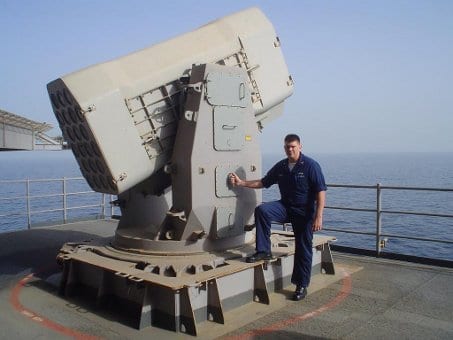
Well, we’ve covered men in the Air Force and Army. Today we talk with a Sailor in the US Navy, Dan Smith. Dan is a Combat Systems Coordinator and Departmental Leading Petty Officer, and we thank him for sharing his thoughts about his job with AoM readers. You can learn more about Dan on his blog.

1. Tell us a little about yourself (Where are you from? How old are you? Describe your job and how long you’ve been at it, ect).

I’m from a small town in Southeast Kansas called Girard. I’m 31 years old, the husband of an amazing wife, and the father of two awesome kids. I joined the US Navy in 1996, passing my 13 year mark in May of this year. To answer a potential question from your readers, I do expect to stay in for the long-haul and retire at the 20-year mark.

2. What drew you to a career in the military and what made you choose the Navy over the other branches?

I joined the Navy because I truly wanted to make a difference. I wanted to serve my country. Well, that’s part of the answer at least. Digging a little deeper, the fact is that I wanted to be a hero. Coming from a small town in Kansas, there weren’t a lot of opportunities to be big and important. I thought the Navy would give me that.

I also joined because I couldn’t afford college and didn’t really have  any marketable skills. That’s one of the reasons I’m grateful for the Navy. I have skill-sets now, a college degree, and I feel fulfilled!

As to joining the Navy instead of the other services, I think the answer is in my blood. As a boy, I would actually read my dad’s old Navy records and look at pictures he had taken during Vietnam. I saw aircraft carriers and his destroyer and it was rather romantic really. The sea has always had a draw on me. The simple fact is that I never even considered the other services. I mean, I was drawing pictures of Gearing class destroyers (what my dad sailed on) while other kids were drawing dinosaurs and tigers. It was just who I was.

3. What kind of preparation should a man seek before joining the Navy?

You’ll need to be in shape. I’m not talking about going to the Marines or anything, but one does have to pass a body fat measurement upon joining. You’ll also have to be able to run 1.5 miles as well as be able to do a certain number of push-ups and sit-ups upon graduation from boot camp, so the earlier you can start the better! The other thing to focus on is just to learn as much about the heritage as you can. We sailors are a nostalgic bunch. We all have our sea stories, and you don’t really belong until you know what that means. Start working on that now and you’ll break into the culture a lot faster.

4. You currently serve as a Combat Systems Coordinator. What does that job entail?

This is my primary watch station while underway. For a five hour shift, I report directly to the Tactical Action Officer or the Commanding Officer on all things Combat Systems. This means that I am overall in charge of everything from the various radar systems to the guns to the missiles as well as being in charge of making all of those things work should we need to use them. On top of that, I’m also responsible for making recommendations for the employment of our air defense system. In other words, I make suggestions on how best to use what weapons system to counter a given threat.

5. You also serve as the Departmental Leading Petty Officer. What does that job entail?

As the Departmental Leading Petty Officer for the Combat Systems Department, I am privileged to support and advise 51 Sailors. The job doesn’t mean that I’m actually in charge of them. Instead, there are three divisional Leading Petty Officers who are direct supervisors. I am a support mechanism. I am also the assistant to the Leading Chief Petty Officer, who is in direct line of supervision for all of those Sailors.

The work that goes along with that title includes: Mentoring Sailors and ensuring that Sailors I don’t directly mentor have access to other mentors. I’m also the administrative assistant for the department, tracking personnel and equipment casualties. Since I’m the senior point of contact for all things Combat Systems, I’m also in charge of the Combat Systems Officer of the Watch review boards and the weekly Tag-Out Audit. Finally, I’m also in charge of anything my boss gives me, but I’m sure that’s how it is in any job!

6. In the Navy, do you get to choose the jobs you want, or are you assigned to a certain position? Do you change jobs over the course of your career?

When a civilian first comes to the Navy, he or she will be given some options for jobs depending on how well he or she scored on the entrance test (called the ASVAB). I got a choice between meteorology, radar (fire-control) and something else that I don’t remember. I chose fire control radar. Once a civilian chooses that job, it becomes his/her “rating” after he or she graduates from the technical school.

Once a Sailor has been in awhile, usually at his/her four or six year mark, you get to choose a new job location, but it usually has to do with your rating. For those of us who don’t do that, we get what are termed special duty assignments, such as recruiting, etc. That is called going “out of rate.” There are advantages and disadvantages to that. Anyway, it is true that there is some choice for the Sailor in the process, but it’s carefully maintained so the needs of the Navy are met.

7. What are the advantages and disadvantages to life on a ship?

Advantage:

Travel. I’ve yet to meet a Soldier, Airman, or Marine who has traveled to as many places as I have. It’s far from being on a pleasure cruise, but the fact is I’ve been to around ten countries, eight of them because of my shipboard duty. And for those Soldiers, Airmen, and Marines who have gone to more places than I personally have, there are scores of Sailors who have been to more places. I would be willing to bet that the average Sailor has been to more places than the average person in the other services.

Disadvantage:

Time away from my family. Even on my “off-deployment” years I’m still underway for workups, training, anti-drug ops, etc, somewhere around five months of the year. Add to that the number of duty days, where I’m on board for a 24 hour rotation, and you see how I can end up spending a lot of time away from my wife and kids.

8. What is the best part of your job?

One of my favorite parts of the job is the travel. I joined the Navy with dreams of seeing exotic places around the world, and I have! I’ve seen Singapore, Hong Kong, Tokyo, Australia, and many, many more places.

But maybe the best part of my job is leading junior Sailors. I’ve been mentored by some great Sailors over time, and I’ve bought into the mentoring program because I know for a fact that it works. I have experiences that younger Sailors can use, and I share with them what I can. And when it sticks…when a young Sailor “gets it”…that’s the win.

navy2

9. What is the worst part of your job?

Pulling out of port for a deployment. It’s ironic really. I love traveling, love the adventure of a deployment. Yet how can any man who loves his family say that the adventure is better than his loved ones? So by far, the worst part about my job is the leaving part.

10. What’s the work/family/life balance like?

On some days I have it easy. I go into work very early, so I often find myself able to pick my son up from school or even get off a little early to spend time with my wife and daughter before picking him up. Furthermore, I’m able to volunteer at my church and my son’s school with relative frequency. I’m grateful for that.

On the other hand, no one can replace six month chunks at a time from my son and daughter’s lives. During deployments, I make an extra effort to call at least once a week underway, technology and operations permitting, and I make them voice recordings that I send over email. I also send things home periodically, and email pictures after port visits. It’s difficult, sure, but we make it work.

11. What is the biggest misconception people have about your job?

I really appreciate this question! I think one of the misconceptions about my job is that officers do everything important. Top Gun and other movies show officers barking orders, pushing buttons, and saving the day. What those movies don’t show is that an enlisted man or woman is often the Sailor actually doing those things.

When we are in CIC, and I’m on watch, I usually report to a junior officer who has significantly less time in the service than I do. Since I (and many Sailors like me) have degrees, this distinction is no longer true either. Although officers go through specialized training that helps them understand how to make decisions, in many cases, my experience lets me come up with the answer before they do. That is why it’s the job of the Combat Systems Coordinator (the CSC) to make recommendations for weapons employment to the Tactical Action Officer. When the decision is made to fire, the shooting is actually, usually, done by a 20 year old 2nd Class Petty Officer, not a commissioned officer.

I know that Sailors have the reputation of being rabble-rousers and obnoxious (many times that’s deserved), but the reality is that we are as professional, across the board, as any other military professional, especially as you look at the Sailors who have been in awhile.

12. Any other advice, tips, or anecdotes you’d like to share?

My biggest advice, especially for anyone currently in the Navy, is to find a good mentor. Find someone you look up to and who has what you want and go get it. And if you are a Sailor who has experiences, find someone to give those to…it is one of the most rewarding things you can do!


Related Posts


1 Perry Clease January 13, 2010 at 8:34 pm

I had Dan’s job! I did over 21 years in the US Navy and while there was some tough times I do not regret it at all. The thing about leaving the family had one positive, it made my wife very self-sufficient and capable; She often did home improvements while I was on deployment and I may come back to find that she retiled the deck or something.

I was a QM, a Quartermaster. This rating works in navigation and ship control, not supply as in the Army, master of the quarterdeck. I retired as a Senior Chief Quartermaster.

Fair winds and following seas Dan.

2 Brennan McCue January 14, 2010 at 2:16 am

Aw man! I wanted to do that one, guess I didn’t speak up soon enough. I’m a fellow FC1 here currently on the USS Ronald Reagan.

3 Ken January 14, 2010 at 4:15 am

I spent 6 years in the Navy as a nuc EM. I was happy to get out because it wasn’t fun for me on a carrier. I originally started on a cruiser and may have stayed in longer if we hadn’t decommissioned those cruisers. On the cruiser, it was a smaller division and you mostly took care of each other. Upon moving to a carrier, it was a huge, backstabbing division and extremely political. We were always the first ones on and last ones off. My division actually had to do fast cruises (ship’s in port, but you pretend you are at sea) while watching everyone else go home. After running several work centers and the divisional training, I really didn’t want to stay there anymore, but carriers were the only surface options left unless I changed rates.

With all that said and knowing the outcome, I would have still went into the Navy. I had some great times, met some wonderful people, saw places that I know I wouldn’t have seen without the Navy, and grew a lot personally.

4 Dr. Rod Berger January 14, 2010 at 12:35 pm

Very interesting read! Nice to read about someone employed and the ups and downs. I was worried this would read like a “atta boy” report on a “manly” occupation, but the root of it was more about his love of his family. I love that part of it because it can be helpful to those men who are looking for work and trying to be open-minded about the impact not just on themselves, but their families. I wrote about this today in the final post of a 4-part series on men and job loss today. Nice to see both sides…very helpful for all.
Warm Regards,
Dr. Rod
http://thenormalmale.wordpress.com
twitter: thenormalmale
drrod@thenormalmale.com
Rod Berger, PsyD The Normal Male

5 Christopher Haley January 14, 2010 at 6:39 pm

The only thing I would add to this is only enlist if you really want to serve your country. If working in the Navy sounds appealing to you, go for it! But if you only want to enlist to enjoy the Navy’s benefits (i.e. G.I. Bill, travel, bonuses, Healthcare, etc.) I’d suggested pursuing a different course in life. Being in the Navy isn’t just a job, it’s a life style and that life style requires a lot of personal sacrifices. Be sure you are willing to make those sacrifices before you sign on the dotted line.
If you want to learn more about what life is like for a typical sailor you can check out my video blog at http://youtub.com/TheSailorGeek

6 Christopher Haley January 14, 2010 at 9:00 pm

Whoops! Thanks, Allison. What would I do without you?
http://youtube.com/TheSailorGeek

7 Dan January 14, 2010 at 11:41 pm

Christopher,
I had intended to get that point across in answering the second question, but I like your explanation. It’s well said. One should desire to serve one’s country. We have too many Sailors today who joined for the wrong reasons and it’s hurting us.

8 Dennard January 15, 2010 at 12:04 am

Thank you for serving, Petty Officer Smith! If it weren’t for my physical disability I would have joined one of the Armed Forces branches. I have really enjoyed the Military entries in this series.

9 Richard | RichardShelmerdine.com January 15, 2010 at 4:15 am

I’ve got a friend who is in the navy. He lives in Scotland and lives it. The pay is fantastic too. Not for me though. I abstain from violence as much as possible.

10 John Paul January 15, 2010 at 6:17 pm

Loved the article! I am a Nuclear field Electrician just like Ken, but I am only 4 years into an 8 year (at least) enlistment. I have yet to enjoy the travel part as I am stationed on shore duty as an instructor, but I will be leaving in the next few months to be stationed on the George Washington in Japan. I have to agree completely with Christopher and Dr. Berger, it is a way of life, even at a shore command.

11 Carducci January 16, 2010 at 4:51 pm

Nice to hear about this in such details and from a family man.

12 Matt P. January 17, 2010 at 7:39 pm

I’m one of Dan’s shipmates, I’m actually reading this in his living room.

I’ve got to say, I agree with Christopher, if you want to be in the Navy, you have to decide that you want it. I’ve been in for a lot less time than Dan, just 3 years, but this job is something altogether different. The sacrifices one makes can only be justified by the pride the uniform gives you. I’ve given up a lot of my own personal freedoms and rights so that you can enjoy them.

We don’t do this job for your thanks, we don’t do this job to march in a parade or get a discount at random stores (though that last one is pretty cool). We do this job so that you can wake up everyday and live the American Dream, whatever that means to you.

I don’t know if I’m a lifer just yet (said “life-er”, meaning a sailor bound for 20+ years of service), but for the time being I’m enjoying it. Right now my rate is Quartermaster, as mentioned earlier I work in Navigation. But if you join as one job and decide later on that you’d prefer to do something else, it is possible to change your job later on, as I want to work in the medical field, I’m “crossrating” to Hospital Corpsman.

13 Allen January 18, 2010 at 10:07 pm

I’m a Supply Officer on a submarine, based out of Groton CT. Submarine life is a very different one from the surface fleet but there are some similarities. Good to see one of our first classes giving a good perspective on what it means to serve.

14 Jarin Udom January 20, 2010 at 7:13 am

I did 5 years in the Navy as an Information Systems Technician (ending up as a 2nd Class Petty Officer), mostly on the USS John C Stennis (I didn’t have a problem with the Navy, it just wasn’t my lifelong career choice).

Great article, although it isn’t 100% true that you get to choose your rate. Some people come in undesignated as a Seaman, Fireman (engineering, not a fire fighter), or Airman. The recruiter will tell them that they get to roam around and try out different jobs before committing to a rate. However, from what I’ve seen that’s not generally true, and undesignated sailors seem to get shoehorned into whatever rate they get assigned to on getting to their first command.

I recommend that anyone joining the Navy should pick their rate beforehand if at all possible, even if it means signing up for an additional year of service. 4 years (or longer) is a long time when you’re in your early twenties, and working in a job you enjoy makes a huge difference.

15 Kyle January 31, 2010 at 5:56 am

I’m a CTI2, currently in my 5th year of a 6 year enlistment. And, whereas I’ll acknowledge that, being a CTI (linguist) and on shore duty for my entire enlistment, my experience in the Navy has been quite different from most sea-going rates, however the Navy is the Navy in every command. Thus, I must respectfully disagree with a portrayal of the Navy (and perhaps the whole of military service) as a “manly” job.

Military life is, on a whole, utterly demeaning. You must defer in all matters to those who outrank you, even if they are younger, less-experienced in your job, or plainly far more stupid and less capable than you are; your life in all aspects is at the mercy of (in general) morons. Any man with any sense of self-worth should be offended by this. A man should be able to make his own decisions, to determine what is best for himself, and to do his job as he sees fit, and if his current situation does not allow hi to do so, he should be free to change his situation. The military strips you of all self-determination.

The military is a fantasy world, where everything is handed to you: food, housing, health care, a sense of importance, just as long as you don’t mess up. It doesn’t matter what job you do, or how well you do it, all your life is taken care of. It is, in my estimation, a cowardly existence. Get out of the service, enter real life, do things for yourself, be your own man; thankfully, in a year, I’ll be able to do just that.

Again, this is just my take. I know many people who love the Navy and have made a life out of it, and perhaps that’s the best for them…I just don’t respect those people. Sorry I’m not sorry.

16 Lostcase February 17, 2010 at 6:31 pm

Thanks Dan for a wonderful q&a session.
@ Jarin Udom
Can you tell me a little bit more about your rate? I currently work in IT, with over 7 years experience, my last title was System Support Administrator for a retail company. I will be taking my ASVAB in a week, projecting to get a 80-90. I took the ASVAB ten years ago, almost signed for a Nuclear Engineer rate, but declined, wasn’t ready at that point in time. Now I feel that I am ready to take that next step. I am considering either a rate in Intelligence or Engineer, just not nuclear. Any recommendations?

17 henry May 15, 2010 at 3:59 pm

wow, i cant agree with Kyle more! his initial diasgreements may have been offensive but his latter reasons are very righteous and true. it really is a fantasy world, u do what ur told. there’s no freedom, u live a life of pretty much a coward. despite the great camaraderie(no doubt about it), everything else is pretty much submission which isnt something we’re born to be, we’re born to be resistent. i think.

18 vanessa May 27, 2010 at 8:23 am

this page was really helpful for my 5 paragraph essay

19 Dan Smith July 10, 2010 at 11:20 am

Kyle and Henry,
I’m assuming both of you are junior sailors. I have mentored a few young sailors in your position, hating the Navy, thinking the Navy owes you something, thinking everyone who outranks you are morons and less intelligent than you are. Stick it out, if you have the guts to, and see what happens. If you have the manly ambition it takes to make a real career out of the Navy, then you’ll do fine. Of course, since I enjoy my career, it’s impossible for you to respect me and my feelings about it (as you suggested), but it’s more truth than you have spoken in your comment. Best wishes for your (short-lived) carer, Kyle. If you need some mentoring, hit me up and I can help you.

Dan

20 John T August 17, 2010 at 12:15 am

@ Jarin Udom

First of all, great article! Much thanks and appreciation to Dan Smith for his service! Second,
@ Jarin Udom: I leave for RTC early September and my rate is Information Systems Technician. Anyway, if you see this, I’d appreciate the chance to talk to you about the job…Pretty much anything you can tell me about the rate, any tips, etc.

Comments on this entry are closed.

Previous post:

Next post:

Site Meter