





Dealing with Male Depression

by Brett & Kate McKay on September 1, 2009 · 91 comments

in A Man's Life

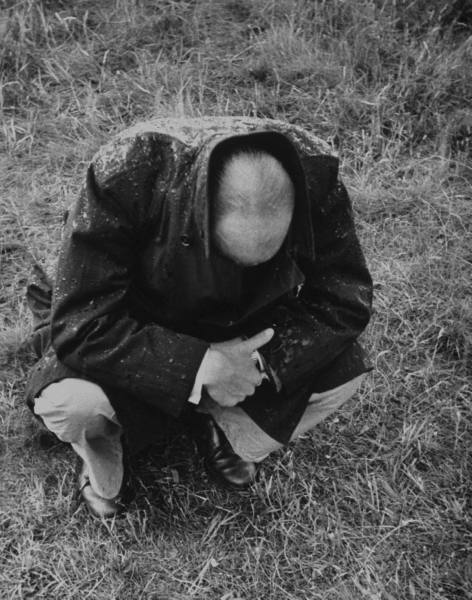
depression1Source: Life

Editor’s note: This is a guest post from S.M. Leahy. Mr. Leahy is a student studying at Columbia University. He is originally from Virginia.

A man will have faults.  An overweight man can look at himself and take the steps needed to shed pounds.  A man with poor eyesight can wear glasses or contact lenses. How often, though, does a man look inside himself for ways to improve? A man’s emotional and mental health are just as valuable as his physical, yet the former receives much less attention. One of the most common mental illnesses in men is depression. 10 % of men will suffer a major depressive episode during their lifetime.

Great men in history who suffered from depression are numerous: Abraham Lincoln, Ernest Hemingway, Winston Churchill, and Buzz Aldrin to name a few. Buzz Aldrin overcame his depression and alcoholism, eventually becoming Chair of the National Mental Health Association. Churchill took up painting to keep what he called the “black dog” at bay. The treatment Hemingway sought for his depression only served to deepen it. The ECT shock treatments stole from him valuable memories and hindered his writing ability, precipitating his  suicide with a gruesome shotgun blast to the forehead.

What makes mental illness, such as depression, so difficult to deal with in men is the perceived shame that comes with admitting it.  The World Health Organization states that fewer than 25% of male sufferers worldwide will seek treatment “[because of] social stigmas associated with mental disorders including depression.”   A man may put his pride before all else, no matter what the cost. I know this, and I know how high the price can rise.

Origins  of Depression

I was diagnosed with major depressive disorder when I was seventeen years old, but I believe I had been suffering for years prior.  Since childhood I had bouts of extreme sadness.  I would sit in the blue-grey light of our family’s kitchen as the sun slipped below the horizon and feel paralyzed, head to foot, by some terrible aloneness. I would recover from each bout within a few days, but I could feel the sadness stalking me.  I’d fall into it even when I had something in my life to be elated about. I became confused and frustrated because of the incongruity, and the depressive episode would deepen. I had no idea where it all came from.

Depression’s origins vary from man to man. Sometimes traumatic events such as sudden death or illness triggers depression. Early social interaction and a man’s childhood also play a major role.  If a man felt neglected or unloved by his parents, or ostracized by other children, depression is more likely to become a constant companion. Eventually, however, depression boils down to a question of biochemistry. Although we all have sad episodes in our life, even some lasting for weeks or months, men who suffer from depression have some sort of imbalance in their brain chemistry that causes pain and suffering for no reason and without warning. While looking to the past to find the root of a man’s depression can be beneficial, a focus on positive and active treatment now and in the future is most essential.

Dealing with it: The Monster and The Man

Everything was enemy to me. I used denial as a defense mechanism, a way to preserve my ego and pride.  I would not admit to myself that I was weak and needed help.  This is how I built my monsters.

I started to self medicate. Towards the end of high school and the first semester of college, I used alcohol heavily at the worst times.  I would seek it out on the weekends and drink alone in the corners of house parties and in the back seat of parked cars. This was not a social activity. I smoked cigarettes in the same secretive way. When I had happy and together moments in life, I abstained from drinking and smoking – to this day, I don’t enjoy either. When I was in the valleys – when I hurt – alcohol and cigarette tobacco always arrived.

The emotional abuse I saddled on those around me remains the worse product of my depression. I allowed depression to burden not only me, but two girlfriends, my family, and my closest friends. One girl could not deal with it and ended up leaving me.  The other stuck around longer, and I abused her emotions without knowing it. I was terrifyingly cold and unfeeling, even as she broke down into tears and begged me to say anything.  I made her feel responsible for anything that went wrong in my life.  I left her more than once without warning, but would soon come back  and manipulate her damaged emotions to get back together. All of it was a way for me to artificially build myself back up. I was trying to destroy my depression, but I ended up harming the most vulnerable people in my life. Cowardice and dishonesty dictated my thinking.

What underlies all these abuses is a fundamental disgust and anger with one’s self.  I manipulated the emotions of everyone around me to bring them down to my level and feel better about my station in life.  Admitting my weakness terrified me so much that I went out and tore away.

The booze and cigarettes, I think, show a self-destructive streak common to all those who suffer with depression.  Although the exact motives for self-destructive thoughts vary, they usually revolve around the ideas that a man cannot deal with such a great burden or, as in my case, that a man is not worth it, that he does not deserve to live because of such weakness.

I was honest on the worst day of my life. It was December 12, 2007. That day, I received my acceptance letter to Columbia University, an Ivy League school in New York City. The second I opened it and saw “Congratulations!” I placed it on my mother’s desk, walked into my room, and slowly lowered myself, face down, to the cream carpet after turning out all the lights. I was motionless for hours, half naked, praying for life to seep out of me. I never cried. I was far beyond the point of emotional release.  When my mother opened the bedroom door, I looked up and said, “There’s something wrong with me.”

Honesty and integrity are fundamental parts of manhood. Admitting weakness takes a tremendous amount of effort. It also is the most important step to correcting the flaws in a man’s life. I realized I could not deal with depression on my own and allowed myself to grow more comfortable with the idea of professional help. I started seeing a psychologist, who I will call “Lloyd.” Lloyd was a soft spoken Southerner who talked with me instead of treating me. I was skeptical and guarded when we first met, and I asked him why I should trust him, a stranger I’d never met. His response was simple, “There’s no good reason.” It was the perfect answer. Lloyd let me talk in a way I never had before. He asked simple but difficult questions and let me unravel myself. There were points when he was candid and told me that he didn’t have a good answer for whatever issue we were working through. He showed me life was uncertain but worth it, too.  Eventually, we developed a system for dealing with my depression:

  • Carefully monitor my moods. I started keeping a journal after talking with Lloyd. I update it every day.
  • When I begin to see my mood swing down, I mentally prepare myself for a depressive episode and take preemptive steps to deal with it. It’s like the first signs of a cold or the flu – I realize there is no avoiding it, yet there are ways to make it easier.
  • Understand that my depression will be more or less present for my entire life. Simple acceptance can be the deciding victory.

Opening up to Lloyd was critical. Without talking about depression, and letting myself share the burden, I would be in much worse shape now. I would not be writing this article. For any man who feels he may be suffering from depression, a depressive episode, or is just in a low cycle of life, seeking counsel in someone close is the simplest and often most potent medication. A professional is not necessary for everyone; use your close friends or family members; they will judge you less than you think. But I would caution against relying on a girlfriend or wife as partners’ moods in a romantic relationship tend to feed off of one another, and you may end up inadvertently sucking them into your depression.  A little distance between yourself and that trusted other person is healthy.

Another method that I use to deal with depression is physical exercise. Vigorous exercise releases chemicals in the brain, such as dopamine, that can elevate mood instantly. Studies have shown that exercise is just as effective as medication in treating depression. I stick to my routine every day and  never skip it, even when I am in a low phase.

Do not let depression hijack your life. Keep busy physically and mentally to hold depression at bay. It can be tempting to think that a step back from the stress of life will do a man good. However, when a day loses purpose, when nothing fills the hours, depression is happy to steal them away. Depression will lure you away from the good in life before it strikes.

Lloyd and I  talked about prescription drugs briefly, and we quickly decided against it.  Unfortunately, there seems to be a trend in America that revolves around quickly and haphazardly prescribing potent drugs. To that end, overprescription and abuse are higher than they should be. Antidepressant use in this country has doubled over the last decade; 1 in 10 Americans are now takings meds! Medication for mental illness is extremely powerful and should only be used by men who absolutely cannot function without it

Lessons

I do not revel in my depression. I do not use it as an excuse nor do I exalt it to others or myself. I understand it is a destructive force. That being said, I have learned things while in deep depressive episodes that have allowed me to grow as a young man. The introspection and reflection that came with depression has led to my life evolving.  Because I know how dark things can get, I am more thankful and more aware of the happiness in my life – I appreciate my friends and family much, much more.  Finally, I believe I may never have started writing were it not for Lloyd recommending starting a journal.  Now, I plan to make writing my life’s work.

Yet I wish I could have found these answers in other ways.  There is something here a man should learn to do: Whatever the situation, no matter how dark, move through the awful and find the goodness.

Have you dealt with depression?  What have you done to overcome it or get a handle on it? Let us know in the comments.


{ 6 trackbacks }

Dealing with Male Depression | The Art of Manliness | Get out of your Depression Rut!
September 2, 2009 at 2:31 am
CompeerRochester’s Blog
September 2, 2009 at 1:43 pm
Withdrawal Syndrome » Dealing with Male Depression | The Art of Manliness
September 2, 2009 at 5:12 pm
Medications Options For Depression
September 11, 2009 at 12:56 pm
Depression und “manliness” | nullwert
September 15, 2009 at 5:14 pm
The Ultimate Life Improvement Toolkit: 100 Tips, Tools, and Resources to Improve Your Life
October 15, 2009 at 9:13 am

{ 85 comments… read them below or add one }

1 Davey Jones September 2, 2009 at 10:14 pm

While I certainly wouldn’t want to live with depression, I have to wonder if we would have the same great art and literature and music, and whether Lincoln and Churchill would have been the same leaders, if there had always been meds around to take the edge off…….

2 Doug September 2, 2009 at 10:16 pm

Good article and good conversation.

YMMV – Your mileage may vary. Every man’s experience will be different in some way. My work to keep my depression at bay involves a balanced, diversified portfolio of talk therapy, experiential therapy, exercise, diet, involvement in activities that get me out of myself, a men’s support group, experiences that nurture me. Oh, yes, and medication. The cocktail and level of medications has evolved over my treatment, and is at its lowest right now (I joke with some about being on a “pediatric” dose of my antidepressant – I’m glad I can manage on such a low dosage!). I talk periodically about getting off the medication, and my doctor have agreed, “Not yet.” Given the biochemical component of depression, it’s important to keep medication in the arsenal, when appropriate.

The comment that men don’t ask for help is right on the money. In addition, the health industry finds it easier to deal with women and women’s ways of dealing with such problems than with men. I generally rate my health plan and resources quite high, but in terms of men’s health, they’re clueless.

I was initially quite skeptical about AOM; based on the name, I had expectations of simplistic views of masculinity (The Marlboro Man for the 21st. Century). Some of the content I find irrelevant, and even offensive. Articles and discussions such as this more than balance out any negatives *I* find at this site.

Men, take care of yourselves!

3 Eric Granata September 2, 2009 at 11:10 pm

Great post and fantastically written!

The author’s experience with depression before seeking treatment is much like my own. I was either high or low. Hypersensitive, or cold. I was always too proud to seek treatment through therapy. However, at one point I did use medication to suppress the symptoms.

Unfortunately the side-effects were even more unbearable than the depression and so after a few months I stopped taking medication, started taking vitamins, changed my diet and exercised. The difference has been amazing, though I still deal with occasional anxiety, unchecked anger and the odd bout of the dumps. That’s not to say that medication does not have its place. I am sure for some people that no amount of lifestyle change could set everything straight. But imagine the time and money I would have saved if the doctor had told me to eat right and get off my butt instead of moping around and supporting big pharma.

…hmmm…maybe big pharma has something to do with it. Selling drugs that make their drugs work better. Sounds like a scam to me.

4 Steve September 3, 2009 at 12:30 am

@reader

I am glad you are getting relief from your depression. I hope your recovery and wellness continue.

I want to comment on something you said, “Anti-depressants are dangerous, over-prescribed drugs.”

I keep seeing and hearing this, repeated as dogma, but I have yet to see any really convincing evidence that it is true. (Yes, I have looked for such evidence and have found a lot of speculation, but very little data that are persuasive.)

It’s valuable to question things and maintain a healthy level of skepticism. We ought not be swallowing pills recklessly, at the first reminder that life is not perfect. On the other hand, I wonder how many people are really doing that.

5 chris September 3, 2009 at 7:27 am

meds no meds who cares. Like you pointed out the crutches are endless drinking, smoking,drugs,poor behavior to make your self feel better. This was a very good article and very profound as any who have really been there can attest to. Thank you for writing this.

6 John September 3, 2009 at 10:53 am

I appreciate the article above very much.

For those who live with depression, like myself, it can be the most important topic to address. I’m 32 and have been dealing with depression in various ammounts, from severe to a low simmering boil, since being a teenager. First off, I do not believe there is one right cure for everyone. Even the idea of a “cure” is juvenile, and everyone must choose their reaction to this force in their lives. What I have learned in my personal experience is my depression is synonymous with my passion for life and I must always be reminding myself to keep that focus on the positive, on the creative or productive side of things. To keep it in check, although it’s not always possible. So I seek the things that keep me looking upward. I distance run and enjoy the benefits. I write and keep a eye on my attitude. I’m a musician and find that a few hours with a guitar and singing/writing songs puts me right in balance. I allow myself a moment of weakness, if needed, but only a moment, and then man up. I ride my motorcycle out in the country and live in the moment. Most importantly, I get together with friends or family and have a laugh or just share time working on a project or doing something we all enjoy. I keep a list of the things that make me happy and add to it almost everyday. It started out with about 20 things and is now around 1000! If I’m down, I read through it and I’m reminded that there is a lot be joyful about. These are just some of my personal home-brew approaches for achieving balance. It’s life, it happens to all of us and we are not alone in it. I say, find the way to truly enjoy your life and value yourself. We hold our own keys to survival. Life is indeed what you make it and if I can keep floating on after my own trials then I truly believe anyone can. Thanks to everyone for sharing their stories.

7 Mick September 3, 2009 at 2:43 pm

I read the article concerning male depression with considerable interest. It applies to my life in so many ways.

Currently, my business is not doing well. Part of the reason involves issues related to depression, including the “freezing up” and inability to function. I have been able to take a couple of steps forward after several major steps backward. Other issues concerned the time that I had to take away from my business to try to help a drug addicted child who finally had to serve a prison term. The emotional toll was tremendous.

My wife and I will be filing bankruptcy shortly. The debt load is just too much with my business not doing well. We will be losing our home as a result.

My wife and I are officially separating. As she put it, the is “too much history” and she “lost whatever feelings” that she had for me.

My health has been deteriorating for some time with diabetes, HBP, asthma, etc. I have been trying to follow my doctor’s recommendations and have dropped my weight from 247 lbs. to 206 lbs with a goal of 180 lbs.

My mother’s health issues have been another tough issue to take care of. She is losing some of her mental faculties. With physical ailments, she has had a difficult few years.

I was seeing a very good counselor for over a year. He was so very helpful in getting me to straighten out my head, my issues and my priorities. He also made me aware that I am not a bad person and not responsible for every bad thing that has happened between my wife and I. Unfortunately, due to my financial problems, I am unable to continue treatment.

Depression has been devastating for me. Sometimes, I wish that I could just go to sleep and not wake up. For this reason, it is so helpful to read articles like the one by S.M. Leahy. It gives me hope that there will be a life out there for me when I get past my current issues.

Mick

8 p51mustang September 3, 2009 at 4:20 pm

This article and commentary is for me very timely and helpful. I commented the other day after the Hemingway posters led to the discussion of whether his suicide made him a good authority on manliness. I learned about his despair over the loss of his memory and writing abilities because he was treated with electroshock therapy, and I believe he was also diagnosed with cancer. I remember that Sen. Thomas Eagleton of Missouri was dropped as Sen. George McGovern’s vice-presidential candidate because it was found that he had received ECT for depression, so perhaps the discussion about whether anti-depressant pharmaceuticals are a valid proven treatment possibly represents the same old prejudices that a percieved infirmity- treated, cured, or hushed up- serves as an indicator of weakness or inferiority in a person- or especially- a leader. Franklin Roosevelt was almost never photographed in braces or a wheelchair, either. Why is that, and why do we differentiate between mental and corporeal disease? In other words, is not treating the brain and its proper function in controlling, initiating, and regulating thought, mood, and action any more or less different than how we treat and cure any diseases of the “body”? Does it go back to the ancient idea that any illness is the fault of the afflicted, brought on by a moral or spiritual defect?
In our time depression is considered a disease, just like schizophrenia or bipolar syndrome, so do we ask of those so afflicted that they should just exercise, pray, or keep a journal and be cured? Why don’t medical plans cover mental illness therapy at the same rate as other disease therapies? My plan only pays for six visits a year- not enough for a serious illness, in my opinion- and that is one reason for the explosion in SSRI anti-depressant prescriptions. In 1990 my family practitioner could begin to help and monitor my newly diagnosed depression, coinciding with my diagnosis of HIV. I think that long-lasting depression led to my infection through overuse of alcohol and drugs to relieve sadness, loneliness, and low self-esteem . Of course my doctors did also strongly urge me to seek advice and treatment from psychiatric specialists that my plan paid for or I could afford. It’s been a long road since then- I worked, biked, lifted weights, and ignored my HIV until it progressed to AIDS- then friends intervened and I began treatment with every medication as it became available. I developed resistance through HIV genetic mutation, suffered 11 years of worsening diarrhea, sank to 140 pounds but avoided hospitalization and even gave myself injections twice a day for two years to little avail.
In 2007, finally a new class of antivirals came on the market that beat my virus into submission, my diarrhea disappeared (mostly) and I’m 56, 205 pounds, healthy, sociable, active, muscular and grateful. I do have some numbness in the extremities, chronic hand tremors, and possibly slight cognitive and memory loss, but I’ll take them in stride. I’ve cycled on and off anti-depressants and tried most of them, and the two I’m on now work most of the time. Oh, and I also nursed my mother through the last five years of her life to 2001, mostly by myself and without the help of my siblings, because I believe in love, honor, duty, responsibility, perseverance, endurance, and maintaining grace under pressure. I don’t think I would have survived that experience without Zoloft, and then Effexor. I’m on Wellbutrin and Luvox now, and I probably will have to take something forever. I hate pills- I take a handful twice a day for everything. I feel so lucky to be able to join in this discussion, to tell my story, and most of all, to be alive on this earth and to continue to try to make a difference.

9 p51mustang September 3, 2009 at 4:50 pm

Mick, you posted your commentary before I posted mine. I forgot to say that I’m going through bankruptcy myself, due to share of costs for medications and tests, chronic overspending to help myself feel better, lack of confidence in my future, the prevalence of easy credit and home refinancing, and I think depression and illness making it difficult for me to monitor and manage my finances. I’ve been living on a fixed income since 1996, I never planned to retire at 43, and inflation is really starting to pinch. I really blame no one but myself for most of my financial predicament, and I should have educated myself and planned better for my future. But I didn’t think I had a future, and back in ‘96 even my doctor told me that I might want to spend my money and enjoy myself because my prognosis was poor. I sympathize and empathize with your situation, believe me. As men, our self-esteem is tied up in our work and ability to provide for ourselves and others. There should be national health care plan that provides needed medication and treatment for people like you and I that doesn’t depend on what your employer provides or what your business income enables you to purchase. Please seek help through your community, county or state for your immediate and medical needs. You have a lifetime of experience and education to share with others who are building businesses, caring for family members in distress, and I’m sure many other things. My friends have been invaluable, but they’re not all still around for various reasons, same with my family, trusted doctors have moved on, and so social workers have helped me cope. If you find you want to unload please email me at bennettwille@aol.com. You’re not alone. Wish you the best. Bill

10 p51mustang September 3, 2009 at 5:04 pm

Mr. Leahy, thank you for stimulating this discussion by your excellent article. Steve, thank you for sharing your inspiring personal story. Thanks to everyone for contributing to my own education and awareness.

11 Steve September 3, 2009 at 6:05 pm

Gentlemen,

The comments here have touched me deeply. The number of comments, their substance and death, and the intensity of the discussion they have prompted have underscored for me just how significant an issue depression among men really is.

The pain of depression–whether physical, mental, emotional, spiritual, or some combination of these–is real, severe, sometimes acute and sometimes chronic and recurring. I think, more than any other reason, the severity of the pain prompts us to seek relief in the fastest, easiest forms such relief may be available. That’s only reasonable; I don’t know anyone who enjoys being in pain like this.

As we go to the mat with depression and seek to understand its origins and mechanisms, we find that different remedies, whether alone or in combination, work differently for different men (and women). Finding the right treatment and developing a solid plan for wellness that will reduce and control depression is difficult: the process can take a long time, involve trial and error, and be very frustrating for the patient who seeks relief, wanting only to feel “normal” or “like himself again.”

Unfortunately, I’m concluding again that there is no easy answer to depression and no one-size-fits-all for this complex state of body, mind, emotions, and spirit. I believe the men here, in this discussion thread, all genuinely want to help their suffering brothers. If the debate has, at times, been impassioned, it’s because we see the intense suffering and want to lessen or eliminate it. We don’t like seeing others in such pain, so a natural compassion wells up inside us and moves us to suggest whatever we sincerely believe works, or what has worked for us in our own encounters with what Winston Churchill referred to as the “black dog.”

At this point, I’m inspired by the kindness and forthrightness of this discussion. You guys care–a lot. At various points in the thread, we have disagreed over some of the exact means to heal depression (e.g., exercise, writing, developing stronger traits of manly character, psychotherapy, and prescription drugs). While we have wrangled a bit with the means, I’ve never sensed any doubt about the end, the common goal: to reduce each man’s suffering and help him get back on his feet, functioning in society, and living a full life.

To me, that’s what it’s all about. Thanks, Brett, for this site, and thanks to all of you for teaching me a lot in this discussion and giving me some additional tools to keep in my own toolbox as I keep moving ahead, and doing my part to help others who have depression.

Best wishes for good health and happiness always.

12 Billy September 3, 2009 at 9:08 pm

“Medication for depression is a crock.”

Tell that to my mother, who credits her antidepressants with saving my parents’ marriage – and in so doing, led to my birth.

13 Lee September 3, 2009 at 10:55 pm

What I’ve found in myself is that when I am in or entering a depressive period, is that I retreat from personal interaction and instead spend inordinate amounts of time surfing on the computer. I have a benign sexual fetish and I’;ve found that I retreat into it, using the internet to provide escape and fantasy, as opposed to facing my difficulties in a direct manner. Therefore I limit my use of the computer, using self-control to accomplish tasks and not drift into surfing. There are some days in which I will not sit down at my keyboard at all. As a result, I tend to be more active and engage with others more frequently. Doing so facilitates the upward spiral needed and required to minimize the impact of the depressive period.

14 Ed September 3, 2009 at 11:10 pm

It should be noted that the people you mention with depression: Abraham Lincoln, Ernest Hemingway, Winston Churchill, and Buzz Aldrin all actually had Bi-polar disorder or are now suspect of having bi-polar disorder as it was once not a diagnosis. Depression is a part of that, but i thought it worth mentioning.

15 Don September 3, 2009 at 11:49 pm

@Billy post 61

Oh, GREAT!! So anti-depressants also cause pregnancy. Now I’m DEFINITELY not taking them.

16 Sir Lancelot September 4, 2009 at 3:13 am

@ Ed

I’ve always suspected that. The get-up-and-go those people had doesn’t come from a depressed state.

17 Michael H. September 4, 2009 at 4:15 am

Clinical depression is a physiological disease caused by a chemical imbalance in the brain and the value of medicine is one tool in combating this disease, While I commend Mr. Leahy on his public discussion of such a taboo topic, I am very concerned that his attack on the value of prescription anti-depressants negates much of the article’s point.

Men are stubborn about admitting depression. As the discussion points out we are also stubborn in admitting that we are not being weak if we can’t pull ourselves out of it through lifestyle changes and sheer force of will. Exercise and psychotherapy can certainly help, but are not enough for many sufferers.

I have come close to hurting myself before breaking in and giving medicine a chance. Medicine has saved my life more than once. Even then, after feeling better, I would try and survive without my medicine only to become depressed again. Clinical depression is generally cyclical and those that suffer it have very little control. Because of the feelings of hopelessness associated with the disease, it can cause one’s life to get out of hand.

I would like to second Bernie’s point that the article Mr. Leahy linked to didn’t even come close to proving exercise was as effective as medicine. Loads of research has been done on the effectiveness of different medicines. We actually have a pretty good idea of how modern medicines are working, what chemicals they are affecting, etc. Modern anti-depressants are soundly based in modern neuroscience. However, this isn’t the proper forum to be making claims on the medical research though. That is something you shouldn’t trust either Mt. Leahy or myself on. You should talk to your doctor and look into the research yourself.

I strongly believe that the views of Mike G. and Robert Scott are dangerous in that they perpetuate the falsehood that depression is not a disease. To those who don’t suffer from it, it is hard to understand what depression is. It often has nothing to do with what one intends or one’s surroundings.

Thanks to Mr. Leahy for bringing up such an important topic. I wish he had not perpetuated the idea that medicine is bad, but at least it got the conversation started. It takes courage to discuss this in public. Unfortunately, as this discussion highlights, the use of medicine for physiological mental illnesses has too much of a stigma attached for me to discuss the topic using my full name.

18 Ruben September 4, 2009 at 4:23 am

Thy for this Article, i liked it much!!
from now on i will read this blogs everyday!! ;)

19 Jon H September 5, 2009 at 10:11 am

Understanding depression and its treatment has been an obsession of mine since my breakdown, if only to help lessen the burden I carry with me every day. I’ll share some of the pertinent things I’ve learned in the past year and half of therapy that have helped me, even though I still have a long journey ahead of me.

This article is a decent start for those who can recognize that something within themselves that doesn’t feel healthy or isn’t serving them fully. Feeling alone, feeling sad, or feeling pain from loss are all normal emotions that should get expressed throughout life normally that come and go. My working definition for depression is when those normal emotions get stuck or unresolved e.g. trauma, loss; when such emotions aren’t able to be processed in a healthy way that last longer than 3-6 months and impact daily functioning.

I’ve heard many people describe depression as the “Thinking man’s illness”, where you think to much and do to little. Whether that inaction is out of fear, regret, or apathy, it acts as a wall of sorts that prevents us from functioning how we perceive we should. Mans’ cruelest prison is the one he builds for himself. Breaking free of it can be especially difficult if it’s construction was aided by your family while you were growing up. Only you can free yourself of it, but you don’t have to be alone during the process. Blame servers only to distract. Acceptance of what you didn’t get then is the start of figuring out how to get it now for yourself in the present and for the future.

For me, anxiety often times goes hand in hand with depression, especially when trauma is involved. The way it played out for me was I would have depression sully my recollection of the past and distort/limit my focus and awareness in the present. When it came to trying to do things in the present or plan for the future, my impaired judgment would feed into anxiety that would further lead to inaction — which in turn I’d later get depressed about and feed into a downward spiral. Recognizing these patterns is the first step to understanding them. When you understand them you can try and put ’stops’ in, so that you don’t get sucked back into it and can have choice over the pain. Pain can be a powerful motivator to enact change, but only if you’re able to be aware of it in the present. Eventually, you can make real conscious change. Lasting change however doesn’t come easy. It takes time, it takes effort, and it takes courage. Momentum is key, not the pursuit of perfection. Feeling emotion is not like rocket science, though I wish it were sometimes. Taking two steps back to take a step forward is progress. Hell, as long as you don’t give up, even a step backwards is progress — especially if you’re feeling trapped or stuck.

On the topic of Meds, I have a very strong opinion against initial use. They should be used when traditional approaches have little to no success. The meds can be the extra push some people need — but I think there is a difference between you moving you with a little help vs. expecting the meds to move you for you.

I was diagnosed with a dissociative disorder until I was actually able to express feelings again, at which point it was later changed to depression. The first treatment decision was that I was put on anti-depressants at the age 14 after my initial “cry for help”. I didn’t know what I needed, I just wanted to stop feeling sad, alone, and hurt. My mother was an experienced sufferer of bipolar and a social worker herself, after all “Mom knows best!”. Unfortunately for my sake, she was incorrect — It was easier to give me pills than it was to acknowledge the fact that I had a less than healthy childhood and that her inability to manage her illness impacted me in ways that I still struggle to understand and cope with today. When college started, my rents started their divorce. My dosage got ramped up to the max halfway through college to help cope and I had a breakdown episode a year after my Father was diagnosed with prostate cancer(He’s cancer free these days) while my Mother was calling umpteen times a day with her suicidal episodes(Also alive, but I cut her from my life) in a desperate bid to upstage my Father. What I didn’t realize then was that not only was I facing the potential death of both parents, it also triggered post traumatic stress flashbacks from childhood trauma which fed into my depression which made the meds simply ineffective for helping me cope with that ramped up level of stress, pain, and sadness that I was going through but couldn’t understand why. It was only a matter of time until I couldn’t function at school and came home broken. When I got back home, I wasn’t taking my meds and it took me a year and help from my Dad to get me past the guilt and self-loathing and actually get into therapy. The key to therapy is wanting to help yourself. I honestly think the meds prevented a breakdown that needed to happen so that I could process the shit I went through as a kid. Its difficult and its a daily struggle for me, but I needed to prove for myself that I am not my Mother, but more importantly that I am an individual; me. Not her. Not my father. Maintaining the realization that I am worth it and that I am stronger than I have previously believed requires continual herculean effort now, but someday I have faith it will be a part of who I am that I’ll be able to pass on.

Medications are only one part of a treatment program for managing depression. If you believe that all you need to do is take the pills and you’ll be fine, you’ve already let the disease win. Believing that only the meds can help you robs you of your control to help yourself.

Since depression can lead to suicidal tendencies and impulses, I’ve always found it helpful to remind myself that it’s as an escape from living. It’s easier to die for a cause than it is to live for it. When that cause is living itself, dying for it hardly does it justice. If you should ever find yourself at rock bottom and decide you don’t want to die, make sure you also make the choice to live. Remember: Surviving is not substitute for living life.

20 Timo McGregor September 5, 2009 at 6:38 pm

I don’t believe it is possible to begin a discussion on medications for mental illness without considering the placebo effect. Since the late 80’s Americans have been conditioned to believe that medication will be able to help fix them.

21 Greg September 5, 2009 at 8:52 pm

I am amazed at the lengths men will go to justify their depression and justify their meds.

So Churchill, Lincoln, and Hemingway really had bipolar? What’s the proof? You’ll never be able to prove that one way or the other. I don’t know much about the other two but I’ve read several Lincoln biographies and the guy was depressed all the time. There is no evidence of “manic” episodes. The truth is that great men of the past dealt with their depression like men, they didn’t have the option of meds, so they had to live with it. They made it work for them instead of defeating them.

I’ve had crippling depression. But I refuse to take pills to fix it. My brain is who I am and it doesn’t need chemicals to alter it. I exercise, I hike, I journal, I surround myself with friends, and I’m able to control my feelings instead of having them control me. I encourage others to stop the justifications and man up.

22 von September 6, 2009 at 3:34 pm

i feel that @ times i’m depressed and dont kno how 2/break it–i think i need 2/exercise more -do fun things and take honest inventory–thanxs

23 Jordan M. Poss September 6, 2009 at 9:34 pm

Outstanding story–I appreciate your honesty. I can affirm your recommendation of exercise.

Until college I got virtually no physical exercize and weighed around 280 lbs. by my senior year. During the summer between my senior year and my fifth year, I lost 110 lbs. and began working out three days a week, running three days, and taking a day off. I’ve stuck to the routine for several years now and as pleased as I am with the physical results, the mental and spiritual results are infinitely more worthwhile. While I used to struggle frequently with down moods and mood swings–perhaps actual depression, though I’ve never sought actual diagnosis or treatment–such episodes are exceptionally rare now and much more brief when they do occur.

One again, great post.

24 Oscar September 9, 2009 at 10:41 pm

Thank you
i could relate to every part of this article i wish everyone well in fighting their own inner demons
my have almost killed me twice, but i have come to grips with it without meds

Be weary of expelling all of your demons because some of them make you who you truly are

25 Santa September 10, 2009 at 1:04 pm

Sometimes the best remedy for depression is between a woman’s thighs… but unfortunately the cause of a lot of depression can be a woman. Go figure.

26 Stan September 10, 2009 at 9:50 pm

I have had depression, at least, what I call “conscious depression for the past four years”. Gone through two suicide attempts, alcohol and drug abuse – anything really to dull the brain, to make it forget the mental hopelessness when it really strikes you. M wife could not take it all and I was left alone.

Have been heavily medicating till about six months ago when I realized that medications is just another form of accepting the illness, another form of a drug or alcohol abuse.

Took a month off work and went cold turkey. First two weeks were the worst weeks of my life but I lived through it. My medicine these days – time spent with my 8 year old son who is the reason I am writing this now. I have not had any attacks I could not overcome myself since then. I don’t think I can rebuild my family now but I am working hard to rebuild my life, one step at a time, under a watchful eye of my little son, Eric.

27 Pedro Angel Serrano September 14, 2009 at 4:24 pm

In a time gone by I would have been discribed as having a “mercurial personality.” Today I have a Bi-Polar Condition. Personaly I like mercurial. What a great word. It’s elemental.
You article has helped me get focused on a chapter of the book I’m writing.

One of the ways I deal with depression is I don’t call it depression. After creating a work of art for a friends magazine cover I found myself lying on the sofa, tears in my eyes. When my friend got the drawing he phoned me and said it was “the coolest things I ever saw.” The tone of his voice mirrored the feelings I had while making it. It seemed that the joy I had drawing his cover was being transmitted to him.
I refer to my depression as “emotional exhaustion”.
A good friend was depressed over his break up. I used the term emotional exhaustion and he said “That’s it exactly.” You’re empty. There’s nothing “inside” to draw from.
When I’m absorbed in my work, really in the groove, there will come a point where I’m a complete nit-picker. Needlessly so. I make adjustments to my writing, drawing, etc… I now step back and tend to something else. Another project or time with friends. Anything but what I was doing before. I also get counseling and have been on medication. Will be going back on it again because it works.

Knowing yourself ain’t what it used to be. Excepting that our emotional states are a product of chemistry made it easier for me to take a (slightly) more objective. I’ve grown more aware of how I spend my time, and even how the food I eat effects my moods. Also reading biographies of folks who had “mercurial personalities” has helped. I recognized myself in Hemingway, Frank Sinatra and Jackson Pollack. Knowing I’m not alone has been a blessing and being able to say to others, “You are not alone.” is as well.

.

28 jim_bob September 15, 2009 at 6:28 pm

Great article.
Re: the question about “Why *male* depression” as opposed to just “depression,” I highly recommend Terrence Real’s book “I Don’t Want to Talk About It.” It is an excellent, detailed discussion about the uniquely male aspects and challenges of depression. Of course, both men and women suffer terribly from depression, but (like every other aspect of our lives) there are vastly different expectations our culture places on each gender’s “acceptable” way of dealing with grief and stress. An excellent, serious, and beautiful book.

29 protein supplements October 1, 2009 at 5:27 am

As someone with a long-term but (usually) mild form of it, I have viewed depression as an unwanted condition, something that gets in the way of creativity and personal growth, and should be managed with medication, psychotherapy or other treatment if severe enough.

30 Luke - AspiringGentleman October 3, 2009 at 7:49 pm

I’ll second (or third or fourth) the effects of exercise. I feel far better about myself, my life, and my circumstance after thorough exercise. In my (completely uneducated on these matters) opinion, a pair of running shoes is worth the investment over expensive meds. And it’s a permanent solution, with a myriad of other benefits.

31 Anon. October 4, 2009 at 9:04 pm

Finding this article, right now, almost seems like fate. Thank you for writing it. It scares me- it really does… but I needed to read it. Thank you so very much

32 kimutai October 5, 2009 at 4:28 am

i have been struggling with bouts of depression for over six months,
i use prayer and physical exercise,
irecently started keeping a journal

33 Chris October 13, 2009 at 4:48 am

Great post. Very insightful.

I grew up with depression myself. My father’s side was prone to depression and alcoholism and father left me at very young age. My mother worked so much that I only saw her on Monday afternoon. I lived with my grandparents for sometime in my childhood. My grandfather was a superintendent for an apartment building, and my grandmother was so drugged up on prescription meds, she was asleep majority of the time. Being a child, this left me thinking that there was something wrong with me. I was sub-human to even the parents that were supposed to love me. There are many more stories that confirmed my thought process, but my answer was to join the USMC, where I have been more focused than ever. The exercise, being pushed to do certain goals, the constant communication and interaction with people, knowing that people are there for me, and the no drug policy really did it. Of course keeping a journal was an important item as well. Now I have the urge to go back to school. Making plans for my life after the Marines. I have wonderful friends both in the Marine Corps, and at home. Me and my grandparents and especially my mother have a great relationship now.

After all the accomplishments I have done, depression still lurks in the shadows, and you must learn to keep it in that corner. I can honestly say that everything in Mr. Leahy’s post is 100% correct in my opinion. If you don’t address depression it will only get worse.

34 Jesse November 1, 2009 at 6:21 am

I have anxiety, cyclothymia and depression. It’s really hard because I’m only thirteen and I often feel like I shouldn’t have to deal with these things. I have to keep reminding myself of all the people who have it worse. But I am dealing with it. I think haha.

35 Dave November 6, 2009 at 5:49 pm

Great discussion of this health issue, so good to see it being aired like this.
One thing that nobody mentioned that’s very important : diet,exercise and talking about it are three key elements to controlling depression, in my opinion/experience there’s a fourth : sleep! Establish regular sleeping patterns and make sure you get enough.
This is not for anyone in the middle of a depressive episode, when it’s well nigh impossible, but when you’re on the up do this, it’s essential to a healthy life.

Leave a Comment

Previous post: The Best of Art of Manliness: August 2009

Next post: So You Want My Job: Professional Wrestler

Mens Blogs - BlogCatalog Blog Directory <