




In Praise of Sprezzatura: The Compleat Gentleman Giveaway

by Brett & Kate McKay on July 14, 2009 · 172 comments

in A Man's Life

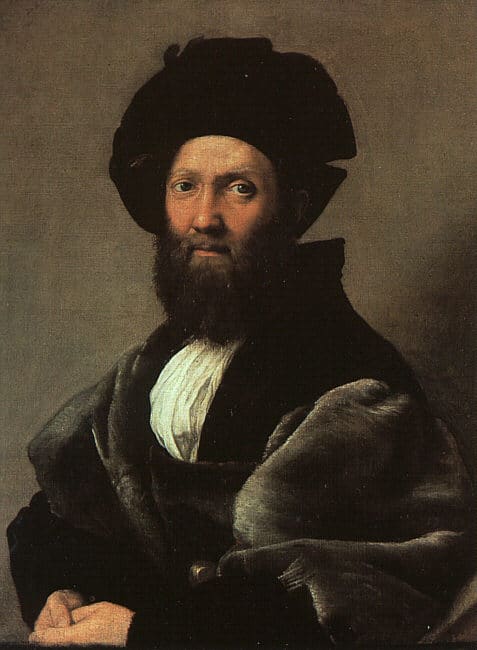
castiflione

Editor’s note: This is a guest post by Brad Miner. Mr. Miner is the author of The Compleat Gentleman. For a chance to win his book, see the details below.

What was once called sprezzatura, a wonderful word coined by the sixteenth-century writer Baldassare Castiglione, is a kind of graceful restraint that is an elemental characteristic of true civility. It helped define Western ideas about the gentleman, and it helped strangers to manage the slow transition to friendship.

Castiglione was an advisor to Popes Leo X and Clement VII, and to the Holy Roman Emperor Charles V. Castiglione’s The Book of the Courtier appeared in 1528, but it has surprising freshness today. It was considered revolutionary in its time, and yet Castiglione’s take on manliness owed much to Aristotle and Cicero. The ideal courtier was to have Aristotelian arete, which is to say excellence. An aristos (whence our word aristocrat) was educated in the best ideas and tempered by training to possess the best impulses, martial and artistic. He was, in Jacob Burckhardt’s phrase, engaged in “self-fashioning.” For Aristotle — and for men of the Renaissance such as Castiglione and Shakespeare — the standard for self-fashioning was the “golden mean,” the center between extremes. As Peter Burke explains: “Courage is defined as the mean between rashness and cowardice, liberality as the mean between extravagance and parsimony, and so on.” From Cicero, Castiglione took the Stoic concept of neglentia diligens (studied negligence), an obvious precursor to sprezzatura. And like many writers of his period, Castiglione respected Ovid’s famous observation, “Ars est celare artem.”

The purpose of art is to conceal itself.

Castiglione advocates such “art” in the formation of the gentleman, but his critics say he means pretense or dishonesty, and Castiglione’s courtier has come down to us as a superficial fellow content to fake it if he can — so long as the deception is shrewd.

Sprezzatura in Practice

No one is born a gentleman. Becoming one is a matter of education, and Castiglione’s “art” is really the practice of the principles that when finally internalized create the man whose urbanity, wit, athleticism, and restraint have sunk into his sinews.

A gentleman practices sprezzatura so that he can get it right. Confucius said that “although the gentleman may not have attained goodness, he acts in such a way so that he might become good.”

Developing sprezzatura is a worthy challenge in a culture that discourages and is suspicious of discretion and restraint. Many people are simply aghast at taciturnity. We tend to distrust anyone we suspect of not being “open.”

But the whole point of restraint, and the etiquette supporting it, is to give us a chance to negotiate slowly and carefully the difference between being strangers and becoming friends.

The handshake developed as a way strangers could show themselves unarmed. It was a sensible and cautious first step towards friendship. We do well to remember that intimacy must be a process, a negotiation, and that who meets a stranger and jumps quickly into bed, so to speak, has a better than even chance of waking up next to an enemy.

The ability to pause before acting and then to act sensibly is manifest prudence, which is the first among the cardinal virtues.

A man who has sprezzatura is content to keep his own counsel. He not only does not need to have his motives understood, he prefers that they not be understood. His actions, including his carefully chosen words, speak for him. It is not necessary for others—save his intimates—to know more.

Although it is not specifically a reason for embracing circumspection, it so happens that a discrete gentleman amasses, over time, a tremendous edge in the affairs of this world. He hears things that others do not, because people of all sorts confide in him, knowing that he will not betray their trust. The knowledge of the human heart that the compleat gentleman thus develops can be a burden, but it is also something of a liberation. It may call upon every bit of his strength to restrain himself from saying or doing more than he ought with knowledge gained from friendship, but there it is.

The art (and depth) of sprezzatura is defined by a man’s power: the stronger and wiser he is, the gentler his manner and the more circumspect his speech; the more, in other words, his true self is hidden.

Of course there is more to sprezzatura than just restraint. There is the quality people refer to when a man is called suave. Cary Grant was usually a gentleman in his film roles because he seemed able to do difficult things with ease and because he seemed a “man of the world,” not only suave but urbane as well. One could not imagine him saying anything inappropriate, and it was inconceivable that he would blurt out an intimacy, perhaps not even to an intimate friend. He knew the difference between a true friend, an acquaintance, and a stranger.

Implicit in sprezzatura is not only an effortless elegance but also a strenuous self-control. In the end, to be a gentleman is to hold Stoically, quietly to the conviction that he not be seen doing his “gentlemanly thing.” Silence really is golden. As Cervantes has Sancho Panza put it: “A closed mouth catches no flies.”

The Compleat Gentleman Giveaway

The Compleat Gentleman - small 3

Intrigued by the concept of sprezzatura? Want to know more about the virtues and attributes that every man should seek to cultivate? Enter to win a copy of Brad Miner’s The Compleat Gentleman: The Modern Man’s Guide to Chivalry. Mr. Miner reaches back in time to recover the oldest and best ideals of manhood. The book explored the roles every man should embody: warrior (a readiness to face battle for a just cause), lover (he lets a woman be what she wants to be) and monk (a man possessing true knowledge).

We’re giving away 2 copies of The Compleat Gentleman to AoM readers. To enter to win, leave a comment about a figure, historical or present day, famous or not, fictional or real, who either showed a mastery of the art of sprezzatura or an embarrassing disregard for it.

Contest ends Friday, July 17, 2009 at 11PM CST.

As usual, I’ll randomly pick two people from the entries.


{ 4 trackbacks }

Weekly Link Round-Up | The Art of Manliness
July 18, 2009 at 12:02 pm
A semana nos arXivs… « Ars Physica
July 26, 2009 at 11:25 am
A semana nos arXivs… | Phasing
July 26, 2009 at 11:21 pm
The Different Types of Manliness | The Art of Manliness
September 13, 2009 at 10:57 pm

{ 168 comments }

1 bill July 16, 2009 at 2:23 pm

George Washington was sprezzatura.

2 Shane Long July 16, 2009 at 3:57 pm

My vote is for two former politicians that now broker peace around the world former President Jimmy Carter and George Mitchell. I think both have the “ability to pause before acting and then to act sensibly is manifest prudence, which is the first among the cardinal virtues.”

3 Taylor July 16, 2009 at 4:40 pm

The character of Joe Roberts, played by Sean Connery in Sidney Lumet’s “The Hill” definitely has it. If you haven’t seen this movie, you should do so immediately. A great man movie

4 Spud July 16, 2009 at 5:18 pm

My cousin Ted, I think, exhibits sprezzatura. Generally quiet yet crazy, the manner in which Ted does what he does is left unexplained to the public, and even to most of family. I am greatly honoured whenever I get to sit and talk with him, because though people know he is intelligent, he is so much more thoughtful and wise than we give him credit for. I admire Ted very much.

5 Paul July 16, 2009 at 5:23 pm

An interesting fictional example is Gandalf. While not an obviously manly figure, he certainly did not parade his considerable power, kept his own counsel, and didn’t get involved in the affairs of others unless bigger matters were at stake.

6 dan July 16, 2009 at 8:17 pm

Pat Tillman , beacuse he was a true American who had evreything and gave it up to serve his country.

7 Beniaminus July 16, 2009 at 9:48 pm

Leonardo da Vinci. A fine example of the self made man, always learning, athletic, entertaining and self-controlled.

8 Ed July 16, 2009 at 10:56 pm

My current boss displays sprezzatura. He is very reserved until he chooses to let you into his confidence and always acts the gentleman. His limited communication gets people to talk to him more than they would someone else I think.

9 Carl C July 16, 2009 at 11:49 pm

My grandfather was the epitome of a gentleman. Severed in WW II, deacon in the church, family man and always had time to teach me how to fish and be a decent person. Nuff said.

10 Gustavo Caetano July 17, 2009 at 1:27 am

Generalfeldmarschall Erwin Rommel

11 Jonathan Foster July 17, 2009 at 12:36 pm

I would nominate Benjamin Franklin. He is perceived as a gentleman histrocially. He associated with American Patriots and European nobility. He dabbled and investigated just about everything he could in science and philosophy. Philanthropically, he even established a trust fund that continues to this day to benefit Philiadelphia.

12 Colin July 17, 2009 at 2:39 pm

Colin Powell

13 peter July 17, 2009 at 5:08 pm

One person that comes to mind when i think about the concept of spezzatura is Sir Ranulph Twisleton-Wykeham-Fiennes. He is a famous british explorer, who was the first man to cross both the north and south poles by surface means. He is such a man that he was able to complete SEVEN marathons in SEVEN days on SEVEN different continents four months after having a heart attack.

This may not have been the wisest move but having watched interviews with Sir Ranulph Twisleton-Wykeham-Fiennes, i can attest that he is a true gentleman, who considers all the risks before he sets out to do anything. His is also a man of honor who lives by his conscience. I highly recommend looking him up.

14 Harry July 17, 2009 at 5:27 pm

Francisco D’Anconia, of Atlas Shrugged by Ayn Rand, perfectly illustrates the power of this control over oneself. He is a character we all hope to be comparable to in some way…

15 Joey July 17, 2009 at 6:17 pm

Tupac Shakur made it looks easy for the smallest man in the room to be the most feared.

16 Corey July 17, 2009 at 6:57 pm

I would say that Robert Heinlein, wile an excellent writer, is an example of a lack of sprezzatura. When safe in his career and unhindered by public opinion, his later books (Glory Road, Number of the Beast, Stranger in a Strange Bed, &c.) were all very vocal, and crassly and unrestrainedly vocal, in urging ungentlemanly behavior. Mike the Martian urges faithlessness in marriage and disregard of human life; Lazarus Long is the embodiment of cowardice.
For reasons listed above, C. S. Lewis and his protagonists are far better practicioners of this virtue. For true sprezzatura, I will agree with those who have said George Washington – here is a man who has won vistory against the mightiest military of the day, has won the highest office of the newly formed country, and when asked how he would be addressed, simply said “Mr. President.”

As an aside, I find it interesting that the Victorian gentleman and the Edo-period samurai both found restraint to be the most telling demonstration of proper behavior: note the similarities in the colors of fabric – subdued dark blues, browns, blacks, sometimes with subtle pin-stripes. Fascinating.

17 Rev. Adrian L. Piazza July 17, 2009 at 11:06 pm

For a compleat lack of sprezzatura, my nomination is Brett Favre. From his weepy goodbye in Green Bay to his super public argument/transfer to NY. Finally, his constant jabbering about going to the Vikings, which did not happen. He talks to everyone and has the emotional fortitude of a feminine fourteen year old.

I learned Sprezzatura from Rev. Dr. Norman Nagel. He could skewer a phony at a 100 yards, but, was invariably polite and genuinely helpful to those who were seeking to learn. He could weave a tale (seemingly pointless) that would keep your attention until he revealed the crux of the matter, followed by an question that kept your mind busy for days. Conducted the Liturgy with a genuine reverence with hair mussed from putting on the surplice. From Australia through Germany and England was always dressed as a Dr. Professor ought: three piece suit or sweater vest and jacket, tweeds in the spring and summer. Only dressed down in his own back yard. Smoked thick black cigars, pipes and drank Foster’s from the can. Never shared, but spoke when he needed and was silent when he listened.

18 Rob July 18, 2009 at 10:45 am

I agree with Jack, below.

Comments on this entry are closed.

Previous post: Announcing the New Art of Manliness T-Shirts

Next post: Meet the Parents

Mens Blogs - BlogCatalog Blog Directory <