




7 Lessons in Manliness From the Greatest Generation

by Brett & Kate McKay on April 30, 2009 · 84 comments

in A Man's Life

ggjpg

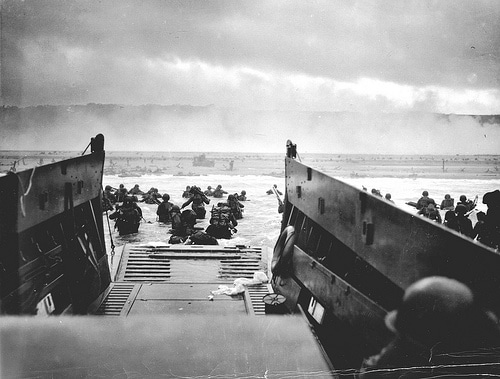
Every generation has its share of men who fully live the art of manliness. But there may never have been a generation when the ratio of honorable men to slackers was higher than the one born between 1914 and 1929. These were the men that grew up during the Great Depression. They’re the men who went off to fight in the Big One. And they’re the men who came home from that war and built the nations of the Western world into economic powerhouses. They knew the meaning of sacrifice, both in terms of material possessions and of real blood, sweat, and tears. They were humble men who never bragged about what they had done or been through. They were loyal, patriotic, and level-headed. They were our Greatest Generation.

Tom Brokaw gave them that name, and while it’s a bold claim, I wholly support it. They weren’t perfect by any means, of course, but as a whole they were a cut above the rest. One of the inspirations for Kate and I starting the Art of Manliness was our grandfathers. When I looked at them, and then at the men of today, the chasm of manliness seemed jarring. These are men cut from a different cloth of manliness; they simply don’t build them like that anymore. Their extraordinary manliness is not something you can scientifically measure. But you can sure feel it. And you can see it in old pictures. It seems every man back then was dashingly handsome; their manliness practically leaps off the page.

When I was taking a tour of the USS Slater in Albany last summer, Uncle Buzz and I were looking at the tiny, closet-sized kitchen where a couple of men prepared meals for hundreds of sailors as the ship rocked to and fro, and at the giant guns the men used to blast the enemy and knock planes from the sky. One tends to picture 30 year old guys doing that stuff; Tom Hanks and Co. always leap to mind. But a lot of them were just 18, fresh from the prom and varsity football.

In Brokaw’s book, The Greatest Generation, he remembers his mother telling him the story of the day Gordon Larsen came into the post office where she worked. Larsen was typically a cheerful and popular member of their community, but that day he had stopped in to complain about the rowdiness of the teenagers the night before, which had been Halloween. Brokaw’s mother was surprised at his tone and asked him good naturedly, “Oh Gordon, what were you doing when you were seventeen?” Gordon looked at her squarely in the eye and said, “I was landing at Guadalcanal.” He then turned and left the post office. These were men who were surely mature beyond their years.

There’s a saying that each generation is most like their grandparent’s. And while we’re not there yet, I do see a lot of people these days who are dusting off the values of the Greatest Generation and embracing them once again. What were those values? Today I’d like to take an opportunity to enumerate a few of the Greatest Generation’s lessons in manliness, using some of my personal observations along with various stories and quotes taken from Brokaw’s book.

Lesson # 1: Take Personal Responsibility for Your Life

While today’s generation often shirks responsibility as too much work, the Greatest Generation relished the chance to step up to the plate and test their mettle. One son of a WWII Medal of Honor winner remembers of his dad and his peers, “For them, responsibility was their juice. They loved responsibility. They took it head-on, and anytime they could get a task and be responsible, that was what really got em’ going.”

And when the Greatest Generation accepted responsibility for something, they also accepted all the consequences of that decision, whether good or bad. They were not a generation of whiners or excuse makers. They took pride in personal accountability. In a time where individuals and businesses reach for a bailout or the easy fix of bankruptcy to make things right, stories like that of Wesley Ko inspire. Soon after the war, Ko started a printing business. After 35 years of working hard to transform it into a successful company, he decided to relocate his business from Philadelphia to upstate New York. Ko personally guaranteed the 1.3 million dollar loan needed to make the move. The transition did not go as expected, and Ko’s company faced several setbacks; after only a year, he was forced to go out of business. Ko said, “It was a big decision making time. I couldn’t retire. I hadn’t taken out Social Security. So at the age of seventy I had to go get a job and start paying back that million-dollar loan. I just didn’t feel comfortable with declaring bankruptcy. I just didn’t think it was the honorable thing to do, even though it would have been easier.”

Lesson #2: Be Frugal

If your grandparents are anything like mine, then their house is stuffed with doodads and boxes of stuff. They have a sort of pack rat mentality because they grew up in the Great Depression where the next canister of oats or pair of pants was not guaranteed. They learned to live on less and be grateful for the things they had, no matter how humble. It didn’t take a new Wii to brighten their Christmas morning; an orange at the bottom of a stocking was enough to knock their socks off.

This was not the generation that purchased Corvettes to soothe their mid-life crisis, nor the generation that equated success with the purchase of a McMansion. This was the generation that was thrilled to move into the small houses of Levittown, which at 750 square feet were as big as some people’s garages are today.

One of the mottos of the Greatest Generation was “use it up, wear it out, make it do, or do without.” Of course, it’s hard to “make it do” if you don’t know how to fix it, and thus handiness was also central to this generation’s frugality.

Tom Brokaw remembers this about his own dad:

“My father, Red Brokaw, was a blue-ribbon member of that fix-it generation. My mother learned not to say aloud what she needed, say a new ironing board, because my father would immediately build her one. She liked to buy something from the store occasionally. When I was a young man in need of spending money I mentioned that I could mow many more lawns if I had a power mower. I had a snazzy new model from Sears Roebuck in mind. My father went to his workshop and built a mower using an old washing machine motor, welded pipes for handles, a hand-tooled blade, and discarded toy wagon wheels mounted on plywood platform. He painted it all black and it was a formidable machine. At first I was embarrassed, but then as it drew admirers I was proud of its homespun place in a store-bought world.”

dday

Lesson #3: Be Humble

Typical of the Greatest Generation is the story of a son or daughter who finds a war medal stashed in the attic after their father passes, he having never told them about it. Even if their exploits had been brave and heroic, the Greatest Generation rarely talked about the war, both because of the difficulty in remembering such carnage, but also from the sense that they had simply been fulfilling their duty, and thus had no reason to brag.

Brokaw observes: “The World War II generation did what was expected of them. But they never talked about it. It was part of the Code. There’s no more telling metaphor than a guy in a football game who does what’s expected of him-makes an open-field tackle-then gets up and dances around. When Jerry Kramer threw the block that won the Ice Bowl in ‘67, he just got up and walked off the field.”

marriage

Lesson #4: Love Loyally

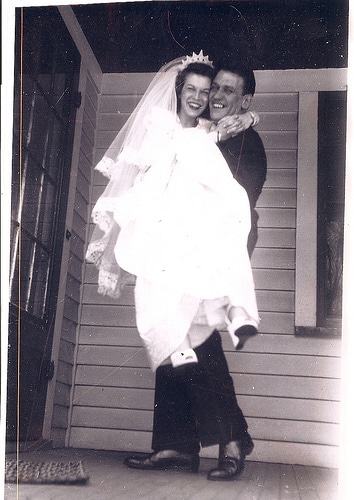
The men of the Greatest Generation took their marriage vows seriously. Brokaw wrote, “It was the last generation in which, broadly speaking, marriage was a commitment and divorce was not an option. I can’t remember one of my parents’ friends who was divorced. In the communities where we lived it was treated as a minor scandal.” The numbers bear Brokaw’s anecdotal evidence out: of all the new marriages in 1940, 1 in 6 ended in divorce. By the late 1990’s, that number was 1 in 2.

This was a time where there was no hanging out or “hooking up.” Men asked women on real dates, and had serious intentions in doing so. When a particular gal caught a man’s heart, he proposed, and they got hitched. And they were married for the next 60 years.

Peggy and John Assenzio had the kind of commitment to marriage typical of the Greatest Generation. They were married right before John headed off to basic training. Peggy kept her husband constantly in her thoughts while he was away. “I never went to sleep until I wrote John a letter. I wrote every single day. I wouldn’t break the routine because I thought it would keep him safe.” When John got home, he and Peggy picked up right where they left off. John would sometimes have nightmares about the war, and Peggy was always there to comfort him. John said, “The war helped me to love Peggy more, if that’s possible. To appreciate her more.” Their commitment to each other was unshakeable. Peggy believed that young couples today, “don’t fight enough. It’s too easy to get a divorce. We’ve have our arguments, but we don’t give up. When my friends ask whether I ever considered divorce, I remind them of the old saying, ‘We’ve thought about killing each other, but divorce? Never.”

The cynical among us are apt to think that while the divorce rate was low, that simply means that more men were stuck in unhappy marriages. These days we’re quick to think that anyone who gets married in their early 20’s and is married for decades after that, is bound to be living a life of quiet desperation. Yet I’ve met a lot of Greatest Generation couples and almost all of them are and were quite happy together. They’re companions and best friends. What’s their secret? The answer can really be found in changing expectations. As Brokaw observes, “When they got married and began families it was not a matter of thinking, “Well, let’s see how this works out.” Some would argue that marriages were less happy because divorce wasn’t an option. But could it be that the opposite was true? That with the divorce option off the table the whole tenor of your marriage would change? Maybe things wouldn’t be so bad if you didn’t think there was an escape hatch, and you knew that whatever bumps in the road you hit, you had to work through them together.

Lesson #5: Work Hard

In war, these men had learned to focus on the objective at hand and not give up until that objective and the mission as a whole was accomplished. When they got home, they carried that focus over to the world of work. They didn’t fall into the fallacy that Mike Rowe has been busy denouncing, that you have to find “your passion” to be happy. They could find happiness in any job they did, because they weren’t just working for personal, self-fulfillment; they labored for a bigger purpose: to give their families the financial security they hadn’t enjoyed growing up.

As soon as they graduate college, many men today want the things it took our parents and grandparents 30 years to acquire. But the Greatest Generation knew that going into the debt was not the way to get the things you want. They understood that the good things in life must be earned by honest toil.

Lesson #6: Embrace Challenge

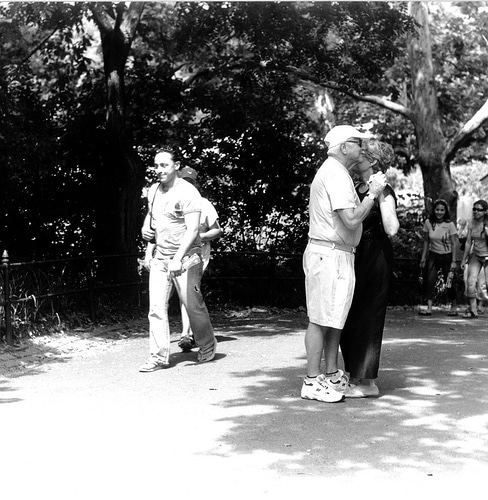
The Greatest Generation wasn’t the greatest despite the challenges they faced, but because of them. Today many men shirk challenge and difficult pursuits, believing that the easier life is, the happier they’ll be. But our grandfathers knew better. They knew that one cannot have the bitter without the sweet, and that true happiness comes from overcoming the kind of challenges that build character and refine the soul. The challenges they experienced made their joy all the more sweet because it was tinged with the gratitude of knowing how easily it could all have been taken away.

dance

Image by iamthelorax

Lesson #7: Don’t Make Life So Damn Complicated

If there’s a common thread in these lessons, it’s having a common sense and a level-headed approach to life. In our day, when men are obsessing about finding themselves, their holy grail of a woman, and their “passion,” the Greatest Generation’s uncomplicated approach to life is refreshing. They didn’t go on a diet, they simply ate whole food; they didn’t exercise, they worked around the house; they didn’t obsess about their relationships, they just found a gal they loved and married her. They always looked sharp, but never fussed with fashion trends. They didn’t mull over which appliance better suited their personality and image, they just bought the machine that worked the best. They didn’t think about how to get things done, they just got em’ done. When Joe Foss, a celebrated and daring WWII pilot and then governor of South Dakota was asked if he missed his younger days, he said, “Oh no. I’m not a guy who missed anything from anywhere. I’ve always been a guy who just gets up and goes.” Instead of spending you time navel gazing your life away, just get up and go!


{ 10 trackbacks }

Topics about Go-greener » Blog Archive » 7 Lessons in Manliness From the Greatest Generation
May 1, 2009 at 1:32 am
Art of Manliness @ Daddy Hood
May 1, 2009 at 10:37 am
May 1st Link Lovin’ | Just A Guy Thing
May 1, 2009 at 12:51 pm
Lessions from our Grandfathers - Straight Razor Place Forums
May 1, 2009 at 4:29 pm
Business of Life
May 2, 2009 at 4:51 am
the greatest generation « J THARP
May 6, 2009 at 7:15 pm
Thomas Friedman at Grinnell College | Around Des Moines
May 24, 2009 at 9:12 am
Jaka's Tea Party - Dress up. Get down. Speak out.
August 7, 2009 at 12:02 pm
fix bad credit
August 11, 2009 at 9:09 pm
“Killing killers so they can’t kill anymore” – Peggy Noonan « Nonesuch
October 15, 2009 at 12:10 pm

{ 74 comments… read them below or add one }

1 Bruce Williamson May 2, 2009 at 10:04 am

I agree 100%. They did what they had to do. They showed us how to do with what we had too. I remember my father making a weed whacker out of an old vacuum cleaner motor and one of my guitar strings! Don’t laugh it worked! It whacked everything weeds, flowers, shins anything that got near it. We repaired things that broke before we would buy another. He once patched a hole in an engine block when the engine threw a connecting rod! If I asked one of my nephews how to fix something on their car, their answer would be to take it to the mechanic.

They passed a lot of the knowledge on to us. People ask me “How do you know so much about home repairs?” I reply “because we couldn’t afford to pay someone to fix it. So we did it ourselves.” I learned from all of my uncles, my father and grandfathers. From them I learned electricity, plumbing, carpentry, masonry and gardening(for food). When I visited my widow aunt I fixed her ceiling fan. She thanked me. I said “Don’t thank me thank Uncle Vernon. It’s his skills that he taught me that let me do this. They’ve come full circle back to you.”

They all fought in WWII. One uncle was lost so I never knew him. Like the article stated none of them spoke about the war. My father never even received his medals. I asked him why and he replied “What for?” I left it at that.

So, the article really rings ture form my experience with the Greatest Genereation.

Bruce Williamson
Phila., PA

2 Bruce Truog May 3, 2009 at 6:36 am

While I don’t want to take away from the heroism of the men who waded ashore on D-Day or at in the Pacific, I do want to comment on the fact that these were not the leaders of their day. The leaders of the day were from the generation that fought in WWI. Patton and Eisenhower were not from the “Greatest Generation”. I do not argue that we tend to mimic our grandfather’s. At the danger of being accused of sour grapes, is it the Boomer Generation’s fault that their leaders, “The Greatest Generation” would not commit to victory in Korea, Cuba and Viet Nam? I contend that each generation, including the current one holding the wall against terrorists rises up to beat back the forces of evil to the extent that the leader generation allows it succeed. I think the “Greatest Generation” let us down when it came their turn to lead. We may have peaked as a society when the leaders from WWII passed the baton.

3 Ben May 3, 2009 at 4:50 pm

This is an amazing blog post. My grandfather, who in the absence of my father, was the main male influence in my life growing up lined right up to this standard.

When he was a senior in high school, he had the chance to go to college on a hockey scholarship, but his father got sick from working with the nasty chemicals involved in plating in the late ’20’s, so instead of looking to his own happiness, he quit school & went to work to support his mother & father. After working for a grocer for a number of years, he took a job with the gas company & at about the same time was drafted into the Navy. He & my grandmother had already been married for a few years & my grandfather was one of the oldest men in basic. He was stationed on a PT boat off California & then at Treasure Island. While he didn’t see combat (thankfully), that ‘complete the mission’ mentality stayed with him. He came back from the Navy & went back to work with the gas company where her stayed for over 40 years, had two daughters, & made an excellent life for not only his wife & children, but myself, his grandson, as well.

When my father left my mother, she tried to make it on her own, but at one point, it got to the point where she opened her cupboard & found nothing in there for us to eat. She swallowed her pride & moved back with my grandparents who took both of us in without question; they watched me so my mother could work & get back on her feet. Even after my mother remarried, I spent the greater portion of my time with my grandparents. My grandfather got me into hockey at an early age & made time to take me to all my practices & games,as well as manage the team.

He wasn’t perfect, but he did what needed to be done & didn’t sweat the circumstances. I don’t think I would be the man I am today without his influence & his example. I found this article & this blog randomly, but I got to say kudos to the writers & keep up the good work. Men today need to be reminded of what being a man is all about, especially in a society where men have been conditioned to be useless layabouts who only exist by the mercy of their wives. Their children ridicule them & society laughs at them, but there was a time when we were much better than that; & that time could come again if only we, as men, learned to follow examples like the men discussed in this article.

I glanced by a response as I was scrolling down to add my own remarks from a man who stated he would not teach his sons these values because of his own horrible experience at the mercy of the legal system which he correctly stated is in the hands of the anti-male (now) majority. For my own part as the father of two boys, I will be teaching them the realities of this world, but also giving them an ideal to strive for. We may be the products of our environment, but no matter what is thrown in our path & whatever is heaped on our backs to put us down, we always have a choice. The men in this article were faced with a similar choice. They could have whined that the draft was unfair, which it was, & when they came back that the rebuilding of industry & the economic system was too great a challenge, which it was; but they made a different choice, they said ‘times are tough, but we’re tougher’, & then they went out & proved it. I think if more of us made this choice, our society & in fact, the stated of the entire world would be much different than it is now.

That’s my two cents, I figured I’d spend them.

4 Dane Kingrey May 3, 2009 at 8:42 pm

I’m confused. You start by referring to the greatest generation as that between 1914 and 1929, however your examples are all of men around WWII (early 1940’s, 20 years later). Which is the greatest generation? the first one or one 2 generations later?

5 Brett May 3, 2009 at 8:53 pm

@Dane-
The Greatest Generation was born between 1914-1929-making them the right age to go fight in WWII and so on.

6 chris May 6, 2009 at 8:52 pm

This is a great article and I have found it to be inspiring to me in numerous ways. I actually looked at my life and was embarrassed. I now want to make some changes in my life. Also i would like to point something out that in the first lesson you said “One son of a WWII Medal of Honor winner”. I just want you to know that you do not win the Medal of Honor in any way shape or fashion, you are awarded the Medal of Honor. :)

7 Meredith May 8, 2009 at 10:53 am

AMEN!

8 Matt May 8, 2009 at 7:40 pm

I don’t know who wrote this, but really, are you telling men that because they are not in times of suffering that they are not good people? Yes, they fought hard, but there were also the tools of that generation that screwed the general populous – british colonels at Gallipoli as an example.

As for the majority of this article, I’m glad you’ve told us what you think a man should be. I would vouch that most people reading this (as Anne said) would hope that women would live by these mor/al codes as well. This therefore doesn’t tell us how to be a man at all then, does it? Simply how to be a christian person in our society.

By the way, in part 7, if we all just got up and went, where exactly do you think we’d be? Directionless, and without moral integrity I would say. You actually contradict yourself in another post (Living a Life of Integrity) by saying the very Nike ‘just do it.’ It is this exact mindset that resulted in the millions of deaths in World War II. If german men thought about what Hitler was doing, as opposed to ‘just doing it’ we may have seen an earlier end to the bloodshed.

My guess – five negative at least.

9 John C May 12, 2009 at 8:23 am

Many great virtues displayed from the generation of our grandfathers, and many critics who want to take this in different directions.

Truth is, they were a hard working, fiscally conservative and loyal to their marriages. These folks who put posts about not being able to tell the difference, maybe they shold check the newspaper. 25 yr anniversaries are getting a lot harder to find, let alone 50’s. The values and ethics of that generation are definitely not being actively promoted in our society today.

My grandparents were tremendous people and embodied these principles, I am a better man for learning from them what I don’t see in society today. My children are fortunate to be handed some of the lessons I learned from the lives of my grandparents. I hope to be 1/2 the man my grandfather was. Manly, loyal, hard working, ethical, a leader in his church and well respected in his community.

Time to Man up fellas. We need to pick up the torch despite what society today promotes!

10 Kalevi May 14, 2009 at 10:41 am

I can’t really relate to some of the points here. Societies have always duped men into blind acceptance of their twisted values by rewarding them with a heightened sense of manliness. Men go to war thinking it is their responsibility but they are in fact being irresponsible for surrendering their ability to think to their superiors. I would like to remind you that we also have much to learn from the hippie generation. Those men had the guts to say “No, sir!” and stand firm behind their conviction.

11 PVT FUBAR May 16, 2009 at 5:37 am

Fantastic article. I have forwarded it to the other men in my unit. i cant agree with this more. We need to get back to these ideals. Morals in america are falling apart. This article is about the ideals which were the embodiment of the greatest generation. Yes, there was racism an cheauvanismn (sp?) but that is not what this is about. This is about the values we need to embrace again. Everyone please stop griping about the negatives here. In the years since we have made great strides in getting rid of them. there is still much work to do but we can still get rid of the bad and start to embrace the points listed above in the article. this will make us all better people. God bless everyone from this era. I try to follow their examples the best i can but i know i will never be 1/100th the man that these men were.

12 TomK May 17, 2009 at 8:59 am

Let’s all remember that there was thousands upon thousands of regular men and women in each generations that had and held these same ideas/beliefs/values, and more, but are not held up to the light as this few leaders…

Everyday working people with home grown values that passed from father & mother to son & daughter, are the ones that have built this country. Sadly alot of them are not doing it anymore and so these values, ideas, traditions, etc are fading away as government increases it’s presence in everyday life…

13 Perry May 23, 2009 at 9:53 am

Wonderful story which was obviously not written for the eyes of bleeding heart liberals which were few and far between in the subject time period. I was a child during the great war and remember vividly of the sacrifices every American citizen gladly made for the love of his country. America haters were on the other side of the oceans, then. I would trade today’s America for the America of the greatest generation in a heartbeat.

14 Jan Boyle June 4, 2009 at 3:23 pm

I am offended by the term “greatest generation”. That leaves no room for any other generation to aspire to “greatness”. These men and women were often drafted into service and (as my father always said) had to do their “duty” whether they agreed with the government or not. He was not proud of what he had done – he never did talk about it but not out of pride and selflessness but out of shame.
The many veterans that have served since “the big one” have every right to the honor that seems to be only bestowed upon one generation.
It proves that we – especially journalists – must be very careful in the words we choose. They are powerful and can send a messages to many generations to come that they will never be “good enough”.

15 Dan June 17, 2009 at 6:01 pm

Most humbling moment of my life. I was returning from my first tour in Afghanistan I was 19. As we got off the plane there was a string of Vietnam and WWII Veterans standing in a line saluting. You have never seen so many professional tough guys with tears in their eyes. The pride we felt that these men felt it fitting to salute us was palpable. Never have I been so proud yet so humble. The WWII vets were mostly smaller and frail now and yet I knew that each of them were twice the man I would ever be.

16 Matt July 16, 2009 at 10:47 am

I completly agree with most of the points. These were great men and i have had the honour of meeting a few. There are three such men at my golf club when i was younger and i would happily go out and join them for a round on a quite afternoon. Many would avoid them as they saw them as old and slow but the stories they told would captivate my imagination and i believe help mould me into the man i am today.

17 Joe July 28, 2009 at 12:58 pm

Brett—-
Read this through the archives today, and have to say it may be the single most impressive blog post I have read. I have a spot in my heart for members of this “Greatest Generation”, especially my grandparents, who helped form my character and morals. These people were, without question, made of different stuff, and I couldn’t agree more with just about every point you made. As far as the questionable “criticisms” that this post brought to you, they had to be expected from “commenters” who probably need a kick in the ass. Don’t ever let that disuade you from writing what you deem to be the truth. More than enough readers, myself included, will be backing you up….

18 Donna Mulholland August 12, 2009 at 8:05 pm

ABSOLUTELY AWESOME AND SO VERY VERY TRUE~~

I have to say that I have found ONE man born in 1950 who is up to the standards but he belongs to someone else and is OFF LIMITS! Wish they had cloning perfected. My brother would have been one of these but he gave his life in 1969 for our country.

My Father is one of these honorable men! He and my Mother met on a blind date – he kept the stirer from the drink from that night – it’s in a frame on the wall in his den – it was Mom’s birthday – I think she was 22. Dad was in the Marine Corps – he saw the horrors of war in Japan and Korea. He was away from our family for some long periods of time serving in the Corps. Mom had us say our prayers on our knees each and every night and when he came home we were THERE to meet him.

They made a pact that if one of them had a serious illness that caused them to need help 24/7 then the one would tend to the other – no nursing homes was the bottom line. Mom had a series of strokes that, eventually, landed her in bed with her left side paralyized. They celebrated their 60th anniversary together in the home where I am presently residing. Unfortunately, upon doctor’s orders, with pain in his heart and tears running down his face, he had to tell Mom that she was going to have to go into a convalescent hospital because he had to have back surgery. He didn’t tell her but it was from taking care of her that his back was in very bad shape. He was no longer ABLE to take care of his sweetheart but that didn’t mean he didn’t see her. He spent every waking hour by her side. When he had congestive heart failure and was in the emergency room he got a phone and called my mother’s room to tell her that he wasn’t well and wouldn’t be able to come visit her but he called her every single day.

They just don’t make them like this anymore … with the exception of a very few. I’ve been blessed to know one of my generation and I call him my “brother from another mother” – he was my brother’s best friend during their time in Vietnam. God Bless the REAL men!!!

19 Dan August 24, 2009 at 2:09 pm

I’m glad to see that heart-felt detractions are allowed on this site. This may seem harsh but I have to bring it back to earth. I wasn’t there during the depression or the “Great War” as if all others that men died in were “Second Class Wars”. Being swept into a war isn’t what makes men great. A war can bring out the best or the worst in men and WWII did both. But since on this site we seem intent on putting the WWII generation on a pedestal for all other generations to feel inferior to, please allow my two cents of balanced perspective.

Surely every generation has it’s own seed of greatness planted by the previous generation. I suppose the same could be said for seeds of failure. Regardless of who gets credit or blame for a generation’s deeds, each generation manages to fail their own generation as well as it’s progeny in some ways. The so called Greatest Generation may be seen as such (by themselves mostly) because they fought a well defined and supposedly crucial war and were raised amid the rubble of the Great Depression, one of the failures of THEIR parents who also fought a terrible but well defined and supposedly crucial war.

The WWII generation was trained by early deprivation to become focused on objectives and conquering obstacles. They also gained a natural talent for compulsive SWOT analysis driven by fear of the T (Threats). I suppose who could blame them. But who they became as adults (and I assume we’re mostly talking about men here) are not only the most objective-focused and materially affluent generation in history, they are also the most self-congratulatory, arrogant, and relationally inept generation in history even if it can be said that they don’t brag much about their war battles. Is that all that matters. Most of my generation of boomers were brought up with a different kind of deprivation with a much deeper scaring impact than hungry stomachs or long walks to school.

Here’s a clue. Men of the greatest generation don’t as a rule, have relationships. They possess and rule over people they admittedly do care about or who are important to their objectives. They just don’t know how to be vulnerable and transparent enough to inspire relational trust and they tend to blame the resentments they provoke on weakness or ingratitude.

And as for WWII, lets also be clear. The greatest generation were the ones who pulled the triggers and died bravely. That’s what the new memorial should be about even if it is a bit out of proportion, in my view, with other war memorials in terms of demand for attention. But in a very significant way that war didn’t belong to them. It was their fathers who saw WWII as crucial, entered it, strategised it, commanded it and guided it to victory. I’m sorry but it was for Viet Nam that the greatest generation fulfilled those roles (except for the victory part). Not exactly a badge of honor. And my generation who died in Viet Nam did so for nothing but war profits. The cynicism and resentment this added to an already resentful boomer generation made us, to our shame, a sell out generation to personal peace and affluence. We became the thing we hated during the Viet Nam era and did little to build on the good of our fathers or erase the bad. Among the few things we boomers have a little more of than our fathers is perhaps better understanding of technology (whoop-te-doo), and the pity and affection of our children.

So to those who need to ignore some of the truth in order to find heroes, I’m sorry you feel so inferior to those guys. Thank God for the special ability they have of coming through in a crisis and their example of loyalty to some principles and also to those they love. They do have that over us boomers I’m sat do say. But don’t blindly worship them as superior to your particular generation. They’re definitely not. The present young generation has so much more to offer the world than the WWII generation and certainly more than my fellow boomers. I’m hopeful they’ll be able to restore what the founders of our union of States dreamed of and do it in a way that inspires their children without alienating them. The current young generation has far more potential to develop genuine adult humility and strong relationships based on equal respect and trust. It may still be rare but not as rare as in my generation or in the WWII generation where it’s all but non-existent. Let’s have a more balanced perspective when we look for praiseworthiness in others. Like the Bible says, examine all things and keep what is worthy.

20 k2000k August 26, 2009 at 6:54 pm

Look, its been well established that the Greatest Generation did many great things, fight WWII, land a man on the moon, lead the nation during cold war, and that there are also numerous skeletons in the closet. Honestly, it is missing the point to debate those two items. What needs to be taken from this article is that men, real men, even flawed men, will do things that need to be done and when they have to do it. None of the men who fought in WWII wanted to be there, they had to be there, but rather than complain about their misfortune they trudged on. These instances in courage aren’t limited to one generation, it happens all the time. Korea, Vietnam, Iraq, or Afghanistan. It doesn’t have to be in a war where we see courage, the civil rights movement, or even in the United States, the Iranian election protesters. Any man worth emulating posses a few key traits, courage, diligence, integrity, and honor. Ultimately all I know is that I already have lived a longer live than my grandmothers brother, who lies in the Philippines.

21 sparkyf1 September 18, 2009 at 6:48 pm

the BEST advice I have ever read!

22 John Wayne October 13, 2009 at 9:31 pm

Great website. Some of you liberal bloggers need to get a hanky and get on with your life. We love you, but you need to stiffen the spine a little. The men who returned from WWII probably were a little hardened in some ways… but they had to be to survive. We owe them a life debt.

23 Nate Davis October 15, 2009 at 10:37 pm

Very good advice , It seemed , while reading , that you knew my grandpa . He did not fight in the war , but he was born in 27 . He was my best friend until he passed in 1993 . I still miss him so much . I was 20 years old when he passed , and I wish almost daily that I could spend a few minutes picking his brain , now that I am in my mid 30’s . He had so much to teach me , and I paid attention , but now realize how valuable all of those lessons were . I place a high value on the time spent with grandpa , and now that I am trying to live my life as he did , I realize what a real man he was . One of the greatest compliments I have ever recieved , is my grandmother calling and telling me that grandpa would be proud of the man I have turned into . Although I am not half the man he was , I have something to strive for . I think this resonates with many of you . Those of you writing that you have doubts about the greatest generation , I dont think know , anyone from the greatest generation , or you would’nt be writing those negative things . I just want to get up , and go . What else matters ?

24 concernedcitizen October 16, 2009 at 1:22 pm

I just want to write and say that in these times we are hearing more about the scandal and hypocrisies of our current generation, there are no doubt good men and women out there, but that is not the focus of today’s society. When we focus on the contrasting values of what was important then compared to now, I feel that we will see where the discrepancies lie. Family, emotional happiness, loyalty, a higher importance than one’s self, respect, honor, these are all things that we lack in our society today. Granted, these are different times but those values need to be applied to our current situation. Also, the choices that we face on a daily basis and the freedoms we are experiencing as citizens of the United States of America are due to the men of the Greatest Generation’s loyalty and diligence as citizens of the United States, as loving and honest family men, courageous and willing human beings. I agree wholeheartedly with this article and I feel that a lot of our generation could learn from these men, not necessarily live their lives in the exact same way, but look at their values and apply that to their life. This was not to say that our generation is full of low lives, this was to show that the focus of our generation and our current economic environment has shifted and needs to be redefined and refocused.

Leave a Comment

Previous post: Ask Wayne: Man Hasn’t Had Passion for Anything in Years

Next post: Manvotional: “George Gray” by Edgar Lee Masters

Mens Blogs - BlogCatalog Blog Directory <