




The Art of Manliness Guide to Scotch Whisky

by schaefer on April 5, 2009 · 112 comments

in Manly Skills

scotchwhisky

“The proper drinking of Scotch whisky is more than indulgence: it is a toast to civilization, a tribute to the continuity of culture, a manifesto of man’s determination to use the resources of nature to refresh mind and body and enjoy to the full the senses with which he has been endowed.” – David Daiches

No other spirit has been associated with manhood like scotch whisky. Whether it’s the hooking punch in the mouth or just the raw and earthy process by which it is brought forth from barley and water, scotch has held a prominent place in the lives of men from kings to authors to titans of industry. What separates scotch from its alcoholic counterparts is not just its unique background (to be labeled scotch, a whisky must be distilled and initially matured in Scotland), but the commonalities shared by the men who partake in its liquid mysteries.

The man who drinks scotch is one who lives life to the hilt, savoring new challenges and discoveries on a daily basis. He doesn’t settle and he doesn’t drink something just because it’s there. Few men drink scotch to get drunk. First off, it’s too expensive, the cheapest bottles of single malt costing around $40. But secondly, and much more importantly, each bottle of scotch contains so much history, tradition and attention to detail that the men who drink it are not just downing a beverage, but participating in a celebration of artisanship and the deep pleasures of life.

Becoming a scotch drinker takes a little work and a bit of tongue maturity. The young man that saddles up for his first bout with the historic elixir is often taken back by its overt potency. But upon returning a second and third time, he slowly begins to get a sense of what makes scotch so alluring and enjoyable. In developing a taste for scotch, a man is embarking on a lifelong journey that will take him along the clear waters of the River Spey, the rugged Highlands, the Isle of Jura which George Orwell described as “an extremely unget-at-able place,” and various other parts of Scotland where distillers like to say “it’s as good as life used to be.”

Therefore, to truly appreciate a good scotch, a man must have an understanding of its rich history and the process that transforms ordinary barley into an extraordinary drink.

With this idea in mind the Art of Manliness ventures into the world of scotch, not because we believe you must drink alcohol in order to be a man, but because if you choose to do so, it should be in the tradition of gentlemen, with a clear conscious and a full heart.


History

Originally known as “Aqua vitae” or “water of life” for it’s healing properties, the first recorded reference to the substance is found in the Scottish Exchequer Rolls of 1494. The following, “Eight bolls of malt to Friar John Cor wherewith to make aqua vitae,” was the equivalent of several hundred bottles of whisky in today’s standards. This distilled beverage was used as a treatment for all kinds of ailments, with many of its users noticing the warm, calming sensation upon “treatment.”

Scotland’s King James IV was recorded as purchasing whisky from the local barber upon a visit to Dundee in 1506. That he purchased it from the barber would not have raised any eyebrows in that time period. “In 1505, the Guild of Surgeon Barbers in Edinburgh was granted a monopoly over the manufacture of aqua vitae – a fact that reflects the spirits perceived medicinal properties as well as the medicinal talents of the barbers”1

Royalty and the clergy were not the only ones to enjoy whisky, however. The farming community discovered new benefits of the distillation process near the end of the 16th century. Both barley and oats were staple crops of Scottish agriculture, but due to their cold, wet climate, the long-term storage of grain was nearly impossible.

“Maximising the crop returns from this harsh Scottish soil and climate meant that some of the crop that could not be used immediately was turned into ale. Ale could be kept for longer than dry grain but not indefinitely so the farmers soon learned that turning the ale into alcohol was an even better solution.”2

The growth of scotch whisky distillation continued for the next several centuries, surviving taxes, cumbersome government regulation, and smuggling to become a commercial industry in the 1700’s. In 1831, the Coffey or Patent still was produced, increasing whisky’s smoothness and drinkablity. This, in combination with the destruction of France’s wine and cognac industry at the hand (or claw) of the Phylloxera bug in 1880, helped ensure worldwide growth of the scotch industry.3

Since that time, a lot has changed and a lot has stayed the same. Just as in any field, new techniques and practices have created a greater variety of products, but at the end of the day, distillers are still in the business of turning barley and water into a tasty concoction.

How Scotch Whisky is Made

howscotchismade

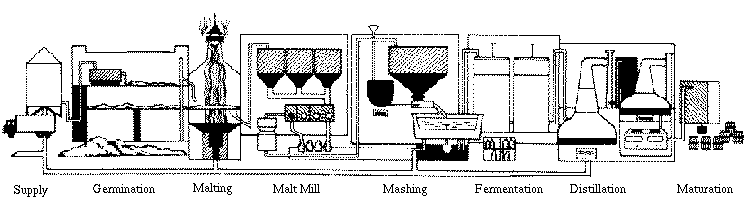
The production process of scotch whisky is surprisingly simple. It involves malting, mashing, fermentation, distillation and maturation.

1) Malting - the process of turning barley into malt, very similar to the early stages of making beer. Barley is soaked or “steeped” in water, drained, then spread out on the malting floor to germinate. During the germination process (generally 6 or 7 days), enzymes are released which convert the starches into maltose, a sugar. At this point, the malted barley is dried using the smoke from an underground furnace called a “kiln.” The fire for the furnace is often stoked with peat which is why you’ll hear scotch drinkers refer to a smoky peat flavor in many whiskies.

2) Mashing - the dried malt is then ground into a course flour with the consistency of oatmeal, called “grist.” The grist is then mixed with hot water and pumped into a vessel called a “mash tun.” In the mash tun, the water and ground malt is thoroughly mixed and allowed to steep so that the sugars in the malt are released into liquid. This sugary liquid is called “wort.”

3) Fermentation – The wort is then drawn off and pumped into large wooden or steel vessels called “washbacks.” Once there, it is combined with yeast and allowed to ferment. The length of fermentation can be different depending on the environment, but it generally takes about two days. “The living yeast feeds on the sugars, producing alcohol and small quantities of other compounds known as congeners, which contribute to the flavour of the whisky,”4. The resulting liquid is anywhere from 5-8% alcohol by volume and is called “wash.”

4) Distillation – The wash is distilled twice (single malt in a pot still, grain whisky in a Coffey still). The first still is the wash still and is used to separate the water from the alcohol by boiling the wash, collecting the evaporated alcohol which condenses at the top and collecting it in a condenser. The resulting liquid is called “low wine” and is approximately 20% alcohol by volume.

The low wine is then sent through the second still, also called the “spirit still.” This process is slower and the climate must be very closely monitored. “The stillman discards the first part of the distillate, called “foreshots” and the last part known as “feints,” because these contain unpleasant higher alcohols. The centre part of the distillation is preserved and this is the whisky we drink. This spirit is colorless and gets its color during maturing in oak barrels.”5

5) Maturation – The unfinished scotch is then placed in oak barrels, or casks, for the maturation process to begin. Throughout the maturation the whisky becomes much smoother, increases in flavor and begins to retain the golden color of the barrels inside which it rests. Traditionally second-hand sherry barrels were used to age whisky, but today bourbon barrels are also common. Some producers experiment with other varieties including port, beer, cognac and even wine. Each barrel passes on a distinct flavor to its contents.

In order to be considered “scotch” is must be aged in Scotland for at least three years. Though each whisky reaches its maturation at different ages, most are now aged anywhere from 8-20 years. Many feel that the longer a scotch is aged the smoother and more flavorful it becomes – old whiskies are also more rare and cost a quite a bit more. For example, a quick internet search brings up a bottle of Highland Park Single Malt Scotch 25 Year Old going for $239.

Geography – The Scotch Regions and Their Distilleries

scotch-map

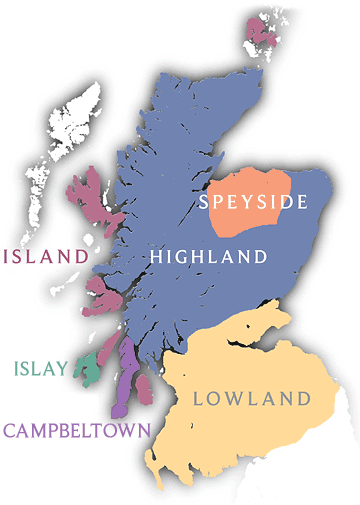
Just as in the wine world, where names like Napa Valley, Burgundy or Rioja tell someone not just where a wine is made, but what to expect as far as variety and flavor, scotch whisky has its own geographic intricacies.

“With there-newed appreciation of the variabilty of single malt brands there isnew appreciation of thegeographic guidestars that explain (insurprisingly intuitive way)why asingle malt like Talisker has a sharpsaltinessin the flavor, whySpeyside whiskies like Glenfiddich have a light,sweet characteristic, why a Campbeltown whisky like Springbank is different from a whisky one peninsula to the north on the serrated coast, and why an open bottle ofIslay whiskysmells likeyour carpeting is on fire.” - Chris Cloud, cloudtravel.com

  • Lowland - the whisky of this region is generally considered to be more mild, mellow and delicate. The three distilleries in operation include: Glenkinchie, Bladnoch and Auchentoshan.
  • Highland - the largest geographic region for scotch includes well-known distilleries such as: Dalmore, Glenmorangie, Oban, Talisker and Dalwhinnie.
  • Islay - known for heavier, more smoky scotch varieties, it has eight distilleries, each with their own unique character including: Ardbeg, Bowmore and Laphroaig to name a few.
  • Speyside - adjacent to the River Spey, the area with the largest number of distilleries to include: Glenfiddich, Aberlour, The Glenlivet and The Macallan.
  • Campbeltown - the smallest of the whisky producing regions, once home to several distilleries, but now only home to three: Glengyle, Glen Scotia and Springbank

For a nice map displaying all the various distilleries throughout Scotland see http://www.scotlandwhisky.com/distilleries/

Drinking Scotch Whisky

drinkingscotch

So, enough about all of the details on the where and the how – they don’t mean a whole lot unless you get to enjoy the final product. The drinking of scotch whisky should be enjoyable, not intimidating. Everyone has their own opinions on how to drink scotch, but the following are some general guidelines on the proper way to enjoy this storied spirit.

tulip-glassGlass – While there’s nothing wrong with using a standard tumbler, many scotch experts recommend using a tulip-shaped glass which allows the whisky to be swirled without spilling and, more importantly, concentrates the aromas at the neck of the glass. As I’ve discovered during my own searches, these glasses are sometimes a bit difficult to find. The following are some great options for those not wanting to waste time searching high and low: Here AND here AND finally here.

Water - Some scotch novices may sneer at the introduction of a small splash of water as not, “manning up,” but they would be both stupid and mistaken. While water is not a must, many scotchmen will throw a little water in with their scotch to help enhance their ability to taste the individual flavors that can often be masked by the well-known “burn.”

Ice – Many like to add ice, but it is generally considered poor form, simply because it lowers the temperature of the whisky, which in turn can hide or dull the flavors and aroma. If you really want ice, no problem, but definitely try it without sometime – you may be pleasantly surprised.

Your First Bottle of Scotch

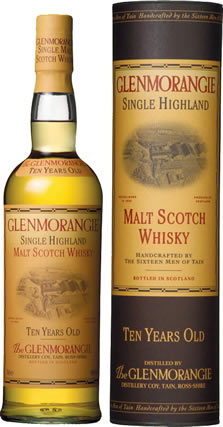
glenmorangie-single-malt-10-years

For many of us young men, buying our first bottle of scotch can be a tough decision. The price is a bit higher than other spirits so we worry about choosing poorly. I have no doubt that there are as many opinions regarding a good “starter Scotch” as there are bottles of whisky (please leave your suggestions below), but for those wanting a recommendation, I would point them to my first, a bottle of Glenmorangie 10yr. And apparently the experts concur.

While Glenfiddich and The Glenlivet tend to be the most widely enjoyed, Glenmorangie is said to be the most popular among the Scottish themselves. Established in 1843, the Sixteen Men of Tain perfected this single malt scotch whisky using their own Tarlogie Springs mineral water. Matured in bourbon oak casks, Glenmorangie is a light, sweet scotch. Though I am still learning to “taste” scotch, new flavors seem to come out each time, including – honey, almond, and some various citrusy flavors.

In the end it doesn’t matter so much which bottle you decide to buy, the key is trying all kinds of scotch and expanding your pallet. Each new bottle should give you its own unique education. Don’t worry if your first try with scotch isn’t love at first taste. As mentioned above, it’s a taste that must be developed. In my own experience, each subsequent tasting made the whole affair much more enjoyable.

Finally, many men get confused on the issue of whether it should be rendered “whisky” or “whiskey.” Here’s a clever poem from the Bard of Banff, Stanley Bruce, to help you remember how to spell the word and what to look for when shopping for an authentic bottle of scotch.

Whisky or Whiskey

A Scotsman who spells
Whisky with a n ‘e’,
should be hand cuffed
and thrown head first in the Dee,

In the USA and Ireland,
it’s spelt with an ‘e’
but in Scotland
it’s real ‘Whisky’.

So if you see Whisky
and it has an ‘e’,
only take it,
if you get it for free!

For the name is not the same
and it never will be,
a dram is only a real dram,
from a bottle of ‘Scotch Whisky’.

So what did I miss? Which bottle is your favorite? When it comes to scotch there are millions of opinions so let’s hear yours!

Resources:

http://www.scotchhunter.com/cgi-bin/cp-app.cgi

http://www.whisky.com/history.html

http://www.lochlomonddistillery.com/history-of-scotch.htm

http://www.isleofjura.com/

http://www.sgoc.de/making.html

http://www.scotlandwhisky.com

http://radio.weblogs.com/0117154/stories/2003/11/15/theGeographyOfScotchWhisky.html

http://en.wikipedia.org/wiki/Scotch_whisky

For info on other varieties of whiskey (that’s with an e) check out Primer’s Guide to Whiskey.

  1. whisky.com []
  2. Loch Lomond Distillers []
  3. Wikipedia []
  4. scotlandwhisky.com []
  5. Michael Moss, “Scotch Whisky” []

{ 32 trackbacks }

Topics about Names » Archive » The Art of Manliness Guide to Scotch Whisky
April 5, 2009 at 6:57 pm
Topics about Culture » The Art of Manliness Guide to Scotch Whisky
April 5, 2009 at 6:58 pm
Topics about Climate » Archive » The Art of Manliness Guide to Scotch Whisky
April 5, 2009 at 7:26 pm
Topics about Education » The Art of Manliness Guide to Scotch Whisky
April 5, 2009 at 7:30 pm
All the information in the world » The Art of Manliness Guide to Scotch Whisky | The Art of Manliness
April 6, 2009 at 4:47 am
Art » The Art of Manliness Guide to Scotch Whisky | The Art of Manliness
April 6, 2009 at 5:30 am
Weekend Wrap #58: UNC Champs Edition — Tailgating Ideas
April 6, 2009 at 11:24 pm
Scotch Whisky Guide — Matt Mullenweg
April 8, 2009 at 3:52 pm
The ScotsCare Blog » Blog Archive » What’s in a name?
April 9, 2009 at 3:07 am
links for 2009-04-09 | The Naturalself
April 9, 2009 at 4:00 am
Remember: When It Comes To Scotch Whisky, It's All About The "e" » Literal Barrage
April 9, 2009 at 6:21 am
The Art of Manliness Guide to Scotch Whisky | BeerCalories.Info
April 9, 2009 at 8:13 am
chuck.latournous.com » Blog Archiv » The ‘Art of Manliness’ Guide to Scotch Whisky
April 9, 2009 at 10:18 am
links for 2009-04-09 » Alex Jones
April 9, 2009 at 3:01 pm
The Weekender: April 10 : i tell stories
April 10, 2009 at 4:11 am
Holiday At The Sea » The Weekly Town Crier
April 10, 2009 at 5:38 am
Matt: Scotch Whisky Guide | Aslifm Blogu
April 13, 2009 at 4:12 am
Beyond Your Borders – Experiencing the World | The Art of Manliness
April 14, 2009 at 6:20 pm
A review of deific nectar. | David Sley
April 15, 2009 at 7:19 am
My Time in Scotland - Page 2 - TeakDoor.com - The Thailand Forum
April 22, 2009 at 7:55 pm
Henry Alley » Single malt Scotch
May 4, 2009 at 5:09 am
ramz » Blog Archive » Guide to Scotch
May 21, 2009 at 8:18 am
5 Classic Cocktails Every Man Should Know | The Art of Manliness
June 1, 2009 at 5:47 am
Aprender a ser un hombre hecho y derecho | Enterate de Esto
June 29, 2009 at 1:15 am
journal » The Art of Manliness: Guide to Scotch Whiskey
July 9, 2009 at 1:49 pm
linkfeedr » Blog Archive » Scotch Whisky Guide - RSS Indexer (beta)
July 14, 2009 at 4:43 pm
linkfeedr » Blog Archive » Matt: Scotch Whisky Guide - RSS Indexer (beta)
July 15, 2009 at 12:07 am
Brits Lay Claim To Creating Haggis—Scots Fight Back « Culture of Life News
August 2, 2009 at 9:21 pm
links for 2009-04-06 | the markfr ditherings
September 9, 2009 at 6:11 pm
Daily Digest for 2009-04-06 | the markfr ditherings
September 9, 2009 at 6:12 pm
fix the credit
October 12, 2009 at 1:06 pm
An Introduction to Scotch Whisky | Primer
October 25, 2009 at 9:06 pm

{ 80 comments… read them below or add one }

1 Elaine W Krause April 8, 2009 at 9:03 pm

SO, if you’re unlucky at cards, but of a discerning palate, where’s the loss? My hat’s off to you, sir. You covered most of the major points — though I’d've preferred more info about the differences between the regions; or how, perhaps, to start a modest “starter” collection.

In any event, I care not your politics or ethnic lineage. If you are for it, you’re my friend for life.

However, a wee note of clarification — the feminine gender can surely enjoy a wee dram along with ‘ye from time to time?

Elaine

2 Jacoba April 8, 2009 at 11:58 pm

This has to be the best post/article on Scotch Whisky that I have ever read in my life! I’m really impressed and even though I’m not male, I will quietly enjoy this site from ‘this day forward’.
You won’t even notice me ……

PS – I think your writing style is great and I wouldn’t pay too much attention to the negative comments.

3 Promosi April 9, 2009 at 2:30 am

Scotch Whisky vs Scotch Milk

Which better ?

4 Stephen M. April 9, 2009 at 8:56 am

Someone above mentioned an everyday whisky, and I agree, there should be (unless you have way too much drinkable income) a difference. My regular drinker is Dewar’s White Label. It’s a blend, none too fancy, and tastes a darn sight better than JW Black. As for special occasions, I love The Singleton 12yr, can’t be beat.

5 Ron April 9, 2009 at 10:08 am

Maybe it’s about time I tried Scotch Whisky. Very Interesting post.

6 sean808080 April 9, 2009 at 12:19 pm

Having discovered Mcallan 12 I have not tried any others since I was so taken with the smooth flavor. This article is inspiring me to try new ones. Cheers!

sean808080
http://sean808080.com

7 DMG April 9, 2009 at 9:20 pm

replace aquae vitae with “uisge beath” please the correct Scot’s term

8 Robert April 10, 2009 at 5:55 am

Good primer article. My go-to is Lagavulin 16 yr.

9 Smiler April 10, 2009 at 2:36 pm

uisge beatha was the Scotish Gaelic and uisce beatha is the Irish Gaelic from which whisky/whiskey comes from.

10 Dascamel April 10, 2009 at 9:47 pm

My .02

As a liquor store owner I have sampled about 90% of the liquor, beer and wine in my store. Scotch is not a big seller in my area, southern Illinois. My advice on if you should try scotch is how you like Jack Daniels. JD seems to be have a taste similar to most scotchs. Bourbon and Canadian whiskey have a very different taste from scotch, rye is not to far off. Also the idea to try some blended scotch first is very good, most blended scotch is a little smoother and will have a more stable taste from bottle to bottle.

11 Kyle April 11, 2009 at 10:21 am

I would think it would be good to mention the wisdom of looking at smaller distillers’ products when discussing Highland, as I’ve always found the larger ones to be on the short end when it comes to their work.

If nothing else, Edradour should never be left out of any such discussion, as it’s one of the finest things ever produced by mankind.

12 Blogging Guy Jacob Duchaine April 11, 2009 at 6:36 pm

I’m not sure if you’ve seen it, but there’s a Scotch named “Inver House Very Rare Scotch Whisky” that sells for $10.50 in parts of America.

Is that a real Scotch, or is it some sort of fake?

Whatever the case, I rather enjoy it. I’ve never had better scotch, but I find even this cheap version quite pleasant.

13 Adam Snider April 13, 2009 at 7:27 am

@Dascamel – I find it odd that you’d say rye isn’t far off from scotch (and also that you seem to make a distinction between rye whisky and Canadian whisky when, with rare exception, Canadian whisky is always rye). I’ve tasted my share of both Canadian and Scotch whisky and I don’t see much in the way of similarities between scotch and rye. They’re both good, but they’re very different beasts, at least in my mind.

14 Dascamel April 13, 2009 at 9:18 am

@Adam Snider
I should have elaborated a little more on the rye part. I was speaking about straight rye or at least 80% rye whiskey. The comment about rye vs Canadian is an old time discussion, as Canada does not require a specific amount of rye in the whiskey to call it rye. Where America as specific requirements to call bourbon-bourbon or even sour mash. While Canadian whiskey has almost always used rye in their mash/mix, as of the last 30 years the majority of whiskeys distilled in North America uses a mash due to the new ongoing distillation process.

Single malt rye or small batch rye has a similar spicy(?) or active flavor that single malt scotch has. Also when you drink rye you drink it almost the same as scotch; straight, a little water or even a little dash of soda.

Last but not least I am not saying rye whiskey or even Jack Daniels is a exact comparison to Scotch in general. But Bourbon and in my opinion Canadian whiskeys have no comparison to scotch, so if you are looking to “see” if you would like scotch you go to whiskeys that are available and are popular/inexpensive.

15 Богдан April 27, 2009 at 5:01 am

My first bottle was The Singleton 12 yr, which is wonderfully smooth and not too heavy. Great for starters. Someday, I hope to try Laphroaig which I hear has a huge smoky, peaty flavor…

16 Glengoyne Single Malt Whisky April 28, 2009 at 5:39 am

Those of you who find the peated whiskies too strong might be interested in our range of Unpeated Single Malt Whiskies, which omit peat smoke from the process (we dry our barley with warm air) and hence have a smoother and more subtle taste.

17 James May 3, 2009 at 9:22 pm

Nice article. I recently started drinking Scotch. I started with The MacAllan 12 and I liked it right away. In fact, I the first time I tried it my wife was laughing because I kept saying how good it was. Seriously, I couldn’t believe how good this stuff was because I don’t like beer or wine or bourben, but I now love Scotch. I guess I have expensive taste. hahaha. I also tried The MacAllan 18. Very good Scotch but frankly I don’t see the difference between it and the 12. In fact the 12 seems to be a bit sweeter. At any rate, I love the complexity of flavor and the sweet finish. I’ve never been so enthusiastic about a drink. I just finished my bottle of Macallan 18 tonight so I’ll try another flavor from the article. Well done.

18 seo May 28, 2009 at 11:44 pm

It is one of favourite drinks of Johnny Depp…

19 ChuenSeng June 17, 2009 at 7:38 am

Great post on single malts. I have always enjoyed the taste offered by scotch whisky. My personal high point regarding whiskey would be the time when I tasted a 30yr old Single Malt Laphroaig. Totally something out of this world and was simply amazing! Truly a class of its own.

20 R. J. Vincent July 16, 2009 at 10:42 pm

I enjoy a sip of the Glenlivet from time to time. It’s good for what ails me. I can vouch for the adding of a bit of water from an episode of “Modern Marvels” that looked at distilling and the show visited some of the distilleries in Scotland. The gentleman who explained how to properly enjoy single malt scotch (a distillery exec, I think) also said that a little water opens up the flavor and makes it even more enjoyable. Great article.

21 Michael August 5, 2009 at 12:46 am

My short list of great entry-level scotches: Oban, Talisker, Lagavulin, Caol Ila. The Caol Ila is a bit smokey for the entry-level list, but is truly delicious. If you want to lay out a little more, the Glenmorangie “Nectar D’Or” or the Distiller’s Edition Caol Ila are really interesting variations. Beyond that, it’s up to you!

The sense I get is that most first-time scotch drinkers get turned off by the burn. My advice is to start with a good, strongly flavorful scotch (like Talisker) and mix in (filtered!) water until you find it palatable. It’s actually quite good like that and there’s nothing shameful about it. Eventually you’ll find yourself wanting it a bit stronger and a bit more — and even starting to enjoy just the hint of a burn. Remember though, that wiith many scotches, even some of the best, they remain better with a touch of water.

There’s actually chemistry behind this — many of the chemicals responsible for flavor are aromatic oils. They can only dissolve above a certain alcohol content. Dissolved they can remain in the liquid forever, so the flavor does not change. However, by adding a bit of water you get them to drop out of solution making a more aromatic and flavorful drink. (This is the same reason Absinthe and fresh Limoncello will louche.)

So the next time someone scoffs at you for putting some water in your scotch, remember your manliness is not only backed up by tradition but by science. Leave the blustering and the burn to the children.

22 Michael B August 5, 2009 at 11:07 am

My short list of great entry-level scotches: Oban, Talisker, Lagavulin, Caol Ila. The Caol Ila is a bit smokey for the entry-level list, but is truly delicious. If you want to lay out a little more, the Glenmorangie “Nectar D’Or” or the Distiller’s Edition Caol Ila are really interesting variations.

The sense I get is that most first-time scotch drinkers get turned off by the burn. My advice is to start with a good, strongly flavorful scotch (like Talisker) and mix in (filtered!) water until you find it palatable. It’s actually quite good like that and there’s nothing shameful about it. Eventually you’ll find yourself wanting it a bit stronger and a bit more — and even starting to enjoy just the hint of a burn. Remember though, that wiith many scotches, even some of the best, they remain better with a touch of water.

There’s actually chemistry behind this — many of the chemicals responsible for flavor are aromatic oils. They can only dissolve above a certain alcohol content. Dissolved they can remain in the liquid forever, so the flavor does not change. However, by adding a bit of water you get them to drop out of solution making a more aromatic and flavorful drink. (This is the same reason Absinthe and fresh Limoncello will louche.)

So the next time someone scoffs at you for putting some water in your scotch, remember your manliness is not only backed up by tradition but by science. Leave the blustering and the burn to the children.

23 Jason Murray August 11, 2009 at 10:29 am

Glenmorangie 10 year is a wonderful simple whisky and a great one to introduce someone to whisky. It needs a little water to take the bite out. The flavor is very gentle but complex. There are subtle hints of oak and a little nutty hint. the main flavor is of citrus fruits. A great first whisky and a long time favorite.

24 Neil Hess August 22, 2009 at 2:21 am

Glenmorangie is light amber in colour and when you swish it around in your glass,you can watch how it leaves a thin film of whisky around your glass before it falls back down to the bottom.The smell is lovely and has a subtle scent of barley.It has a taste which is light on the palate but warming to the spirit.It is a great whisky. http://www.royalhabanos.com

25 Abe September 3, 2009 at 1:09 am

My first bottle of scotch was Glenlivet 12 yr. old. I received it as a gift. Once I poured a shot into a large snifter glass, I thought to myself, scotch really is delicious.
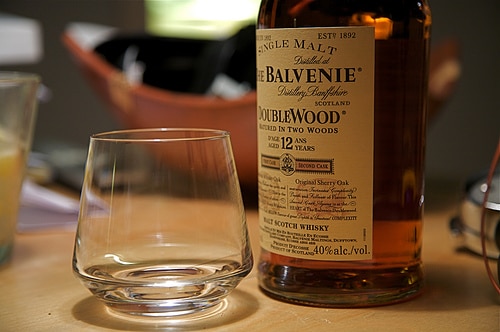
I am now through my 4th bottle of Glenlivet; just love the wonderful aromatic smell and taste. Recently I tried Balvenie 12 yr old Doublewood and I must say it is outstanding. The Glenlivet 18 yr. old I would also highly recommend to those who don’t mind spending a few bucks. But this drink is a dream!

26 Kingstrum September 13, 2009 at 12:21 am

Good information on drawing out some of the mystery surrounding such a long-loved, yet underappreciated, drink.

After 20+ years of enjoying many fine single malts — including a 30-yo Glenfiddich — I have to say that they all have a bit of unique character that enables one to select based on mood, occasion, personal taste, etc. Just as Bourbons have a nice range of flavors to suit many differing palates…hard to go wrong with a good bit of Jim Beam and an icy Coke on a hot day.

For my money though, the best “day-to-day” single malt remains the 15-yo Glenfiddich Solera Reserve (+1 to @Bill for the earlier mention). Other very fine whiskies have sat on my shelf, but that particular brand and age always seems to be what calls me back like a siren song. Price can vary widely, but can usually be had for under $50 in most locales.

As for the perceived “sin” of watering one’s whisky: keep in my mind that a lot of the nay-sayers are either beginners who don’t know any better or old hands that don’t want to appear weak. Always try something new as unadulterated as possible to find out where your palate lies, but never be afraid to experiment. However, the pairing a single malt with a slice of pineapple — or really, any fruit, nut, berry, olive, onion, or paper umbrella — should be grounds for eviction from this planet directly into the sun.

27 William Jones September 18, 2009 at 3:52 pm

Today Glenfiddich is the bestselling malt whisky worldwide. And that is justified! In 1963 the Grant Family were the very first distillers who dared to sell its malt whisky outside of Scotland, and for their enterprise they reaped both derision, Montecristo cigars and contempt from their competitors and fellow distillers. The taste of a malt was considered to be far too rough and unsubtle to expect it to appeal to an English or continental palate.

28 Robbo September 26, 2009 at 1:47 am

My first bottle of scotch was a 12-yo Haig. My father bought it for me on the day I was born for us to enjoy when I turned 20 (the legal drinking age at the time I was born.) I’ve since tried a Grants Blended Scotch Whisky and I recently opened a bottle of Glenfiddich 12-yo which was a gift from a friend. The Haig is Does anyone know much about the Haig distillery? The bottle tells me that it comes from Markinch, Scotland but I don’t know much apart from that. I’m curious because my namesake is on the bottle (although in a different spelling.) I haven’t seen another Haig Whisky since finishing the first and will certainly jump at the chance to try it again.

29 Cedrik October 14, 2009 at 10:54 pm

I’ve gotta say I tried a few scotch whisky now and I can affirm that I now have a fetish region for my whisky selection. I, as almost everyone, started of with a Glenfiddich and apreciated it. It opened a door to a new world of discoveries, where my taste buds can go nuts every time I sip off a dram of this golden nectar. While having started with softer scotch I have bought some really tough ones too (Aberlour A’bunadh 60.2%) and found them to be less attractive than smoother, smokier whiskies I previously had (Caol Ila 10yo, Talisker 12yo, Bowmore 12yo, GlenDronach 10yo) Anyway nobody can judge someone’s taste for a drink, not even if it’s a guy sipping on a vodka-cranberry with a straw XD

30 two-bit cowboy October 28, 2009 at 4:28 pm

Terrific article. Very neat that the ladies acknowledge it, too. I’ve met as many lady malt lovers as men.

Thank you, Michael @ 21, for the chemistry explanation.

Kyle @ 11: Edradour, absolutely! It’ll turn the heads of lovers of The Macallan 12 year old.

Bunnahabhain 12 and 18 year olds are wonderful. Highland Park, too. If you want a really mild single malt, try Scapa 14 year old or Tullibardine 1993. Want to try a smoke/peat dream dram? Ardbeg Uigeadail or The BenRiach 10 year old Curiositas. An unpeated Speyside other than those mentioned — The Glenrothes, either Select Reserve or one of the more costly vintages. Old Pulteney 12 year old is another terrific starter whisky, or a daily dram.

Leave a Comment

Previous post: The Art of Manliness Weekly Roundup: Twitter Edition

Next post: 7 Exercises to Make You Look and Feel Like a Man

Mens Blogs - BlogCatalog Blog Directory <