



Manvotional #5: “Invictus” by William Ernest Henley
Email This Post To A Friend
If you're new to The Art of Manliness, you may want to sign up for a daily dose of manliness either by email or by RSS. You may also want to check out our free e-book on how to be a gentleman in 2008. Thanks for visiting and don't forget to man up!

We all face challenges in our lives. What separates men of character from spineless wieners is the way they face those challenges. In the poem “Invictus,” British poet William Ernest Henley describes how a man should respond to challenges. “Invictus” is Latin for “unconquerable.” Every man should have an unconquerable spirit. When life kicks you in the gut, get back up and kick life’s butt.
The poet himself had the unconquerable spirit which he wrote about. When he was 12, Henley developed tuberculous in the bone. He had to have his leg amputated to the knee and doctors told him he would have to have the other one amputated if he were to survive. Henley told the docs that they were full of hogwash and let them amputate just one leg. He ended up keeping the other. He led an active life with one leg and had a successful career as a poet and literary critic. Henley was truly the captain of his soul.
“Invictus” by William Ernest Henley
Out of the night that covers me,
Black as the Pit from pole to pole,
I thank whatever gods may be
For my unconquerable soul.In the fell clutch of circumstance
I have not winced nor cried aloud.
Under the bludgeonings of chance
My head is bloody, but unbowed.Beyond this place of wrath and tears
Looms but the horror of the shade,
And yet the menace of the years
Finds, and shall find me, unafraid.It matters not how strait the gate,
How charged with punishments the scroll,
I am the master of my fate;
I am the captain of my soul.


.jpg)


To put all my thoughts into one word would most likely be…insperational. Sorry for the spelling I am still in school :P.
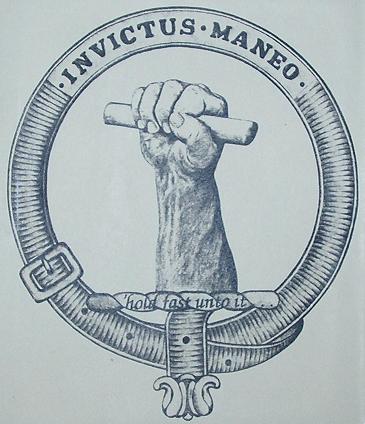
This is also the motto of the Scottish clan ‘Armstrong’. My brothers and I all have tattoos with “Invictus Maneo” in them.
Brilliant!
Inspirational!
Wonderful!
I shall print this, memorise it, and keep it with me forever.
Thank you.
A monumental bit of literary motivation and one that should be keep in a motivational book. I keep one and I suggest that others do the same. Something about flipping through pages rather than clicking through bookmarks.
One of my favorite poems of all time. I had to memorize it for one of my high school lit classes and it’s still with me.
Short and powerful. I think this may be favorite entry yet. Thanks.
I’m glad to see you all have enjoyed the poem. It’s definitely powerful.
You are from Oklahoma I gather, you know this was Timothy McVeigh’s final words?
@PVW - I would hope that these words would ring true to the human soul beyond the tarnish that a single person placed upon them by their choice of ‘final words’.
Oh i still love the poem. I just wanted to know if he knew or not!
@PVW -
I didn’t know that.
Exactly what I need this morning.
I’ve got to admit, every time I see “Invictus” I think of Oklahoma City because this was Timmy McVeigh’s final statement. I remember seeing that in the news years ago, and always stuck in my mind. The coward couldn’t even write his own final words.
great poem, I actually just read this for the first time last night while reading the Dangerous Book for Boys.
@Robert -
See I knew I wasn’t alone.
What is sad is that this poem was Timothy McVeigh’s last written words after his trial.
hey look at that, its probably good to read all the comments before you repeat what someone else Just said. Ha
(McVeigh) “The coward couldn’t even write his own final words.”
It reminds me of John Wilkes Booth. JWB was desperate to be a nationalist hero who was striking against tyranny. However, as JWB died, he muttered “…useless….useless…” because he realized his murderous actions were for naught, and the public was refusing to go along with him.
Which actually sets him apart from McVeigh, because he realized his personal mythology was all an illusion during his final days. McVeigh never achieved such insight, and died within the confines of his tiny head, and his tiny soul.
A real man who was also a good Christian wrote this answer to Henley’s poem about a hundred years ago:
The Soul’s Captain
An Answer to “Invictus”
Art thou in truth?
Then what of him who bought thee with his blood?
Who plunged into devouring seas
And snatched thee from the flood?
Who bore for all our fallen race
What none but him could bear-
The God who died that man might live
And endless glory share?
Of what avail thy vaunted strength
Apart from his vast might?
Pray that his light may pierce the gloom
That thou mayest see aright.
Men are as bubbles on the wave,
As leaves upon the tree,
Thou, captain of thy soul! Forsooth,
Who gave that place to thee?
Free will is thine-free agency,
To wield for right or wrong;
But thou must answer unto him
To whom all souls belong.
Bend to the dust that “head unbowed,”
Small part of life’s great whole,
And see in him and him alone,
The captain of thy soul.
Orson F. Whitney
I first read this poem when I was in 8th grade. It has stuck with me ever since.
One of my all time favorite poems. Great to see it still rings true. Thanks!
@Shaun van Huyssteen - Take life like a man don’t be a spineless wiener
I am a Christian Man, strong as hell, hard as a rock. I love being a man, and thank my God every day that He made me one. No offense to women, but what man would want to walk around with a pussy, except perhaps a fag?
There is definitely a strong sense of defiant manliness captured by “Invictus”. I so admired the poem that I used the word Invictus as a name of a character in a book I am writing. We need more defiance and less compliance if we are to be true men.
Because I follow Christ, I do not love everything in the poem “Invictus” in that it seems to assume there are many gods, and that man will somehow escape accountability to the True and Living Creator God. Whitney’s “The Soul’s Captain” captures that accountability well.
I enjoy both poems. The key to being a real Christian Man is to realize that follow Christ doesn’t mean you become less Manly, more compliant to people, or certainly more feminine. Read “Why Men Hate Going To Church” and you will see what I mean.