So You Want My Job: Firefighter
Email This Post To A Friend
If you're new to The Art of Manliness, you may want to sign up for a daily dose of manliness either by email or by RSS. You may also want to check out our free e-book on how to be a gentleman in 2008. Thanks for visiting and don't forget to man up!

As a man, you’ll most likely spend more time at work than anywhere else, more time than with your kids or with your wife. You have to choose a job that will make you happy, fulfill you passions, and bring your personal satisfaction.
No boy dreams of growing up to become an office drone, swilling Maalox, buried in paper work, and patronized by an overbearing boss. We dream of being a magician, a spy, a pilot, or an archeologist. Whether you’re a still young man plotting his career path, or a middle-aged guy stuck in a dead end job who’s been imagining making a drastic change, it’s never too late to go for the job you’ve always dreamed about. Therefore, AoM is beginning a new series: “So You Want My Job” We’ll be interviewing men who have the kinds of jobs that other men wish they had and asking them about the reality of their work and for advice on how men can finally become what they always wanted to be when they grew up.
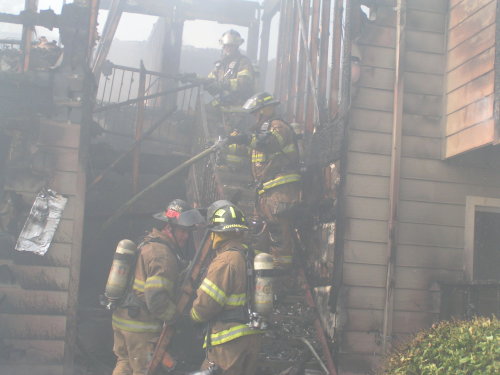
For our first installment, we interviewed Captain Michael Baker, a firefighter, and current Public Information Officer for the Tulsa Fire Department. Many thanks to Capt. Baker for his help!
1. Why do most firefighters decide to become firefighters?
I think that at some point in their life boys want to be firefighters. The thrill of the red lights, siren, and hero factor all plays into the desire. In fact, I think that it may play a strong part in their first few years of employment. Deep down, firefighters are born with a desire to serve the community.
2. If a man wants to be a firefighter, how should he best prepare-education, fitness, ect.
It all starts with the fundamentals- stay in school, be involved in the community, keep out of trouble. Fitness is really related to overall health and a person who takes good care of themselves and has cardio endurance should do well. Education is always a benefit to the firefighter and should be started as early as possible.
3. How competitive is it to get a job as a firefighter?
The level of competition is incredible when seeking employment in the fire service. Our department tests on a regular basis and even getting a chance to take the test is competitive. The main point is to not get discouraged. Just because you do not get hired the first time does not mean your chances are over.
4. Any tips on getting hired?
Be yourself, stay out of trouble, and stay healthy.
5. What sets a candidate apart from others when they’re applying?
An individual with a record of community service, education, and the ability to present information is hard to beat.
6. What is the average salary for a firefighter?
Salaries vary by region. Salary is determined by your rank and any additional certifications that you may have such as Paramedic, HazMat, or Rescue training.
7. What is the best part of the job?
A firefighter is the absolute best profession. The ability to help others and have fun while doing it is priceless. Working in a great station with a great crew cannot be beat. Delivering a service that impacts the community is the number one best part of the job.
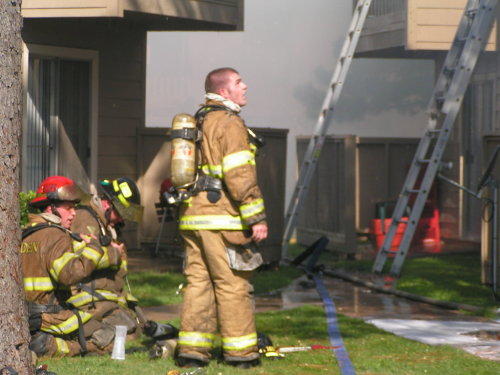
8. What is the worst part of the job?
Dealing with the ugly side of life is the worst part of the job. Death, injuries to children, crime, and poverty are all areas that can impact the firefighters health and well-being. Bureaucracy can also be a factor in your career. Learning to master the politics, like any other job, will make it easier to tolerate.
9. What is the biggest misconception people have about the job?
There are many misconceptions. All are linked to the experience that individuals have had with the fire service. As a firefighter, you are protecting one of the most valued “brands” in the world and you have a legacy of service to maintain.
10. What is the work/family balance like?
Balancing work and family can be a challenge. You can work a variety of hours and be away many nights. The fire service family will support you and help you handle these issues. There are times that you will miss your child’s first steps, but, there will be days that you are at their first school program that 9-5 dads are missing.
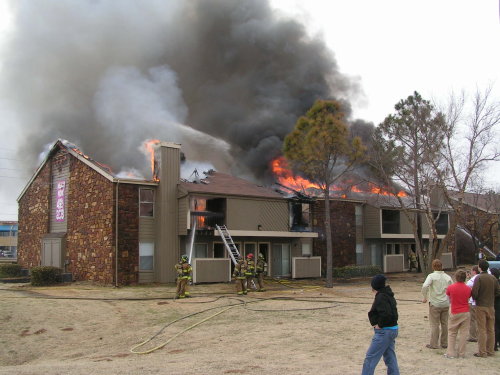
11. Firefighting is a physically rigorous job. What do men do when they get older and are no longer up to the task?
The fire service offers a career path that can take you in many directions. You can work in Public Education, Emergency Medicine, or Training if you need some variety. Many people promote or seek these types of positions when the rigors of station life begin to show. You can also seek promotion and manage fire crews and programs.
12. Are there ways to move-up in the job, or in other words, what is the hierarchy like?
The promotional process is very competitive. The fire service follows a paramilitary type structure and follows structure and order. Testing is the game for each step you take throughout your career. This may be difficult for some to understand, but that is just the way it is in the fire service. The benefit is that you can work your way up through the department with hard work and a desire to lead.
I know there are firefighters out there amongst the AoM readership. What advice do you have to share about being and becoming a firefighter? Drop a line in comments and impart your wisdom to us.
Other Resources to Check Out
So, You Want to Become a Firefighter?
Images provided by Tulsa Fire Department

.jpg)


Great idea for a post, a series of manly job interviews would be awesome
Agreed, this is a really cool series to do. I’m looking forward to it.
Another great article, and I’m sure it will be another great series - keep it up!
What about doing a spot for shark wrestler? If you can’t find one of those, how about crocodile wrestler (that’s almost as cool and manly).
I’ve been a Volunteer Firefighter/EMT-B for just over 3 years now… I asked our Fire Marshal what the best way to get into the fire service was, he told me “become a paramedic”. 97% of your career will be spent on medical calls… its all well and good to be able to put out a fire, but that’s not going to help you when your dealing with someone who’s coding…
In the end, if you volunteer you might find that pretty fulfilling! its ton’s of fun, and you get a great workout!
Good post!
Great article, and great series idea. I plan on becoming a cop after I get my bachelor’s, and I cant wait to read that (inevitable) interview in this series.
Excellent series idea. I wish I thought of it.
I have several firefighters in my extended family and they love their jobs so much - they would do it for nothing. Volunteer firefighters like Damon are heroes in our society. They get A LOT of out it as well, so it’s not 100% altruistic, but no doubt, to put yourself in harm’s way for others is stellar.
Great post.
Another thing you might look into is being a forest fire fighter. My boyfriend does this seasonally through the US Bureau of Land Management. It’s not nearly as competitive as the “structure” (ie: city) firefighting career paths. Furthermore, if you get on the right crew, you can make enough money during the summer months to support yoruself for the rest of the year.
Being a firefighter is a courageous job. I am a Jet fan, so I love firemen.
However, I found out something I thought was interesting. My friend is a cop, and he clued me into something I never thought of. In towns where there are volunteer firefighters, the cops are usually the first ones on the scene. That means they have to enter the building to attempt to save anyone while the volunteers get to the station.
I never realized that before. That is tough. No equipment, no idea when the fire dept. will show up and a bunch of people trapped in a burning building. God bless you guys.
I’d like to add to Julie’s post about becoming a wildland fire fighter, I’ve been a wildland firefighter for the U.S Forest Service for 3 years now and it’s the best job I’ve ever had. I’d recommend being in pretty good cardio shape, as you have to walk through some pretty gnarly country (Hell’s Canyon Idaho was particularly bad). If you’re willing to work harder than you’ve ever worked before but have a good time doing it it’s a great job. Plus, the pay for a 21 day assignment is pretty good even at a starter rate is great, I made $6300 after taxes on my very first fire.
The best advice your young guys wanting to get in is to apply at every department that is testing, take every test and go to every interview. Even if there is no chance you want to work in that city due to distance or wages, you will never go wrong with all the experience you gain from the written tests and taking the board interviews.
I have been in since 1988 and wouldn’t think of ever getting out, best decision I ever made and I get 182 days a year scheduled off. Plenty of time for my family, kids, fishing and my Masonic Lodge, plus the always present OVERTIME PAY!!! Never get tired of those big checks.
I’m a volunteer firefighter and it is very rewarding, although it does stress the family life. Being on call 24/7 is not for everyone, but it is definitely worth it. Just stay in shape and be willing to learn a lot.
I think we can leave the cops out of it. In my life, I was a Military Police for 6 months and I’ve had a few run-ins from the other side. Cops are mostly a pack of macho head trip wankers.
On the other hand, I trained as a fire fighter like all sailors do and faced a shipboard fire. That’s when you need a pair. It ain’t like roughing up a drunk.
I’m a career firefighter; for over 24 years. The fire service has changed a lot since I hired on in 1984. If I were starting over where I work now, I’d get my Paramedic certification/license. Candidates that are medics are hired/interviewed 1st. While you’re going through the training, you do “ride outs” with the ambulances as part of your training. You’ll get a glimpse of the firefighter lifestyle & learn some valuable skills that will be serve you well regardless of what career path you ultimately choose.
I would not change it for the world. Volunteers do it for the community, Not for yhe Patch, Name in the paper or anything else. You go out in Hurricanes, Tornadoes, When it is 20 Degrees and when it is 110. You come in after a 16 hour day at your regular job and spend 6 more hours on a fire or accident scene It is a great job.
This is a great idea for a series!
I’m a lawyer by trade, which presumably is what Brett intends to do with his life also when he graduates law school, so I would be interested to know how he sees that career stacking up with some of the more obviously manly careers in this series.
For my own experience it’s not ‘manly’ in the same clear-cut fashion as fighting fires. When push comes to shove I have to admit I’d rather be stuck in a tight spot with a firefighter, cop or paramedic. But on the other hand I’ve had to develop grit, determination, confidence, dedication and a clear sense of right and wrong in order to do this job effectively and ethically. I ask Brett, is there a space for white-collar careers in this series?
I sent this post to my dad who is a Second Lieutenant on the Brush Fire Truck ( if that means anything to anyone). He said another important part about the education was getting some background with chemicals or chemistry. He also said that some schools are starting to offer Fire Engineering degrees.
Neat!
Are there gonna be more of these? I thought this one was really cool.
@Tommy-
We definitely have some planned for the future. We’ve given the questions to some guys and we’re just waiting to hear back from them. Stay tuned.
piss of ok
do u play runescape add me jake100146 ok thx