




Top

A Health Plan So Easy, Even a Caveman Can Do It
Print This Post Email This Post To A Friend Email This Post To A Friend
September 30, 2008


If you're new to The Art of Manliness, you may want to sign up for a daily dose of manliness either by email or by RSS. You may also want to check out our free e-book on how to be a gentleman in 2008. Thanks for visiting and don't forget to man up!


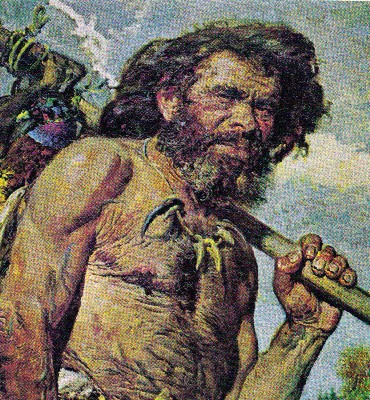
01cromagnanman A Health Plan So Easy, Even a Caveman Can Do It

Editor’s Note: This guest post was by Mike O’Donnell a professional fitness coach and trainer. His blog can be seen at The IF Life

Fred Flintstone is not my idea of a real caveman as he had a car (albeit powered by a foot engine), worked sitting on a dinosaur, and got his food from a drive-thru (we have all seen where the brontosaurus ribs tipped over his car). But if you look at the overall health and fitness of the Paleolithic (or “hunter and gather” period from 10,000 years ago) cavemen, they were all pretty strong, not overweight by today’s standards, and did not suffer from modern degenerative diseases such as diabetes, heart disease, osteoporosis, and cancers.

Most people will argue “Well they had an average shorter life span compared to today,” which actually is true but not for the reasons some think. The key word to look at is “average.”  Living back 10,000 years ago was not a walk in the park. Back then there were higher infant mortality rates, deaths from pregnancy/childbirth stress or complications, and many deaths simply from the overall stress of the climate. And of course, none of these survival hazards were accompanied by the modern medical emergency care that we have today. So many ways, comparing modern man’s life span to caveman life span is comparing apples to oranges

But even if you look at more recent cultures that still followed the hunter-gatherer lifestyle up until the last few centuries, you will see men living longer on average than today’s man and, more importantly, living without high rates of modern degenerative diseases.  Hunter-gatherers simply lived longer, healthier, and more functional lives. So we can definitely learn a thing or two from our old cavemen ancestors. Let’s explore what they did.

Cavemen lifted heavy things

Whether it was getting a log for firewood, using rocks as weapons, building a suitable shelter or just bringing back the animal that they hunted down, life was full of things that were heavy, unstable, and needed to be carried over long distances. Rarely were they picking up neon colored 5lb weights. Their bodies were capable of lifting large objects (or a larger load of smaller objects) and transporting them far.

Caveman sprinted and walked for survival

Survival meant making sure they had something to eat and not being the dinner for something else. While they gathered food they would walk over and around hills searching for plants, nuts, and seeds. When it came time to hunt, they would sneak up on the animal herd and then sprint into action with a spear or rock as their only weapon. If a region was barren of food, then it was time to move the whole tribe somewhere else. A caveman’s life was filled with these brief bursts of intense activity, coupled with a slower, low paced walking/hiking lifestyle. There was no jogging for hours at a time.

Cavemen didn’t do isolated exercises, just full body movements

I’m pretty sure the gym craze and nautilus equipment came long after the caveman period. I don’t think caveman took time out to do some crunches during a hunt or calf-raises on a log. What they did do is move their body the way it was meant to move. That meant pushing objects, pulling things, throwing rocks and spears, climbing or walking up hills, squatting down to pick up something, lunging over and across objects, or lifting items over their head to carry home on their shoulders. Their body was perfectly balanced by natural movements, not by isolating muscles.

There were no running shoes, knee braces, or lifting straps 10,000 years ago

Ever see a lion stretch his hamstrings or tie up his specially made shoes before hunting down dinner? Well that was the same case with our cave guy. They ran barefoot on all surfaces, up and down hills, climbing over rocks and so forth. When they picked something up they didn’t have lifting straps, just their bare hands. As their grip strength increased, so didn’t their whole body strength. Because of these full body movements and the lack of “assistance” equipment, I am sure movement based injuries from daily activity were not something that occurred (unless it was because of a fall or other battle related injury). Now look around today and you will see endless physical therapy clinics, ortho-shoe inserts, and children wearing knees braces. What happened to our natural movements and balance that came from them? Since most modern sports/movement related injuries can be traced to muscle imbalances, maybe it is time to get back to correcting our imbalances first. Cave guy probably didn’t pull his hamstring chasing dinner, yet most modern people are pulling muscles with less strenuous activities.

Cavemen ate natural foods and meats and got plenty of sunshine

Diet is such a huge part of any health, fat loss, or muscle gain. What did our old buddies eat? Well they could have gathered up local vegetables and fruits in season (that would be the summer months). Also they would have eaten nuts and seeds as they found them. When it came to meat, they would eat the whole animal, especially the organs like liver and brain (great sources of vitamins, minerals, and fats). It’s been shown that cavemen actually had larger brains than modern man. Why? Most likely because of their penchant for cracking open animal skulls and supping on their brains, as the brain is mostly fat and a huge source of the essential Omega 3 fatty acid DHA (which is shown to increase brain function). Who knows, if they had never eaten the brains of their kills and developed their own brains in the process, we might still be living in caves painting on walls.

Cavemen didn’t eat every 3 hours and breakfast was not the most important meal of the day

Long ago there were no convenience stores to get a soda or candy bar, no supermarkets to find dinner, and no canned food to keep around for days. I bet if you looked at cave guy he didn’t wake up to have the “most important” meal of the day as his largest meal. Unless there was some meat left over from last night’s hunt, it was time to get back out there and look again. He could eat smaller portions of whatever fruits and nuts he found, but mostly he hunted for the big game. He had plenty of energy, and in fact needed maximum strength and alertness if he was going to outsmart his prey. The largest meal of the day was dinner (not breakfast), when he returned home and shared his kill with the family or tribe. That was a time for celebration and a feast to be enjoyed for hours.

The only big stress was famine and not being eaten by something else

Lifestyle has a big impact on health and the #1 issue of modern life is the chronic stress that many men face daily. Back in the old days there was only the pressure to find food and just plain survive. They had plenty of time for relaxation and didn’t have reports due on Mr. Smith’s desk by noon (another reason Fred Flintstone wasn’t a real caveman). Also there was no artificial light or TV to keep them up late at night, so they got a good night’s sleep. Sure there was stress here and there, but it functioned in the way our body was meant to use it. There’s a reason it’s called the “Fight or Flight” response and not the “All Day Ongoing Stress” system. Used once in a while, the “fight or flight” response is fine; used all the time, stress will keep our bodies in a constant state of breakdown and make us sick. Cavemen had plenty of time to relax, socialize and even play. How does that compare to most of our modern lifestyles?

How to Live like a Caveman in the 21rst Century

Ok, let’s be honest, I’ll be the first to say that I am not about to go live in a cave and give up my laptop, cell phone, and internet. But we can learn what is important in seeing how our bodies were MEANT to move/eat/live for optimal health and fitness. Remember that cavemen didn’t have all the issues of chronic degenerative diseases that we have in epidemic rates today. So we need to take the lessons from the past and apply them to our lives today if we want a chance at healthy aging.

Lift heavy stuff

Not only will you be able to build lean muscle, but you will also get your hormones going for optimal fat loss and muscle building. Keep the weight heavy and the reps low (between 5-10).

Do full body compound exercises with your body or free weights

Forget isolation work for your major lifting movements. Don’t make machines the staple of your workout. Focus first on full body movements like pushups, pull-ups, squats, deadlifts, lunges, and more. Use your body or free weights to stimulate all your major and minor muscles (stabilizers). Make those the base of all your workouts and you will see tremendous results for the whole body. Not only that, you will also lessen you chance of injury down the road as most are usually due to muscular imbalances caused by too many machines and too much isolation work.

Go run/do intervals

We have all seen the evidence that short bursts of high intensity effort can lead to more fat loss. High intensity cardio releases the hormones needed to free up more fatty acids from our fat stores to be burned up. The best workout program will involve some sort of sprinting/interval for a bit, followed by a slower paced activity.

Walk/hike/dance for “lifestyle cardio”

Be like our ancestors and go for a long walk in nature. Pack up the backpack if you want to make it more challenging, like you were moving camp or carrying home dinner. Go find a winding, hilly trail and enjoy just being outside. Leave the iPod at home and let your mind wander and let go of the many things that may be stressing your subconscious. Or just get out with friends and go dancing, a very common and ancient form of human interaction and celebration. But whatever you do, just enjoy it!

Workout naked

Okay, not totally naked, but forget the straps, gloves, braces, and special shoes and inserts. No matter what you’re doing, be as naked as you can be. If you can’t naturally hold a weight, you shouldn’t lift it. If you need special shoes and knee braces, you’re not correcting all the imbalances or improper form in your running. Get Nike Frees or try running barefoot on a grass surface. You’ll quickly find your natural stride. Be a man with a strong grip, a rare phenomena nowadays.

Eat whole natural foods

If it wasn’t around for cavemen, then you shouldn’t be eating it. Stay away from anything that comes in a bag or a box. Fresh vegetables, fruits, nuts, seeds, and meats (with healthy fats) should be the staples of your diet. Take some fish oil (as most of our food is devoid of healthy omega 3s) and you will see improvements in your brain focus and overall health (anti-inflammatory, spares muscle, helps burn fat). If you would like more information, I highly suggest reading The Paleo Diet by Dr Loren Cordain.

Have days of feast and famine

Honestly, the whole diet book industry has done more harm than good with their “you must eat a large breakfast and six times a day” sales pitch. Do we really need a large breakfast? No. Does a large breakfast probably just put you to sleep? Yes. Are we going to starve if we skip a meal? No. Is there any real science to the metabolic advantage of eating six times a day vs three times? No, because in the end people lose weight not with the amount of meals they have but based on their insulin control and calorie deficit. The idea that your metabolism will crash if you don’t eat six times a day is the biggest and most harmful myth out there, mostly pushed by guess who? Supplement companies who make their living selling bars and shakes that you’re “suppossed” to eat six times a day. This is not how we were designed to survive.

Time to get back to the environment in which our bodies were supposed to operate, and become stronger because of it. Integrate your own periods of feast and famine. What does that mean? Maybe you need to take some days off with lighter eating through out the day (less calories). Or you could also fast some days skipping breakfast or longer, but always eating at some point later in the day (this is called IF, or intermittent fasting). It’s also important to add in the feast part and have larger meals (like at dinner) when you have the famine part, as it’s not about starvation. Whatever you choose, your body best responds to a continually changing environment. Optimally you want your largest meals in the hours after your main resistance training workouts for the week, when your body is primed to maximally take in nutrients. Remember if you want to lose weight it still boils down to insulin control and calorie deficit, not how many meals you eat. Personally I have done intermittent fasting for the last couple years and have experienced increased mental clarity, more daily energy, easier stubborn fat loss, more muscle retention on less eating and most importantly I’ve brought the  joy of eating back into my life. (you can read more about why I do IF )

Relax, get outside, get your sleep, go have a beer with buddies, dance, and just enjoy life

If there is too much stress in your life, then your health and well-being will suffer. Stress was only meant for small, infrequent bursts of the “fight or flight” response. Cavemen didn’t have all the imposed work deadlines, traffic, overbooked schedules, and money worries that most people have daily. It’s time to remember what really matters in life and enjoy the company of the people/family around you. Getting plenty of sleep will also help your natural hormonal cycle of repair that occurs during the night. Have a beer, get out and dance, or just go relax with friends. Find what really matters to you in life and learn to enjoy it….I’m sure even Fred Flintstone might agree on that one.

Share and Enjoy: These icons link to social bookmarking sites where readers can share and discover new web pages.
  • Digg
  • del.icio.us
  • Reddit
  • StumbleUpon
  • Netscape

Comments

51 Responses to “A Health Plan So Easy, Even a Caveman Can Do It”

  1. karmazon on September 30th, 2008 7:52 pm

    If man made it don’t eat it. We have developed foods in factories, but our digestive systems are still the same as they were in our cave dwelling days.

  2. Timothy Roy on September 30th, 2008 8:55 pm

    Fantastic post! Great summary of the way to real fitness, and a concise diagnosis of the fitness quackery that permeates the airwaves today.

    Most Americans don’t have the time to spend hours in the gym - so they simply don’t go. And if they did, using those shiny, muscle-isolating machines would only develop aesthetic muscles, not functional muscles.

    For more, I whole-heartedly recommend http://www.crossfit.com, a website with which I suspect the author is familiar. The Crossfit program and the Zone diet are quite compatible with a paleo mindset; it’s fascinating to see the convergence in thinking from different programs.

    Reply - http://www.crossfit.com, a website with which I suspect the author is familiar. The Crossfit program and the Zone diet are quite compatible with a paleo mindset; it\’s fascinating to see the convergence in thinking from different programs.’); return false;”>Quote
  3. auto focus on September 30th, 2008 11:42 pm

    Yeah… and so they lived happily ever after, until the ripe old age of 35.

    There is absolutely no evidence that the cavemen lived a healthy life. Nobody actually lived with them and examined them, so all you have are wild guesses. The only hard evidence we have is their bones, and those generally tell us that they lived short and violent lives. Not very healthy.

    You’re also assuming that the human physiology hasn’t changed in the last 20,000 - 30,000, since the agricultural age. That has to be examined as well.

  4. Eric on September 30th, 2008 11:49 pm

    The brain is not mostly fat. In fact it’s mostly water, I believe in a higher ratio than the rest of the body.

    That Neanderthal brains were larger than ours also meant they needed many more calories in a day. The brain is the largest calorie-sink in a (pseudo-)human body, in addition to the fact that they were far more muscular than we are (or even than physically-modern humans living during Neanderthal times were). 5,000 calories a day minimum, according to the most recent National Geographic. That’s Tour de France-racer calorie intake.

    Other than that though, good post. About a month ago I started exercising using the Shovelglove method, which imitates functional exercise by swinging around a sledgehammer wrapped in a sweater to help keep from damaging things. The whole idea of functional workouts really appeals to me.

  5. Martin on October 1st, 2008 12:01 am

    Given that the live expectancy was somewhere between 16 and 30 years back then (various sources, e.g. http://www.longestlife.com/forever.htm), I’d say your health plan doesn’t sound so good.

  6. Ian B on October 1st, 2008 12:53 am

    OK, there probably some merit in a paleo diet and more outdoor ‘natural’ exercise, but the idea of ’stone age’ types being healthier than a westerner is untenable. People exposed to a ‘natural’ environment are not overly healthy, and I speak as someone who has traveled extensively in the 3rd world. Life in the rough is hard, and without modern health care it is harder again.

    This is not to say that we should sit back and stuff grease burgers into our mouths, we in the west have the benefit of science and technology, which enables us to know how to lead a healthy life, so we have should take advantage of this knowledge. But lets not over romanticize the ‘good old days’. Life was hard, brutal and short.

  7. Ross on October 1st, 2008 2:11 am

    Martin:

    Certainly, cavemen were not nearly as healthy as this article seems to portray, but the life expectancy of early man was not as bad as the commonly stated estimate of 15-30 years. This is because for a huge portion of human history, infant and early child mortality were extremely high. If you look at the life expectancy of all people who survived to their fifth year, it normalizes significantly.

  8. Tom on October 1st, 2008 4:09 am

    Another great article! I’m a little puzzled about the suggestion to eat brains though - after all, if I eat brains, what else am I supposed to tan my deerskins with?

  9. ep on October 1st, 2008 4:39 am

    happy to see CrossFit made the comments, here’s an intro:
    http://www.crossfit.com/journal/library/05_03_Interview_Glassman.pdf

  10. Ken on October 1st, 2008 4:46 am

    Reminds me of a Garrison Keillor story where an old Norwegian farmer visits a niece in the suburbs and asks what those people are doing running around … “Jogging, for exercise.” His response: “Why don’t they WORK?”

    Old-fashioned outdoor WORK (think of Reagan chopping firewood) beats exercise any day.

  11. Joshua on October 1st, 2008 4:50 am

    Actually, recent study into the development of human physiology strongly suggests that humans are adapted to running and jogging great distances.
    Sources:
    http://discovermagazine.com/2006/may/tramps-like-us
    http://www.sciencedaily.com/releases/2004/11/041123163757.htm

  12. Scott Kustes - Modern Forager on October 1st, 2008 5:01 am

    Great post Mike. I think as people try the Paleo lifestyle, they realize that they can’t ignore the wonderful health and well-being that they experience, despite advice that goes against mainstream dogma and stick with it. I can’t think of anything that I’d add to your post from a high-level.

    Martin, you’re wrong. Period. Life expectancy at infancy may have only been 35, but that’s due to high infant mortality and a lifestyle conducive to death from Saber Tooth Tiger. At the turn of the 20th century, only about 80% of children reached age 5. No telling what that number was 50,000 years ago when predators might haul Little Timmy away. As a comparision, life expectancy at the turn of the 20th century was only around 45. We’ve added nearly 70% to that in a century….why? Surgical and sanitation improvements.

    Further, today, we can survive gunshots and knife attacks, car accidents, and falls from height, so long as you are in a relatively well-populated area. Diseases that once killed have been eradicated or reduced to a mere nuisance. Rest assured that it’s medicine and sanitation that have caused the prodigious increase in life expectancy, not actual improvements in lifestyle. I wrote a post disproving this myth long ago if you’d care to see more of the data: Paleolithic Longevity.

    Cheers
    Scott Kustes
    Modern Forager

  13. Israel on October 1st, 2008 5:13 am

    This was well written and very entertaining. You touch on many things that a lot of people, including myself are not educated or mis-educated about.

  14. Robert on October 1st, 2008 5:37 am

    Why is it assumed cavemen (avg life expectancy is normally thought to be ~30) lived healthy lives? Why are we striving for that?

    By the same logic brushing your teeth and regular physicals are bad.

    Likely some good points about fad diets… but I’m not sure I want to look at someone who lived a hard life and mimic that.

    Many homeless people live similar to cavemen did. They have lots of free time (low stress), walk miles a day pushing heavy carts filled with garbage and carrying beverage cans, sleep on the sidewalk mid day, hunt for food (breakfast isn’t their most important meal). Assuming some aren’t on drugs or alcoholics… they live perfectly healthy lives.

  15. Gregory on October 1st, 2008 6:10 am

    While I agree (even though the modern/prehistoric man comparison is purely speculation) with most of your post, I do think that your denigration of breakfast as an important part of one’s diet is leading your readers towards false, unhealthy assumptions. You claim that cavemen didn’t have the “modern medical care,” that we have today, but it is just these doctors and nutritionists who provide it that say eating breakfast can help with brain function, energy, weight loss, and staving off disease. It is not the “supplement companies” who dispense this advice. You seem to confuse the notion of “most important” meal with the “largest.” Of course dinner is the largest. How many families can you think of who sit together and eat breakfast while discussing their upcoming days(they don’t really do it for dinner any more, either, but that’s a different topic altogether)? In today’s hectic, frenzied world, people simply don’t have the time to stake out an hour every morning to prepare breakfast, but eating something on the go is much better than nothing at all. And how can you possibly know that cavemen didn’t leave some food to eat in the morning, rather than go out and hunt for breakfast? They may have been cavemen, but it doesn’t take a modern, educated mind to deduce that if you leave food in a safe part of the cave overnight, it will probably still be there in the morning.

  16. Mike Habeeb on October 1st, 2008 6:11 am

    You raise a few really good points, but you lost me a bit on the “There were no running shoes, knee braces, or lifting straps 10,000 years ago” section. You need to keep in mind the idea of evolution. Now, I’m not sure how many people there were running around 10,000 years ago, and we’ve already determined that people died much more frequently back then, whether it be in childbirth or what have you. Perhaps the REAL reason that cavemen were in good shape was that the weak ones couldn’t survive in that environment. If you were born with a bum knee, you didn’t just “Get over it” and become a great hunter anyway. You would slow down the tribe, they would leave you behind, and you would die alone of starvation before ever reaching adulthood. Today, this isn’t the case. You get kids born with bum legs, and so they get a brace to correct it over time.

    The bit about not wearing shoes is a little sketchy too. Sure, it’s a good idea on the beach and such, but it’s been proven that too much movement on solid surfaces (such as pavement, remember, cavement didn’t have pavement, they lived mostly on dirt and grass) without proper footwear will destroy the arch in your foot and contribute unnecessarily to the breakdown in cartilage in your knees, not to mention contribute to major back problems. Barefoot on the beach and on the grass makes sense, on solid surfaces, not so much.

    I do agree about the lifting straps though, if you can’t lift it unaided, you can’t lift it. Use less weight unaided and it will help build the stabilizer muscles that prevent injuries. The rest of the article, likewise, is excellent. You raise a lot of good points that I think can help a lot of people, and I think you do a good job to dispel the notion of muscle isolation as the best thing since sliced bread. Your muscles aren’t meant to work alone. Isolating each muscle and working it out is like separating the members of a team and having them all practice individually. When it comes time for game day, they will fail.

    Overall, a very good post.

  17. Brandon on October 1st, 2008 6:42 am

    Being an archaeologist I find a few things inaccurate about this article. But the one that mostly jumps out at me is the section on lack of shoes for people 10,000 years ago. “They ran barefoot on all surfaces, up and down hills, climbing over rocks and so forth.” When in fact there are shoes that are older, found in Oregon to be exact (http://www.uoregon.edu/~connolly/FRsandals.htm). 10,920-9650 BP (before present) is the range given for these oldest known examples.

    But on a more general note I found the article to be a overgeneralized take on a stereotyped hunter-gatherer lifestyle (aka caveman) with modern ideas of fitness thrown in. The type caveman existence described is just one example of how people may have survived all those years ago. But what about people living in more arctic conditions? Did they have access to fruits and berries and nuts? There are people who until just a hundred years ago or so existed almost solely off of whale, seal and other marine life in the extreme north.

    I do however agree with the ideas of leaving a healthy lifestyle and getting a balanced workout. I do love running and lifting free weights myself and have seen drastic improvements since I began. But I’m not sure if the caveman analogy can be used as a vehicle for change in our own lifestyles and diets.

  18. Mike Edwards on October 1st, 2008 7:02 am

    So, this sounds very familiar to the “new rules of lifting” when it comes to the types of exercises we should be doing.

    Is there a particular workout regimines that you recommend for cycling through?

  19. Mike OD - IF life on October 1st, 2008 7:53 am

    Thanks for all the comments guys…I’ll try to address as many as I can:

    @ cavemen living short lives - Yes on “average” they did live shorter lives. You have high rates of death during childbirth and infant stages of life. Not too mention the harsh living environments they were in. The point being that rates of degenerative diseases (heart diseases, cancers, osteoporosis, arthritis, etc..) are low to non-existent compared with modern culture today. Also while people may live longer today thanks to more acute/emergency care that prevents death, I don’t call being bed ridden or in a wheelchair taking 10 medications at age 70 my version of living. While people may get older today, they are not as functional and sicker. Lastly if you look at more modern groups of people who stick to their ancestral ways (like the Inuits), they have almost non-existant rates of cancers and heart diseases, and they can also live longer. You also see this with tribes like the Masai and Kitavins who still stick to natural patterns. Once there becomes a large influence of agriculturism and modernization creeps in (or westernization and the processed foods/sugars) you see a huge decline in health and increase in all the degenerative diseases. (here’s a past post I did on the Inuit)
    http://www.theiflife.com/2008/04/13/the-inuit-paradox-high-fat-lower-heart-disease-and-cancer/

    Also here is more information when comparing the health and longevity of Paleolithic to Neolithic people:
    http://www.beyondveg.com/nicholson-w/angel-1984/angel-1984-1a.shtml

    @ running barefoot - it’s probably not practical nowadays, but to think we need more padded running support in our heels is just forcing a wrong running gait. If you want to find a natural stride, run barefoot on grass. You can also wear Nike Frees, Vibram Five Fingers, or other shoes that closely resemble barefoot but still give protection.

    @ the brain mostly water. True in the volume sense, as is the whole body. In terms of makeup especially in relation to when they ate it, it’s 60-70% fat.

    @ workout cycling - Keep your movements mostly compounded with reps 5-10, using free weights (barbells, dumbbells). Whether you superset them or do them straight, keep rest periods short. Honestly there is nothing new in the fitness world as what works best for working out, just people marketing it differently nowadays.

    @ Different Diets - I think you were referring to the Inuit in your comment, as they survived on high intakes of fat/blubber and protein with very little fruits and vegetables…all while having little to no cancer or heart diseases. (which all changed once they modern era of processed foods, soda, and sugar came around for the younger generations who didn’t want to follow in their past traditions). High carb…low carb…high fat….you will see it all with tribes depending on where they are located, but the key factor you will notice with them all is no sugar, no processed foods, little grains, and very low fasting insulin levels (which could possible be the most important factor in our health and longevity).

    In the end the point being, see what true health and movement is….see how the body was meant to function and eat, and then apply to your life for maximum results and longevity. While cavemen led harsher lives and lived shorter on “average”, modern man is sicker and less functional than his prehistoric relative. Having dealt with many young people (who should be in good health in their 30s-40s) suffering from arthritis, obesity, and many other diseases while also on 4-5 medications…I can’t buy into the fact that we are a healthier society today.

  20. Mike OD - IF life on October 1st, 2008 8:06 am

    It’s also interesting to note that Paleo man had access to a wider variety of foods to pick from in it’s natural state which meant he got plenty of essential nutrients, vitamins and minerals from many sources. Also his meat (and the organs he ate from his kills) were high in essential fats, vitamins and minerals. He was not malnutritioned by any means (unless it was a long famine period and starvation set in). Modern man eats so many processed and unnatural foods that have little to no nutritional values (empty calories), that many overweight people are still malnutritioned (from the lack of what their body really needs to be healthy). Also our sources of meat are not coming from their natural state which means lower amounts of vitamins/minerals/essential fats and higher in other things (like pro-inflammatory Omega 6s which come from the grain fed livestocks). Our food is as only as good as the source it comes from, and the more natural the better off we will be.

  21. Bo Pigpusher on October 1st, 2008 9:23 am

    The premise of this article is inherently flawed. Why are cavemen seen as the epitome of health?

    This premise is consistent with the type of politically-correct illogic that espouses the “noble savage” theory of mankind: that we started good and have worked our way evil.

    Brett, I know you didn’t write this, but your website can do better than this.

  22. Mike OD - IF life on October 1st, 2008 9:50 am

    @Bo - The goal is to focus on how our bodies were meant to operate and eat in order to achieve maximum health in today’s world. Our bodies are not designed for processed foods/sugars and isolation exercise movements. Traditional hunter-gather societies have less incidence of all degenerative diseases that are every increasing today at epidemic rates. There is nothing evil about the present day, but our state of health is getting worse. I’m sorry if you can not see the lessons that we need to adopt in order to start helping people get healthy and not sicker, as that is what I do on a daily basis.

  23. Nesagwa on October 1st, 2008 12:41 pm

    Didnt eat sugar?

    All those fruits they gather in the summer are full of the stuff.

  24. Mike OD - IF life on October 1st, 2008 3:15 pm

    @Nes - Yes they did have some natural sugar mostly made of fructose to help replenish liver glycogen storage (along with water and natural fibers that is in fruit) and honey on occasion, but they did not have processed foods sweetened with sugar (or drink juice) that breaks down and gets released into our blood so quickly it creates a large insulin response, which in turn leads to weight gain, increased inflammation and other bad stuff. They also did not have an excess of high fructose corn syrup (seen in many things today from soda, sauces, ketchup and most things processed) which can also overloading the liver leaving fatty deposits and creating obesity and fatty liver diseases. The amount of metabolic dysfunction today because of man made foods is staggering. People who want to lose weight will do well to first clean up what they eat, as the most important fat burning organ you have is your liver.

  25. Michael on October 1st, 2008 6:02 pm

    Bo Pigpusher, it is your argument that is inherently flawed. Out of political bias you are purposefully confusing ethics and morality (noble savage) with biological processes and evolution. Within the constraints of the original article they have nothing to do with one another.

    Paleolithic man is seen as a healthier ideal because they moved (excercised) and ate in accordance with their adaptations to their environment that occurred naturally over tens of thousands of years.

    Each adaptation, whether in diet or biology gave man an advantage in survival. So, by definition it was ideal. It takes many thousands of years to for these adaptions to take place; e.g. some black african in the rift valley didn’t spontaneously give birth to a caucasian. Any alteration by modern man in diet (grains, milk or any other recent addition in the last 10k years) or movement has not had enough time to allow man to adapt to it.

    To eat and move like paleolithic man is ideal because that is the way we are meant to, as proven by hundreds of thousands of years of survival

    As for the arguments of others. Yes, paleolithic man wore shoes, but they were nothing more than strips of leather that allowed natural movement of the feet. They were not wearing cushioned, motion controlling pillows.

    Arctic dwelling, in evolutionary terms, is relatively recent, so they are not germane as an ideal unless you are that ethnicity.

    Some arguers against the thesis of the article fail to understand the difference between average life span and maximum life span with respect to diet and excercise.

    Maximum life span is the amount of time the longest living humans lived. This has not significantly changed over time.

    Average life span is just that, the average. This did not change significantly between paleolithic times and 1920. Since 1920, medical care, sanitation, and a less dangerous environment have drastically increased the average life span.

    So to argue that since average life span was shorter in paleolithic times, it is unwise to eat and move in a similar fashion, misunderstands the causes of their earlier demise.

  26. Bo Pigpusher on October 2nd, 2008 9:02 am

    Hey Michael ….

    Whatever.

  27. James on October 2nd, 2008 11:37 am

    Well done Bo. You certainly are the eloquent one!

  28. Greg on October 3rd, 2008 7:23 am

    “There was no jogging for hours at a time” have you ever heard of persistence hunting?
    Where hunters chase the animals for hours at a time until they drop from exhaustion, then they move in for the kill?
    Some scientists have even theorised that the reason we have such a large achilles tendon is precisely for long-distance running, and we are built for endurance running(Sweat glands,achilles tendon, better developed gluteus maximus then other apes)

  29. Tristan on October 6th, 2008 1:53 am

    Overall, this article is good, but I think you’ve sort of shot yourself in the foot with the faulty logic that because cavemen were more healthy than us, anything a caveman would do is more healthy than what we do. I mean, cavemen also charged at wooly mammoths, I wouldn’t advise people that charging elephants is healthy.
    Any of the things you say in the article could well be true, but you should really explain why they’re better, as opposed to simply appealing to the “cavemen were better” principle.

  30. Dennis G. on October 8th, 2008 7:32 am

    Just wanted to agree with this!
    Crossfit is a great way to do it with Paleo and Zone diet!

    Part of the reason scientist think cave men were healthier has to do with Bone density. They had the same bone density as pro athletes.

    Also as mention earlier weight loss deals with Insulin levels. 25 present of the population have adverse effects to eating grains. Their body reacts with lots of insulin which tells the body to store the excess carbs as fat, which deprives the brain of the carbs it need so then giving you a carb craving putting you in a yo yo type situation.

    But eating veggies, which are carbs, it puts the carbs in the blood slower so you don’t get the spike in insulin.

  31. Constantine on October 11th, 2008 5:40 pm

    I agree with basically everything the author had to say excepting the portion about “working out naked” After more than a decade of organized football playing as a center, a few broken fingers and general wrist problems kind of come with the territory. When I’m deadlifting or doing power/hang cleans I need wrist straps to physically hang onto the bar; not to unnaturally improve my ability or avoid doing the work myself.

  32. Rich on October 13th, 2008 11:09 am

    Jared Diamond has a fantastic article on how the lifestyle of hunter-gatherers compares with societies that have developed agriculture. The basic thesis is that until very recently in human history, hunter-gatherers have typically lead longer, healthier lives than humans in agricultural societies–except for elite members of society or those who live in white-collar, post-industrial societies.

    http://www.environnement.ens.fr/perso/claessen/agriculture/mistake_jared_diamond.pdf

  33. Chris on October 15th, 2008 5:27 pm

    Breakfast is actually as important as they say, especially when it comes to blood sugar and insulin levels. Our bodies’ blood sugar levels increase naturally in the morning hours (believed to be an evolutionary byproduct allowing your caveman to get out of bed and go kill some food), and stabilize after eating. When we go without eating, those higher blood sugar levels can stick around into the early afternoon. Granted, eating four bowls of Cocoa Puffs probably isn’t the way to go, but eating a healthy breakfast is a good thing.

  34. Wylde Brumby on October 30th, 2008 6:02 am

    I think that this concept of “average lifespan” being increased since the 1920s is false. Do abortions count towards calculations of the “average lifespan”?

    Walking on flat surfaces, pavement,etc is like isolation exercises for certain muscle groups. At least Cavemen walked on uneven terrain that promoted all muscles in their feet and legs to work together (Anybody see how walking on flat surfaces for most of your life could put unnatural stresses on you spine?).

  35. Myo on November 1st, 2008 7:54 am

    @karmazon -

    What about caveWOman? Would I be healthier if I were in a state of constant pregnancy and nursing from age 13 until 40? This article seems like just another way to say “Don’t eat junk and exercise more,” which is great advice… but the caveman comparison is just silly. Why would you want to make people reject your message by delivering it in such a controversial way? And breakfast IS important. Kids who eat before school consistently retain more and test better. That has to mean something.

Trackbacks

  1. A Health Plan So Easy, Even a Caveman Can Do It | Paleo Diet | if you do the paleo diet you need supplementing
  2. Natural Therapy » A Health Plan So Easy, Even a Caveman Can Do It
  3. Weight Loss » Blog Archive » A Health Plan So Easy, Even a Caveman Can Do It
  4. Health Advice Guy » Decoding YourHealth
  5. Health Babe » Could Saliva One Day Detect Oral Cancer?
  6. Learn Health Today » Elizabeth Edwards tieshealthcare to economy
  7. Everybodys Health » Could Saliva One Day Detect Oral Cancer?
  8. Health Bread » Minister forHealthand Ageing outlines the Rudd Government s…
  9. Incredible Health » AHealthPlan So Easy, Even a Caveman Can Do It
  10. Wednesday Randomness « Watermark Is Moving West
  11. Health Babe » Healthcare costs still outstrip Floridians’ wages
  12. Health Advice Guy » AHealthPlan So Easy, Even a Caveman Can Do It
  13. A Health Plan So Easy, Even a Caveman Can Do It | backpackingshoes.com
  14. The world according to Joe » Blog Archive » Some funny stuff too
  15. » Blog Archive » The Caveman Workout Plan
  16. How to be healthy & strong the Caveman way - The WebZappr

Got something to say?

Please read our comment policy.


<