





Image by Martin Hartland
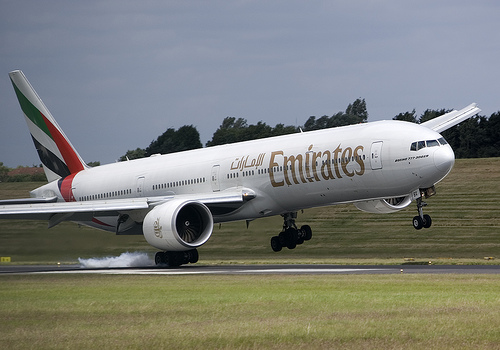
We’ve all had the thought cross our mind while flying, “What if the pilot(s) somehow became incapacitated and I had to land this thing? What would I do?” Or maybe more timely for today’s world, “What if a terrorist takes over the plane and I have to save the day by knocking him out with a Chuck Norris-style thump to the head?”
You’re a hero, boo-yah! But, if the pilot’s unconscious, you may have to get the plane on the ground. Relax, it’s not as hard as it looks and if you follow a few simple steps you’ll be on the ground safely and in one piece for your press conference and hero shots.
Maintain Aircraft Control (Straight and Level)
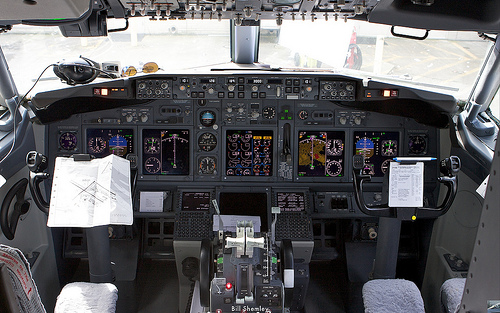
When you first arrive in the cockpit take the left seat if possible, this is generally where the Captain or Aircraft Commander sits and often has easier access to some of the instruments you’ll need to fly. However, the majority of dual seat aircraft can be flown from either side.
As soon as you sit down take a deep breath and look outside to see if the aircraft is in a dive (you see more ground in the windscreen than sky), climb, turn, etc. If it appears to be straight and level then don’t touch the flight controls, the autopilot is most likely on and there’s no need to interfere. If, however, the airplane is racing towards the ground or in a steep turn, then you need to use the stick or yoke (pilot speak for steering wheel) to bring it back to wings level flight. Just like in the video games, you pull back on the yoke to make it climb, push forward to make it descend, and turn it right or left to turn.
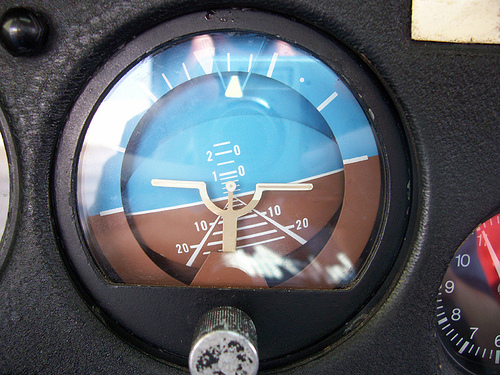
If you are in the clouds and can’t tell the attitude of the aircraft, then it will be necessary to use the attitude indicator, also referred to as the artificial horizon. This is an instrument that gives a representation of the aircraft in relation to the ground and sky. If you’re on a jet of some sort, chances are high that it will be displayed on the screen directly in front of you. The “w” shape in the middle represents the wings of the aircraft, the brown represents ground and the blue represents sky. So if you see half brown, half blue it means you are in level flight which is what you want. If you see anything else, then make corrections with the stick as necessary to line up the wings of the aircraft with the horizon line.
Make a Radio Call

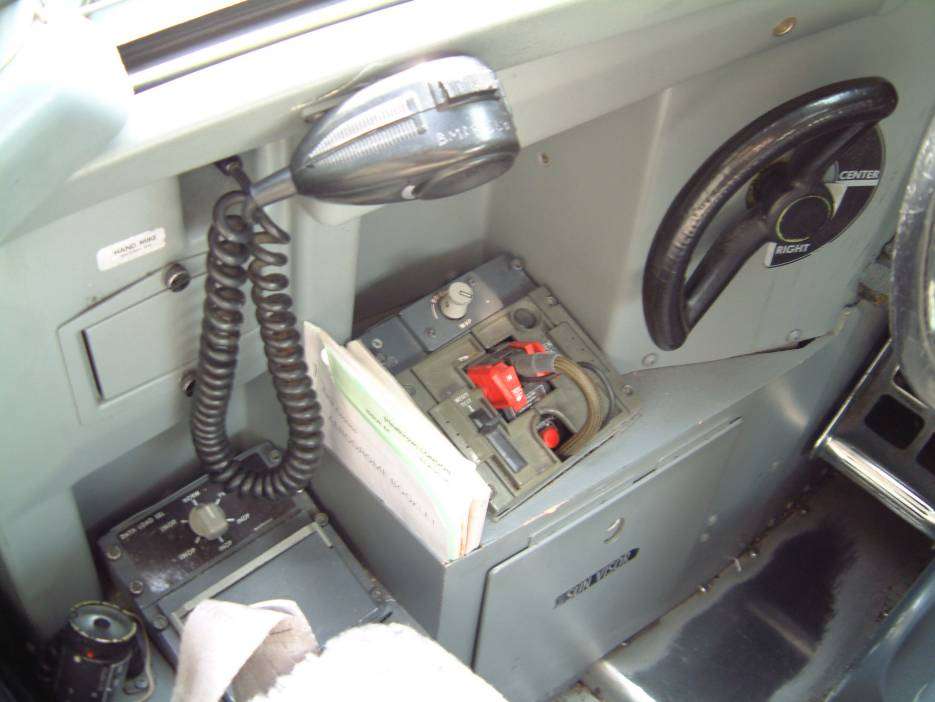
After you have the aircraft under control, the next step is to contact Air Traffic Control (ATC) over the radio to explain the situation and ask for help. The majority of aircrafts have a radio mic switch on the yoke on the back where your index finger would rest when you grasped it normally. The problem is that the autopilot disconnect switch is often placed on the yoke as well and without proper knowledge of the autopilot system, an inadvertent disconnect of the autopilot could result in a major disaster. A safer alternative is using the hand-held radio normally mounted to the left of the pilot’s seat just below the side window. Use it just like you would use a CB radio, push to talk and release to listen.
Try making a call on the radio frequency currently selected and see if you get a response. Say “Mayday” and state who you are and what has happened. Don’t worry about radio etiquette, it’s an emergency so just use plain English and tell them you don’t know what you’re doing and need some help, but don’t sound too panicked. You’re a man after all and completely in control of the situation.
After talking, remember to release the mic button to listen. If no one responds, try changing the VHF radio frequency to 121.5 MHz (this is known as “Guard” and is monitored by everyone). The radio unit will normally be located on the center pedestal in between the pilot’s and co-pilot’s seats or directly in front of you on the center panel.
Do What They Tell You
Just like in the movies, what happens next is various agencies will be notified of your emergency and they will find someone who is an expert for your plane to walk you through getting it on the ground. They will know the cockpit layout and be able to tell you where a button or switch is located and what you need to do with it. They will also be working in conjunction with ATC to navigate you to an airport where you will be able to land. As long as you follow their instructions to the letter everything should turn out just fine. You may not have the prettiest landing, but you’ll survive.
Get It on the Ground
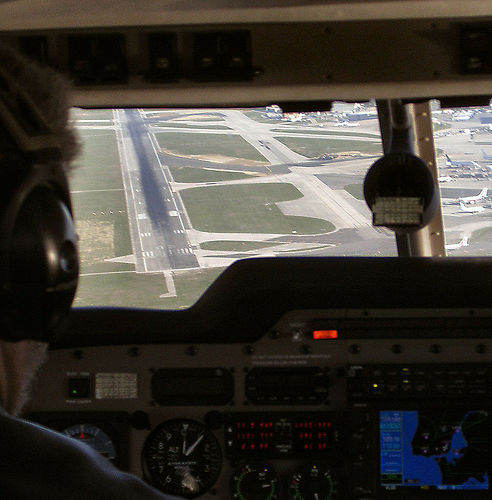
The reality is that many of today’s jets are fully-automated and have the capability to land themselves or at least get you lined up on the runway center line on a proper glide path so that you can take over at 50-100 feet off the ground. All you will have to manually do is:
- Flare (pull up slightly on the stick just prior to touchdown so the main gear hit first)
- Fly the nosewheel to the ground (push the stick forward until the front touches down)
- Pull the throttles all the way back
- Step on the brakes which are located on the tops of the rudder pedals down by your feet.
- If you find yourself veering off the runway then lightly step on the rudder pedals to steer yourself back to centerline.
You’ve landed! It’s incredible; you’re now the hero of the day, congratulations! Now before you go patting yourself on the back in your imaginary scenario, here are a few additional things to consider:

Notes, Warnings, Cautions
- Getting the landing gear down before landing is obviously a key part of the process, but has been forgotten by countless pilots. The gear handle is almost always located just to the right of the center console on the front instrument panel, basically just above the left knee of the co-pilot if he were sitting there.
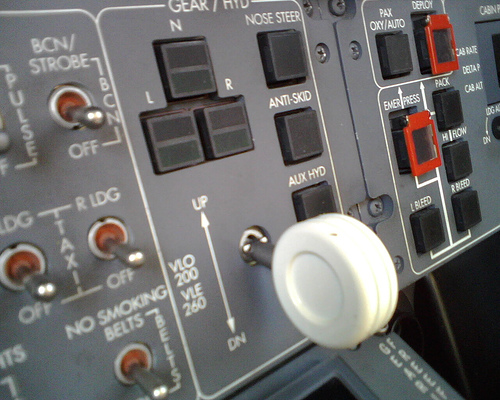
- In order to slow the aircraft to land you must employ various drag devices such as slats (normally only in very large aircraft) and flaps. These allow the airplane to maintain lift at slower airspeeds and allow you to keep the attitude level during a descent. These are generally found right next to the throttles.
- Slats, flaps, and landing gear all have a max speed at which they can be deployed. It’s not the end of the world if you overspeed them in an emergency situation, but it should be avoided. If you aren’t in communication with someone that can help, look on the dash for a placard with the speeds, or a card with TOLD (takeoff and landing data).
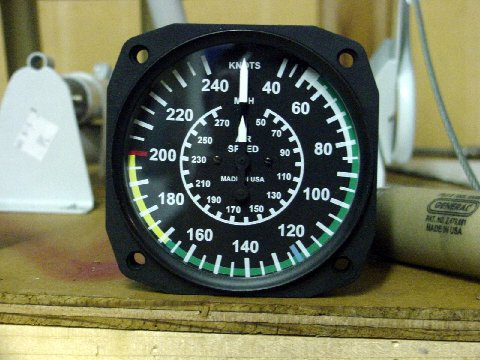
- If you can find the airspeed indicator make sure that you keep it within the green arc while flying. Just like anything in life, green is good, yellow means caution and red means dead. If you get too slow you will lose lift and stall the aircraft (trust me, this is bad and if you’re not a pilot, you probably won’t make it).
- If you’re flying a commercial jet like a 737, a good rule of thumb is to keep it flying at about 200 knots if you don’t have flaps or gear extended, and 130 knots once you do and are making the approach to land. A smaller plane like a Cessna is stable on approach at speeds closer to 70 knots. Of course, if you’re talking to ATC ask them how fast you should go and they’ll hopefully be able to tell you.


Facebook


<
{ 23 trackbacks }
{ 76 comments… read them below or add one }
← Previous Comments
A nice guide but definitely need more than will power for an ordinary guy to land a behemoth plane.
Number One: the several pilots and others who have commented are correct. You will almost certainly fail at this, and if someone (anyone) who has any experience at all is available you should yield to them.
Number Two: Stian, Yeah OK, and their ilk can go to Hell. If you are in fact the only one available, go for it. The chance of your succeeding may be very small, but it is not (quite) zero. People who die trying get cooler spots in the Pit than the ones who decide to relax and enjoy their last moments, and the relax-it’s-inevitable brigade is better off than the useless free-riding f*s who declare it somebody else’s problem.
Regards,
Ric
The author doesn’t know a kite from an airplane. How in the world is anyone supposed to heed advise from an unauthorized source?
As it has been said before, your chance to make a successful landing are NIL, ZIP, ZERO, NADA.
Happy Wet Dreams!
WELL i would just push the red land airplane button that all these apparently simple aircraft must have on board!! if the author here thinks a passenger with zero experience can safely land a high tech aircraft whose pilots require years of training and expereince to fly i want what he is smoking it is not a car, and the pretty flight attendant is more than qualified to fly any aircraft if hollywood had taught us anything anybody who actually belives this article should not be aloud to procreate
From a flight instructor’s point of view: any good instructor can talk a newbie through a step by step landing in a small, light aircraft. Why? Because they are simple, and much easier to maneuver… and light. I hate to say it, but as computerized as larger aircraft may be, hand flying them requires a bit more knowledge of control because of their sheer size and speed; which a newbie in a jet will not have. Instead of a step by step guide on how to manually fly the aircraft down, why not produce a step by step guide describing how to set-up the FMC or FMGS (all flight management systems) so the aircraft can autoland itself?
Pete.
Oh and by the way, laminating and attaching these instructions to your carry-on won’t get your far past security.
Lighten up, some of you fine folks! Come on admit it….the thought of having to land a plane has crossed your mind, even if just in your imagination. Great post!
I also agree that attempting to carry this advice past TSA is a BAD idea!
Yes….I think of landing the plane every time I do it. Some here are speaking from ACTUAL experience.
speaking from actual experience? Umm… when’s the last news story that popped up about Joe Blo landing a jetliner?
“Pete D”: Has the thought that real-life (and I don’t mean private) pilots may be commenting on this nonsense ever crossed your mind? Ted Striker refers to the ACTUAL experience of people who fly airplanes for a living
Just another point to prove how farfetched this all is: ALL Airline aircraft are flown by a crew of TWO. Just think: what are the chances of both pilots becoming incapacitated? The remaining pilot is capable of landing the aircraft without the “help” (ha ha ha) of internet joe.
Again, Happy WET dreams!
“Ted Striker refers to the ACTUAL experience of people who fly airplanes for a living”
As opposed to the author of the post, who flies airplanes for a living?
Just clicked on your link Fielder…..good luck selling fish tank.com for a million bucks! Hahaha! Happy wet dreams indeed!
n.b. the landing gear control is always shaped like a wheel. That might make it easier to find.
Pilots: Nobody here is trying to take your job. It’s an interesting piece meant to entertain. Sheesh!
I don’t know who the author is or where to even find his credentials. I don’t frequent this site so feel free to give me the authors name. The author states facts but that still isn’t going to be enough. Also, the green arc on the airspeed indicator is fine in a light aircraft. Airliners don’t have it because that speed range changes with weight and altitude.
For the guy that wondered about the actual experience thing, read my first post.
Hi to everyone,
I saw some interesting posts explaining how to land an airplane using the autopilot (obviously, those were written by people who know about flying). It’s very important to mention that NOT ALL of the airliners/airplanes are autoland capable. Also you need to know (to everyone who think they can land safely after reading this post), not just the airplane need to be equipped & capable to make an autoland, BUT the AIRPORT need to be equipped with minimum an ILS CAT II and/or ILS CAT III to execute a SAFE AUTOLAND. BTW, we (pilots) need to be trained & CERTIFIED to do this procedure. As you see, IS NOT THAT EASY!
@ Ted Striker, Fielder and everyone else wondering about my experience,
I currently fly C-17’s for the Air Force as Brett mentioned earlier in the comments. I have 30 hours in Diamond DA-20 AND approx 200 hours in T-6 Texan (single-engine) and T-1 Jayhawk (Beech 400A, a twin engine jet).
I also have my instrument rating, my single and multi-engine land, a Beech 400 rating, as well as a commercial pilot’s license.
Now, having said that, I acknowledge that I have no experience flying commercial jets. However, Boeing makes the C-17 (a large 4 engine tactical airlift plane) and in looking at cockpit pictures of other Boeing commercial jets it appears as though they’ve set them up very similarly, especially the AFCS panel.
For everyone blasting this article as far-fetched, unrealistic, etc. You are right. The chances of an untrained pilot ever being behind the controls of a commercial jet are worse than even winning the lottery or getting struck by lightening.
And yes, unless there was a controller and plane expert to give detailed step-by-step instructions, a non-pilot would crash unless a miracle happened. That’s not the point, this post was supposed to be for fun, providing the reader with some interesting facts about flying and landing a jet.
I tried to provide some overarching generalities so there will no doubt be circumstances where these steps don’t apply. Like the green arc for airspeed. Obviously this won’t be found in a 777, but if you find yourself in a small plane it will provide you with some help.
If you’re taking this article completely seriously and analyzing each point and detail you are missing the point. Just like magazines publish entertaining articles like how to ride a bull, or golf like Tiger Woods, this post was meant simply to give a glimpse into some of the procedures for landing a jet in an emergency.
Lighten up a little.
I think most of the responses including mine are responding to people stating that they are going to carry this with them. At that point it is important to inform them that the article is not going to cut it but it could be a good start. People take this stuff seriously sometimes so if it is intended to be lighthearted then you should state that in the article. Due to your position as an Air Force pilot reader may tend to think this is all there is to it.
same here
The FAA conducted a study of this scenario in simulators and found that less than 20 percent of actual licensed pilots (presumably mostly private pilots) were able to land an airliner without fatalities. But this was quite some time back, probably before autoland technology. Also, the study was a bit sqewed toward failure because the simulated ATC offered no help except what was requested. Read about it here: http://www.jimforeman.com/Stories/thedayiflew.htm
One bit of useful information is that the button that allows you to transmit over the communication radio will often be labelled “PTT.” This label will be meaningless to most people, but it stands for “push to talk.” Considering that this button is possibly the single most important thing in the entire airplane in such a situation, it would be nice if they actually labelled it “push to talk” instead of PTT so someone could actually find it.
Being able to land an airplane is such a cool and interesting man skill that for those interested in it, it could be a fun thing to take a flying lesson at the local airport. A single lesson is not all that expensive and you don’t have to go on to get your license or anything. Just spend an hour flying around with an instructor gaining some basic understanding of control and handling. Just tell them that you want some “pinch-hitter” training and they will probably be more than glad to run you through the basics.
For all of you putting these instructions to memory, or indicating you will print them out and place in a carry-on, I think I have more useful advice.
Printout a copy of the Hail Mary prayer (or easily commit to memory).
In the event you find yourself aboard a pilotless aircraft recite the prayer repeatedly until the aircraft lands.
I was in a restaurant yesterday and overheard an “expert” talk a 16 year old girl down in a private jet. The expert was extraordinarily calm, eating a hamburger while he did it. If I hadn’t seen and heard this myself, I wouldn’t believe it. I have been googling looking for the news story but have found nothing.
Great post, interesting replies
) The red auto landing button sounds like a great start. It is unfortunate that flying technology is still so outdated .. while cruise missiles are able to pinpoint their landings, etc.
It would have been wonderful if planes and cars could drive themselves. Then we could all, including retired pilots, have had that drink in the back and “terrorists” would not have had the option to take over the controls.
But please don’t let washing machine engineers automate the vehicles
We will just end up with three cryptic buttons, a ridiculous knob and eventual angry attendants.
However, figure out the statistics for yourself, who are creating the most terror ? , holistically, the rude airport personnel or the small bunch of political extremists ?
Great article! Keep in mind to also deploy spoilers upon landing and reverse thrust…unless you want to run past the end of the runway into a ditch.
thank u!
im paranoid about these things;D
its going strait into my carry on!=)
Is it just me, or am I getting a perception that flamers here think that Brett is trying to give a crash coarse on landing an aircraft? Because what I see is a survival guide for this particular scenario that entails good information that might actually help someone. The point that most of you have so haphazardly missed, is that this info is ment to get you on the ground in one piece. Perhaps by keeping the plane stable, which for the most part is kid stuff, and then guiding the plane down in such a way that it doesnt impload into a firery ball of death, you could save everyone on that plane, including yourself. And reach deep into your minds and try and think of the last time you read an artical about this particular survival situation. I guess the people that doubt this information usefull, or even just worthy of a read, would be the same people that would doubt their own selves and panic in this situation while I, at the least, try and land the damn thing.
← Previous Comments