




Top

The Bushido Code: The Eight Virtues of the Samurai

Print This Post Email This Post To A Friend Email This Post To A Friend
September 14, 2008


If you're new to The Art of Manliness, you may want to sign up for a daily dose of manliness either by email or by RSS. You may also want to check out our free e-book on how to be a gentleman in 2008. Thanks for visiting and don't forget to man up!


Editor’s Note: This is a guest post from Tim Clark. He blogs at Soul Shelter with novelist Mark Cunningham. Make sure to check out Tim Clark’s second book, The Swordless Samurai.

satsuma-samurai-during-boshin-war-period The Bushido Code: The Eight Virtues of the Samurai

“So, boy. You wish to serve me?”

Silhouetted against the blue-black sky, the horse-mounted samurai with the horned helmet towered over me like a demon as I knelt in the dirt before him. I could not see his face but there was no mistaking the authority in his growling tone, nor the hint of mockery in his question.

I tried to speak and managed only a faint croak. My mouth had gone dry, as parched as a man dying of thirst. But I had to respond. My fate-and though I didn’t know it then, the fate of all of Japan-rested on my answer.

Raising my head just enough to brave a glance at the demonic figure, I saw him staring at me, like a hawk poised to seize a mouse in its talons.

When I managed to speak, my voice was clear and steady, and I drew courage with each syllable.

“That’s correct, Lord Nobunaga,” I said. “I do.”

It was a time of carnage and darkness: the Age of Wars, when the land was torn by bloodshed and the only law was the law of the sword. A peasant wandered the countryside alone, seeking his fortune, without a coin in his pocket. He longed to become the epitome of refined manhood-a samurai-but nothing in the demeanor of this five-foot tall, one-hundred-ten-pound boy could possibly have foretold the astounding destiny awaiting him.

His name was Hideyoshi, and on that fateful spring evening in the year 1553, the brash young warlord Nobunaga hired him as a sandal-bearer. Driven by a relentless desire to transcend his peasant roots, Hideyoshi went on to become Nobunaga’s loyal protégé and right-hand man. Ultimately he became the supreme ruler of all Japan-the first peasant ever to rise to the absolute height of power-and unified a nation torn apart by more than a hundred years of civil strife.

Hideyoshi’s true story has inspired countless novels, plays, movies-even video games-for more than four centuries. Born the weakling son of a poor farmer at a time when martial prowess or entry to the priesthood were the only ways for an ambitious commoner to escape a life of backbreaking farm toil, he rose from poverty to rule a mighty nation and command hundreds of thousands of samurai warriors. For generations of men, Hideyoshi became the ultimate underdog hero: a symbol of the possibility of reinventing oneself as a man and rising, Horatio Alger fashion, from rags to riches.

Hideyoshi was driven by a burning desire to succeed as a samurai. But he differed from his contemporaries in seeking to overcome his adversaries peaceably, through negotiation and alliance building rather than through brute force. Lacking physical strength and fighting skills, he naturally chose to rely on wits rather than weapons, on strategy over swords. An unlikely samurai, indeed. Or was he?

A Brief History of the Samurai

The word samurai originally meant “one who serves,” and referred to men of noble birth assigned to guard members of the Imperial Court. This service ethic spawned the roots of samurai nobility, both social and spiritual.

Over time, the nobility had trouble maintaining centralized control of the nation, and began “outsourcing” military, administrative, and tax collecting duties to former rivals who acted like regional governors. As the Imperial Court grew weaker, local governors grew more powerful. Eventually some evolved into daimyo, or feudal lords who ruled specific territories independently of the central government. In 1185 Minamoto no Yoritomo, a warlord of the eastern provinces who traced his lineage back to the imperial family, established the nation’s first military government and Japan entered its feudal period (1185-1867). The country was essentially under military rule for nearly 700 years.

But the initial stability Minamoto achieved failed to bring lasting peace. Other regimes came and went, and in 1467 the national military government collapsed, plunging Japan into turmoil. Thus began the infamous Age of Wars, a bloody century of strife when local warlords fought to protect their domains and schemed to conquer rivals.

By the time Japan plunged into the turbulent Age of Wars, the term samurai had come to signify armed government officials, peacekeeping officers, and professional soldiers: in short, almost anyone who carried a sword and was ready and able to exercise deadly force.

The worst of these medieval Japanese warriors were little better than street thugs; the best were fiercely loyal to their masters and true to the unwritten code of chivalrous behavior known today as Bushido (usually translated as “Precepts of Knighthood” or “Way of the Warrior”). Virtuous or villainous, the samurai emerged as the colorful central figures of Japanese history: a romantic archetype akin to Europe’s medieval knights or the American cowboy of the Wild West.

But the samurai changed dramatically after Hideyoshi pacified Japan. With civil society at peace, their role as professional fighters disappeared, and they became less preoccupied with martial training and more concerned with spiritual development, teaching, and the arts. By 1867, when the public wearing of swords was outlawed and the warrior class was abolished, they had evolved into what Hideyoshi had envisioned nearly three centuries earlier: swordless samurai.

The Bushido Code

bushido The Bushido Code: The Eight Virtues of the Samurai

Just a few decades after Japan’s warrior class was abolished, U.S. President Teddy Roosevelt raved about a newly released book entitled Bushido: The Soul of Japan. He bought five dozen copies for family and friends.

In the slim volume, which went on to become an international bestseller, author Nitobe Inazo interprets the samurai code of behavior: how chivalrous men should act in their personal and professional lives.
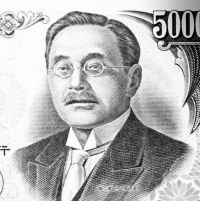
i_nitobe The Bushido Code: The Eight Virtues of the Samurai

Nitobe Inazo

Though some scholars have criticized Nitobe’s work as romanticized yearning for a non-existent age of chivalry, there’s no question that his work builds on extraordinary thousand-year-old precepts of manhood that originated in chivalrous behavior on the part of some, though certainly not all, samurai. What today’s readers may find most enlightening about Bushido is the emphasis on compassion, benevolence, and the other non-martial qualities of true manliness.

Here are Bushido’s Eight Virtues as explicated by Nitobe:

I. Rectitude or Justice
rectitude The Bushido Code: The Eight Virtues of the Samurai

Bushido refers not only to martial rectitude, but to personal rectitude:

Rectitude or Justice, is the strongest virtue of Bushido. A well-known samurai defines it this way: ‘Rectitude is one’s power to decide upon a course of conduct in accordance with reason, without wavering; to die when to die is right, to strike when to strike is right.’ Another speaks of it in the following terms: ‘Rectitude is the bone that gives firmness and stature. Without bones the head cannot rest on top of the spine, nor hands move nor feet stand. So without Rectitude neither talent nor learning can make the human frame into a samurai.’

II. Courage
ii_courage The Bushido Code: The Eight Virtues of the Samurai

Bushido distinguishes between bravery and courage:

Courage is worthy of being counted among virtues only if it’s exercised in the cause of Righteousness and Rectitude. In his Analects, Confucius says: ‘Perceiving what is right and doing it not reveals a lack of Courage.’ In short, ‘Courage is doing what is right.’

III. Benevolence or Mercy

iii_benevolence The Bushido Code: The Eight Virtues of the Samurai

A man invested with the power to command–and the power to kill–was expected to demonstrate equally extraordinary powers of benevolence and mercy:

Love, magnanimity, affection for others, sympathy and pity, are traits of Benevolence, the highest attribute of the human soul. Both Confucius and Mencius often said the highest requirement of a ruler of men is Benevolence.

IV. Politeness
iv_politeness The Bushido Code: The Eight Virtues of the Samurai

Discerning the difference between obsequiousness and politeness can be difficult for casual visitors to Japan, but for a true man, courtesy is rooted in benevolence:

Courtesy and good manners have been noticed by every foreign tourist as distinctive Japanese traits. But Politeness should be the expression of a benevolent regard for the feelings of others; it’s a poor virtue if it’s motivated only by a fear of offending good taste. In its highest form Politeness approaches love.

V. Honesty and Sincerity
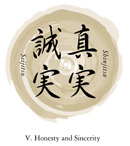
v_honesty The Bushido Code: The Eight Virtues of the Samurai

True samurai, according to author Nitobe, disdained money, believing that “men must grudge money, for riches hinder wisdom.” Thus children of high-ranking samurai were raised to believe that talking about money showed poor taste, and that ignorance of the value of different coins showed good breeding:

Bushido encouraged thrift, not for economical reasons so much as for the exercise of abstinence. Luxury was thought the greatest menace to manhood, and severe simplicity was required of the warrior class … the counting machine and abacus were abhorred.

VI. Honor
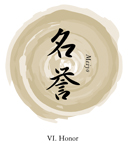
vi_honor The Bushido Code: The Eight Virtues of the Samurai

Though Bushido deals with the profession of soldiering, it is equally concerned with non-martial behavior:

The sense of Honor, a vivid consciousness of personal dignity and worth, characterized the samurai. He was born and bred to value the duties and privileges of his profession. Fear of disgrace hung like a sword over the head of every samurai … To take offense at slight provocation was ridiculed as ‘short-tempered.’ As the popular adage put it: ‘True patience means bearing the unbearable.’

VII. Loyalty

vii_loyalty The Bushido Code: The Eight Virtues of the Samurai

Economic reality has dealt a blow to organizational loyalty around the world. Nonetheless, true men remain loyal to those to whom they are indebted:

Loyalty to a superior was the most distinctive virtue of the feudal era. Personal fidelity exists among all sorts of men: a gang of pickpockets swears allegiance to its leader. But only in the code of chivalrous Honor does Loyalty assume paramount importance.

VIII. Character and Self-Control

viii_character The Bushido Code: The Eight Virtues of the Samurai

Bushido teaches that men should behave according to an absolute moral standard, one that transcends logic. What’s right is right, and what’s wrong is wrong. The difference between good and bad and between right and wrong are givens, not arguments subject to discussion or justification, and a man should know the difference. Finally, it is a man’s obligation to teach his children moral standards through the model of his own behavior:

The first objective of samurai education was to build up Character. The subtler faculties of prudence, intelligence, and dialectics were less important. Intellectual superiority was esteemed, but a samurai was essentially a man of action.

No historian would argue that Hideyoshi personified the Eight Virtues of Bushido throughout his life. Like many great men, deep faults paralleled his towering gifts. Yet by choosing compassion over confrontation, and benevolence over belligerence, he demonstrated ageless qualities of manliness. Today his lessons could not be more timely.

Enter to win Tim’s latest book, The Swordless Samurai.

Share and Enjoy: These icons link to social bookmarking sites where readers can share and discover new web pages.
  • Digg
  • del.icio.us
  • Reddit
  • StumbleUpon
  • Netscape

Comments

23 Responses to “The Bushido Code: The Eight Virtues of the Samurai”

  1. Marlon on September 14th, 2008 8:54 pm

    Brilliant post. I have a question though, from what I know of samurai they are to do everything their master tells them to. Can’t this easily conflict with rectitude?

  2. Andrew on September 14th, 2008 9:24 pm

    Marlon: Good question! The problem here is that the masters were samurai themselves, and were thus bound to act honorably. From my limited knowledge of the samurai, I believe that they would have chosen to act honorably rather than blindly follow their master’s directions, should such a conflict ever occur.

    Incidentally, great post! I only recently discovered this blog, but am certainly hooked.

  3. Harrison McLeod on September 14th, 2008 10:39 pm

    What a timely post. I’ve just taken up iaido (the art of drawing the sword) after several years of being out of the martial arts and I can relate to a lot of what you’ve written. Makes me feel like I’m on the right track.

    Thanks for the post, I deeply appreciate it.

  4. Robert on September 14th, 2008 11:06 pm

    The virtues exposed in this post are very valued, if a bit foggy. I found the part that said that great acts of violence should also be balanced by great acts of mercy very poignant. Such a non-western value! I find that general mercy is a bit better way to go about life.

    Still, it is very nice to see a non-christian, non-white, non-western male viewpoint here on this blog, it really goes to show the wide range of ways to be a man, and how that is relative to the culture and the society and community in which you chose to live.

    Great post!

  5. Innocent on September 15th, 2008 5:42 am

    Hello!

    I am a regular reader of your splendid blog, though I have commented only once or twice. I think you are providing the world with another voice of sanity through this blog, something that seems to be in short supply these days.

    This is a good article, and I’d just like to mention something you might be interested in:

    Some time back, I developed an interest in Akira Kurosawa’s films and wanted to learn about Bushido. I found that the book you speak of, “Bushido: The Soul of Japan,” is available for reading online since it is in the public domain.

    Here is the URL:

    http://www.gutenberg.org/etext/12096

    Another work of literature that gives us a good picture of Bushido is a book named “Hagakure”

    Here is the URL for Hagakure:

    http://pagesperso-orange.fr/chabrieres/texts/hagakure.html

    Happy reading!

    Wishing you success in your blog,
    Innocent

  6. Matthew Carrick on September 15th, 2008 5:53 am

    Bushido, when you just have to find a convenient method to happily enslave the little people. Works well on Chinese and Korean peasants too! Should it ever get out of hand it can be minimized with a quick application of fat man.

  7. Joe Cole on September 15th, 2008 6:01 am

    You do realize that Toyotomi Hideyoshi invaded South Korea twice? All in an effort to conquer China?

    There were some people under his rule that opposed the invasion. Powerless to do anything under the tyranny.

    Won’t deny his achievement. Did some questionable **** though. Must examine him thoroughly from all angles before coming to the conclusion that this was a “great” man.

    No problem with the article. I just don’t want people admiring this guy for the wrong reason.

    Just throwing it out there.

  8. cory huff on September 15th, 2008 6:49 am

    It’s amazing to me how much the values of the samurai and Eurpoean knights match up. It’s also amazing to me that people are so willing to throw these idealized examples of chivalry under the bus.

    Sure, there were probably very few individuals who fulfilled the values exemplified by their respective code of ethics, but does that make the ideal any less honorable? If more men at least tried to live by the ideals that knights and samurai espoused, the world would be a better place indeed.

  9. Peter James on September 15th, 2008 7:39 am

    Great post. I just did a post on the spirit of the samurai. I agree they lived a code that bred success. This code, if not taken literally, is actually a great way to live your life.

    http://yinvsyang.com/the-power-of-the-samurai-spirt/261/

  10. Brian Buck on September 15th, 2008 12:46 pm

    Awesome post. I just discovered this blog and already enjoy the thoughtfulness of the content. I have always been fascinated by Japanese Culture and appreciate the details added.

    A sign of a good blog can be traced to the readers as well. I have discovered a few great sites this morning from the comments above!

    Keep up the great work!

  11. Wm on September 15th, 2008 7:04 pm

    Let’s see… best as I can recall

    “Be Prepared”

    Trustworthy
    Loyal
    Helpful
    Friendly
    Courteous
    Kind
    Obedient
    Cheerful
    Thrifty
    Brave
    Clean
    Reverent.

    On my Honor I will do my Best to do my duty to God and my Country.
    To Obey the Scout Law
    To Help other people at all times and to keep my self physically strong mentally awake and morally straight..

    Marine Corp Leadership traits and principles

    Know yourself and seek self improvement
    Know your men and look out for their welfare
    Insure each task is understood and supervised unto completion.
    Seek responsibility and accept responsibility for your actions
    (I have forgotten part as it has been a long time.)

    Bearing, courage, decisiveness, dependability, endurance, enthusiasm, integrity, justice, judgment, knowledge loyalty, tact and unselfishness.

    Just exactly why do you feel compelled to follow the teaching of another culture when all you have to do is look around and you will find more exacting and specific standards in your own?

    W

  12. Will Carpenter on September 15th, 2008 9:29 pm

    An excellent post. ‘The Code,’ by whatever name you choose to call it or in whatever context you choose to place it, doesn’t vary. Living well - that is to say, living benevolently and living bravely - never goes out of style.

  13. Rodney Hampton on September 16th, 2008 1:25 am

    This is a great post. I was browsing through the bookstore the other day looking for a short explanation of Bushido and now I’ve found it.

  14. Charlie on September 16th, 2008 4:14 am

    Good post! Very thorough and I love that you provided the context by citing Nitobe specifically.

  15. James on September 16th, 2008 6:07 pm

    It is an excellent post. Nowadays people are not concerned in honor, rectitude nor any of the virtues mentioned in Bushido, but personally I am. I’m a bit eccentric, I try to stay at top of tech and gadgets, but I also REALLY like to do some things the old way, like shaving with a barber razor, or dress like it should be (like wearing the right suit, tie, knots, pocket square, etc.).

    I am also new on this site, and I am fascinated with it, greets to all gentlemen!.

  16. Mike on September 17th, 2008 4:30 am

    I like this point of view. I have seen people pick up Sun Tzu’s “The Art of War” and take things literally. This speaks to the mental side of engaging your adversaries and not having to resort to less than desireable ethics or principles. Thank you for a great post!

  17. SMBowen on September 17th, 2008 6:11 am

    @Joe Cole:
    I agree that the Japanese have done some very brutal invasions (if you didn’t know, you would be AMAZED! at some of the things they did even as recent as early 1900’s) but, really up until recent years the world as a whole has been invading countries for their land and other gains. (yes I know that is still going on; Georgia/Russia, Throughout Africa, etc…but it is not world wide like it used to be). He did great things and in current day views we look back at the invasions as ‘bad things’ and how could he do that, but in reality if you put yourself in that timeframe it would be looked at as a failure on his part.

    @Wm:
    I agree with the principle of what you are saying, but have 2 comments on that.
    1. Where do you think most of the current American culture standards have come from? We have been a mut country from the beginning and what makes us the greatest country in the world is we took the good things from lands all over the world to build our culture.
    2. If you are going to have such tunnel vision and continue to be a self licking ice cream cone you will eventually fail, which is been the main reason for a large majority of countries (also companies and people, etc.) collapsing. You have to look out to other sources of ways to do things to grow. You may look at other ways of doing things and think they are absurd or the same as what we already do or great and then you get to choose to drop or adopt them.

    -sm

  18. Dave Dragon on September 17th, 2008 7:23 am

    Yet another Great Piece, and a Great book to boot!

    Ride it like you stole it

  19. Larry on November 2nd, 2008 7:38 am

    @SMBowen - I believe every culture has their equivalent of Bushido/Marines or “The Code”. Bottom Line: Do folks follow them?

    The hard part for folks is to get through all psychic-BS in order to live up to their vision of themselves. “Can they grow the f— up?”

    –Larry

  20. Scott on November 2nd, 2008 2:05 pm

    @Joe Cole

    So because a man went on a failed war of nationalism, he is somehow precluded from being great? Let’s see you go from the near bottom to the near top (Absolute top in political power) of the social ladder in any society. Now do it 500 years ago when every elite will think you’re a different, more retarded species.

Trackbacks

  1. Japanese Culture: Samuri Bushido Code « Improve With Me (previously pass the buck)
  2. Book Giveaway: The Swordless Samurai by Tim Clark | The Art of Manliness
  3. Genesis » The best stuff of the year

Got something to say?

Please read our comment policy.


<