These famous speeches lifted hearts in dark times, gave hope in despair, refined the characters of men, inspired brave feats, gave courage to the weary, honored the dead, and changed the course of history.
How did we compile this list?
Great oratory has three components: style, substance, and impact.
Style: A great speech must be masterfully constructed. The best orators are masters of both the written and spoken word, and use words to create texts that are beautiful to both hear and read.
Substance: A speech may be flowery and charismatically presented, and yet lack any true substance at all. Great oratory must center on a worthy theme; it must appeal to and inspire the audience’s finest values and ideals.
Impact: Great oratory always seeks to persuade the audience of some fact or idea. The very best speeches change hearts and minds and seem as revelatory several decades or centuries removed as when they were first given.
And now for the speeches.
Contents [hide]
- 1. Theodore Roosevelt, "Duties of American Citizenship"
- 2. Winston Churchill, "We Shall Fight on the Beaches"
- 3. Lou Gehrig, "Farewell to Baseball Address"
- 4. Demosthenes, "The Third Philippic"
- 5. Chief Joseph, "Surrender Speech"
- 6. John F. Kennedy, "Inauguration Address"
- 7. Ronald Reagan, "Address to the Nation on the Challenger"
- 8. "Speech of Alexander the Great"
- 9. William Wilberforce, "Abolition Speech"
- 10. Theodore Roosevelt, "The Man with the Muck-rake"
- 11. Franklin Delano Roosevelt, "First Inaugural Address"
- 12. Charles de Gaulle, "The Appeal of 18 June"
- 13. Socrates, "Apology"
- 14. George Washington, "Resignation Speech"
- 15. Mahatma Gandhi, "Quit India"
- 16. Winston Churchill, "Their Finest Hour"
- 17. William Faulkner, "Nobel Prize Acceptance Speech"
- 18. Dwight D. Eisenhower, "Farewell Address"
- 19. Marcus Tullius Cicero, "The First Oration Against Catiline"
- 20. Ronald Reagan, "Remarks at the Brandenburg Gate"
- 21. Pericles, "Funeral Oration"
- 22. General Douglas MacArthur, "Farewell Address to Congress"
- 23. Theodore Roosevelt, "Strength and Decency"
- 24. Abraham Lincoln, "2nd Inaugural Address"
- 25. Patrick Henry, "Give Me Liberty or Give Me Death!"
- 26. Ronald Reagan, "40th Anniversary of D-Day"
- 27. John F. Kennedy, "The Decision to Go to the Moon"
- 28. Frederick Douglass, "What to the Slave is the Fourth of July?"
- 29. General Douglas MacArthur, "Duty, Honor, Country"
- 30. Theodore Roosevelt, "Citizenship in a Republic"
- 31. Winston Churchill, "Blood, Sweat, and Tears"
- 32. Franklin Delano Roosevelt, "Pearl Harbor Address to the Nation"
- 33. Jesus Christ, "The Sermon on the Mount"
- 34. Martin Luther King Jr., "I Have a Dream"
- 35. Abraham Lincoln, "The Gettysburg Address"
1. Theodore Roosevelt, “Duties of American Citizenship”
January 26, 1883; Buffalo, New York
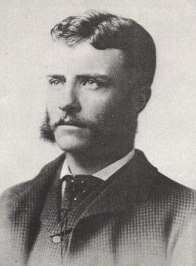
Given while serving as a New York assemblyman, TR's address on the "Duties of American Citizenship" delved into both the theoretical reasons why every man should be involved in politics and the practical means of serving in that capacity. Roosevelt chided those who excused themselves from politics because they were too busy; it was every man's duty to devote some time to maintaining good government.
Worthy Excerpt:
Of course, in one sense, the first essential for a man's being a good citizen is his possession of the home virtues of which we think when we call a man by the emphatic adjective of manly. No man can be a good citizen who is not a good husband and a good father, who is not honest in his dealings with other men and women, faithful to his friends and fearless in the presence of his foes, who has not got a sound heart, a sound mind, and a sound body; exactly as no amount of attention to civil duties will save a nation if the domestic life is undermined, or there is lack of the rude military virtues which alone can assure a country's position in the world. In a free republic the ideal citizen must be one willing and able to take arms for the defense of the flag, exactly as the ideal citizen must be the father of many healthy children. A race must be strong and vigorous; it must be a race of good fighters and good breeders, else its wisdom will come to naught and its virtue be ineffective; and no sweetness and delicacy, no love for and appreciation of beauty in art or literature, no capacity for building up material prosperity can possibly atone for the lack of the great virile virtues.
But this is aside from my subject, for what I wish to talk of is the attitude of the American citizen in civic life. It ought to be axiomatic in this country that every man must devote a reasonable share of his time to doing his duty in the Political life of the community. No man has a right to shirk his political duties under whatever plea of pleasure or business; and while such shirking may be pardoned in those of small cleans it is entirely unpardonable in those among whom it is most common--in the people whose circumstances give them freedom in the struggle for life. In so far as the community grows to think rightly, it will likewise grow to regard the young man of means who shirks his duty to the State in time of peace as being only one degree worse than the man who thus shirks it in time of war. A great many of our men in business, or of our young men who are bent on enjoying life (as they have a perfect right to do if only they do not sacrifice other things to enjoyment), rather plume themselves upon being good citizens if they even vote; yet voting is the very least of their duties, Nothing worth gaining is ever gained without effort. You can no more have freedom without striving and suffering for it than you can win success as a banker or a lawyer without labor and effort, without self-denial in youth and the display of a ready and alert intelligence in middle age. The people who say that they have not time to attend to politics are simply saying that they are unfit to live in a free community.
Read full text of speech here.
2. Winston Churchill, “We Shall Fight on the Beaches”
June 4, 1940; House of Commons, London
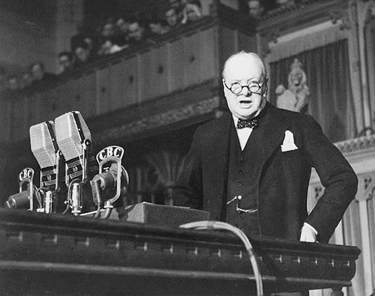
Winston Churchill, one of the greatest orators of the 20th century, was interestingly enough, like Demosthenes and other great orators before him, born with a speech impediment which he worked on until it no longer hindered him. One would never guess this from hearing Churchill's strong and reassuring voice, a voice that would buoy up Britain during some of her darkest hours.
During the Battle of France, Allied Forces became cut off from troops south of the German penetration and perilously trapped at the Dunkirk bridgehead. On May 26, a wholesale evacuation of these troops, dubbed "Operation Dynamo," began. The evacuation was an amazing effort-the RAF kept the Luftwaffe at bay while thousands of ships, from military destroyers to small fishing boats, were used to ferry 338,000 French and British troops to safety, far more than anyone had thought possible. On June 4, Churchill spoke before the House of Commons, giving a report which celebrated the "miraculous deliverance" at Dunkirk, while also seeking to temper a too rosy of view of what was on the whole a "colossal military disaster."
Worthy Excerpt:
I have, myself, full confidence that if all do their duty, if nothing is neglected, and if the best arrangements are made, as they are being made, we shall prove ourselves once again able to defend our Island home, to ride out the storm of war, and to outlive the menace of tyranny, if necessary for years, if necessary alone. At any rate, that is what we are going to try to do. That is the resolve of His Majesty's Government-every man of them. That is the will of Parliament and the nation. The British Empire and the French Republic, linked together in their cause and in their need, will defend to the death their native soil, aiding each other like good comrades to the utmost of their strength. Even though large tracts of Europe and many old and famous States have fallen or may fall into the grip of the Gestapo and all the odious apparatus of Nazi rule, we shall not flag or fail. We shall go on to the end, we shall fight in France, we shall fight on the seas and oceans, we shall fight with growing confidence and growing strength in the air, we shall defend our Island, whatever the cost may be, we shall fight on the beaches, we shall fight on the landing grounds, we shall fight in the fields and in the streets, we shall fight in the hills; we shall never surrender, and even if, which I do not for a moment believe, this Island or a large part of it were subjugated and starving, then our Empire beyond the seas, armed and guarded by the British Fleet, would carry on the struggle, until, in God's good time, the New World, with all its power and might, steps forth to the rescue and the liberation of the old.
Read full text of speech here.
Check out my podcast with Churchill biographer Andrew Roberts.
3. Lou Gehrig, “Farewell to Baseball Address”
July 4, 1939; Yankee Stadium
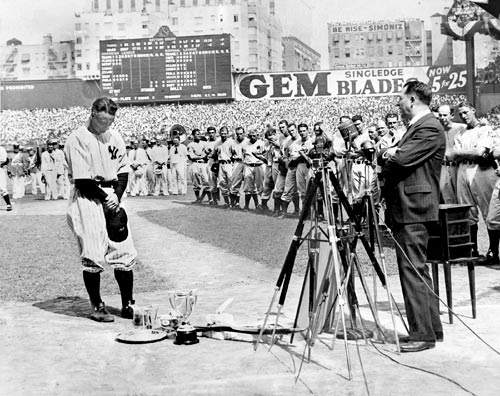
It seemed as if the luminous career of Lou Gehrig would go on forever. The Yankee's first baseman and prodigious slugger was nicknamed the Iron Horse for his durability and commitment to the game. Sadly, his record for suiting up for 2,130 consecutive games came to an end when at age 36, Gehrig was stricken with the crippling disease that now bears his name. On July 4, 1939, the Yankees held a ceremony to honor their teammate and friend. They retired Gehrig's number, spoke of his greatness, and presented him with various gifts, plaques, and trophies. When Gehrig finally addressed the crowd, he did not use the opportunity to wallow in pity. Instead, he spoke of the things he was grateful for and what a lucky guy he was.
The Speech
Fans, for the past two weeks you have been reading about a bad break I got. Yet today I consider myself the luckiest man on the face of the earth. I have been in ballparks for seventeen years and have never received anything but kindness and encouragement from you fans.
Look at these grand men. Which of you wouldn't consider it the highlight of his career to associate with them for even one day?
Sure, I'm lucky. Who wouldn't consider it an honor to have known Jacob Ruppert - also the builder of baseball's greatest empire, Ed Barrow - to have spent the next nine years with that wonderful little fellow Miller Huggins - then to have spent the next nine years with that outstanding leader, that smart student of psychology - the best manager in baseball today, Joe McCarthy!
Sure, I'm lucky. When the New York Giants, a team you would give your right arm to beat, and vice versa, sends you a gift, that's something! When everybody down to the groundskeepers and those boys in white coats remember you with trophies, that's something.
When you have a wonderful mother-in-law who takes sides with you in squabbles against her own daughter, that's something. When you have a father and mother who work all their lives so that you can have an education and build your body, it's a blessing! When you have a wife who has been a tower of strength and shown more courage than you dreamed existed, that's the finest I know.
So I close in saying that I might have had a tough break - but I have an awful lot to live for!
4. Demosthenes, “The Third Philippic”
342 B.C.; Athens, Greece
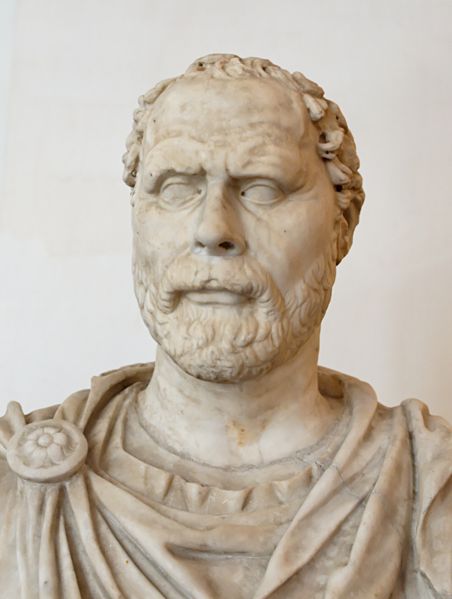
Demosthenes, master statesman and orator, loved his city-state of Athens. He cherished its way of life and abundant freedoms. And he believed in standing strong against anyone who might attempt to infringe on these privileges. This passion, unfortunately, was seldom shared by his fellow Athenians. While Philip the II of Macedon made bolder and bolder incursions into the Greek peninsula, the Athenian people seemed stuck in an apathetic stupor. For years, Demosthenes employed his powerful oratorical skills in attempts to awaken his fellow citizens from sleep to the realization of the imminent danger Philip posed. When Philip advanced on Thrace, the Athenians called an assembly to debate whether or not to finally heed the great orator's advice. Demosthenes was sick of his brethren taking liberty and the Athenian way of life for granted and he boldly called upon them to rise up and take action. After his rousing speech, the assembly all cried out, "To arms! To arms!"
Worthy Excerpt:
It is this fate, I solemnly assure you, that I dread for you, when the time comes that you make your reckoning, and realize that there is no longer anything that can be done. May you never find yourselves, men of Athens, in such a position! Yet in any case, it were better to die ten thousand deaths, than to do anything out of servility towards Philip [or to sacrifice any of those who speak for your good]. A noble recompense did the people in Oreus receive, for entrusting themselves to Philip's friends, and thrusting Euphraeus aside! And a noble recompense the democracy of Eretria, for driving away your envoys, and surrendering to Cleitarchus! They are slaves, scourged and butchered! A noble clemency did he show to the Olynthians, who elected Lasthenes to command the cavalry, and banished Apollonides! It is folly, and it is cowardice, to cherish hopes like these, to give way to evil counsels, to refuse to do anything that you should do, to listen to the advocates of the enemy's cause, and to fancy that you dwell in so great a city that, whatever happens, you will not suffer any harm.
Read full text of speech here.
5. Chief Joseph, “Surrender Speech”
October 5, 1877; Montana Territory
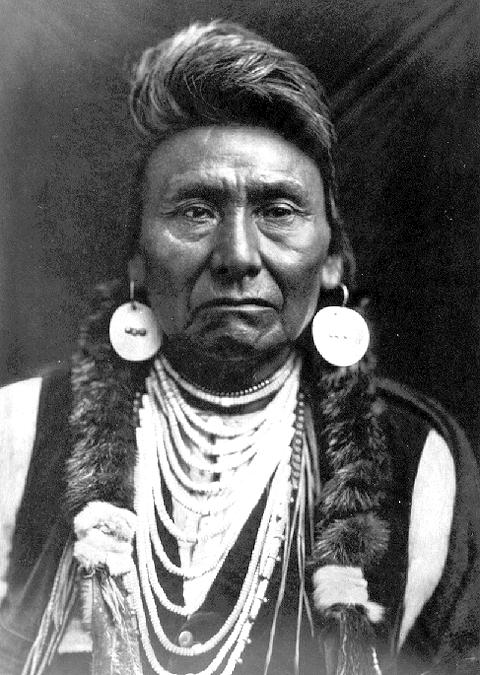
In 1877, the military announced that the Chief Joseph and his tribe of Nez Perce had to move onto a reservation in Idaho or face retribution. Desiring to avoid violence, Chief Joseph advocated peace and cooperation. But fellow tribesmen dissented and killed four white men. Knowing a swift backlash was coming, Joseph and his people began to make their way to Canada, hoping to find amnesty there. The tribe traveled 1700 miles, fighting the pursuing US army along the way. In dire conditions, and after a five day battle, Chief Joseph surrendered to General Nelson A. Miles on Oct. 5, 1877 in the Bear Paw Mountains of Montana Territory, a mere 40 miles from the Canadian border. The Chief knew he was the last of a dying breed, and the moment of surrender was heartbreaking.
The Speech
Tell General Howard I know his heart. What he told me before, I have it in my heart. I am tired of fighting. Our Chiefs are killed; Looking Glass is dead, Ta Hool Hool Shute is dead. The old men are all dead. It is the young men who say yes or no. He who led on the young men is dead. It is cold, and we have no blankets; the little children are freezing to death. My people, some of them, have run away to the hills, and have no blankets, no food. No one knows where they are - perhaps freezing to death. I want to have time to look for my children, and see how many of them I can find. Maybe I shall find them among the dead. Hear me, my Chiefs! I am tired; my heart is sick and sad. From where the sun now stands I will fight no more forever.
6. John F. Kennedy, “Inauguration Address”
January 20, 1961; Washington, D.C.
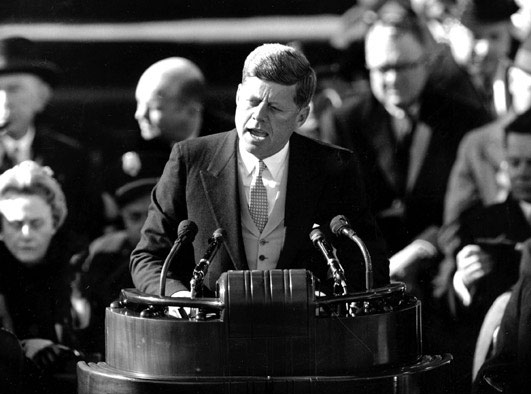
Young, handsome, with a glamorous family in tow, John F. Kennedy embodied the fresh optimism that had marked the post-war decade. On January 20, 1961, Kennedy took the oath of office as the 35th President of the United States. The youngest president in United States history, he was the first man born in the 20th century to hold that office. Listening to his inaugural address, the nation felt that a new era and a "new frontier" were being ushered in.
Worthy Excerpt:
Can we forge against these enemies a grand and global alliance, North and South, East and West, that can assure a more fruitful life for all mankind? Will you join in that historic effort?
In the long history of the world, only a few generations have been granted the role of defending freedom in its hour of maximum danger. I do not shrink from this responsibility -- I welcome it. I do not believe that any of us would exchange places with any other people or any other generation. The energy, the faith, the devotion which we bring to this endeavor will light our country and all who serve it -- and the glow from that fire can truly light the world.
And so, my fellow Americans: ask not what your country can do for you -- ask what you can do for your country.
My fellow citizens of the world: ask not what America will do for you, but what together we can do for the freedom of man.
Read full text of speech here.
7. Ronald Reagan, "Address to the Nation on the Challenger"
January 28, 1986; Washington, D.C.
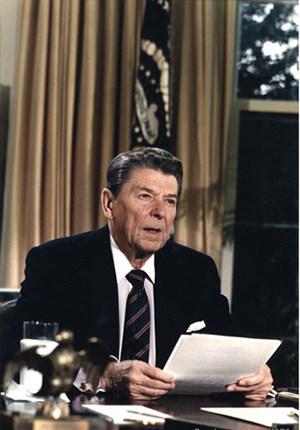
On January 28, 1986, millions of Americans, many of them schoolchildren watching from their classroom desks, tuned in to see 7 Americans, including Christa McAuliffe, a 37 year old schoolteacher and the first ever "civilian astronaut," lift off in the space shuttle Challenger. Just 73 seconds later, the shuttle was consumed in a fireball. All seven aboard perished. These were the first deaths of American astronauts while in flight, and the nation was shocked and heartbroken by the tragedy. Just a few hours after the disaster, President Ronald Reagan took to the radio and airwaves, honoring these "pioneers" and offering comfort and assurance to a rattled people.
Worthy Excerpt:
We've grown used to wonders in this century. It's hard to dazzle us. But for 25 years the United States space program has been doing just that. We've grown used to the idea of space, and perhaps we forget that we've only just begun. We're still pioneers. They, the members of the Challenger crew, were pioneers.
And I want to say something to the school children of America who were watching the live coverage of the shuttle's takeoff. I know it is hard to understand, but sometimes painful things like this happen. It's all part of the process of exploration and discovery. It's all part of taking a chance and expanding man's horizons. The future doesn't belong to the fainthearted; it belongs to the brave. The Challenger crew was pulling us into the future, and we'll continue to follow them......
The crew of the space shuttle Challenger honoured us by the manner in which they lived their lives. We will never forget them, nor the last time we saw them, this morning, as they prepared for the journey and waved goodbye and 'slipped the surly bonds of earth' to 'touch the face of God.'
Read full text of speech here.
Check out our podcast with Ronald Regan biographer Bob Sptiz.
8. "Speech of Alexander the Great"
326 B.C.; Hydaspes River, India
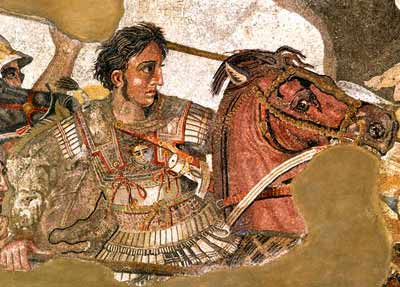
In 335 B.C., Alexander the Great began his campaign to recapture former Greek cities and to expand his empire. After ten years of undefeated battles, Alexander controlled an empire that included Greece, Egypt, and what had been the massive Persian Empire.
That wasn't enough for Xander. He decided to continue his conquest into India. But after ten years of fighting and being away from home, his men lacked the will to take part in another battle, especially against an opponent like King Porus and his army. Alexander used the talent for oration he had developed while studying under Aristotle to infuse his men with the motivation they needed to continue on, to fight and to win.
Worthy Excerpt:
I could not have blamed you for being the first to lose heart if I, your commander, had not shared in your exhausting marches and your perilous campaigns; it would have been natural enough if you had done all the work merely for others to reap the reward. But it is not so. You and I, gentlemen, have shared the labour and shared the danger, and the rewards are for us all. The conquered territory belongs to you; from your ranks the governors of it are chosen; already the greater part of its treasure passes into your hands, and when all Asia is overrun, then indeed I will go further than the mere satisfaction of our ambitions: the utmost hopes of riches or power which each one of you cherishes will be far surpassed, and whoever wishes to return home will be allowed to go, either with me or without me. I will make those who stay the envy of those who return.
Check out the AoM podcast about the life of Alexander the Great.
9. William Wilberforce, "Abolition Speech"
May 12, 1789; House of Commons, London

When William Wilberforce, a member of the British Parliament, converted to Christianity, he began to earnestly seek to reform the evils he found within himself and the world around him. One of the glaring moral issues of the day was slavery, and after reading up on the subject and meeting with anti-slavery activists, Wilberforce became convinced that God was calling him to be an abolitionist. Wilberforce decided to concentrate on ending the slave trade rather than slavery itself, reasoning that the abolition of one would logically lead to the demise of the other. On May 12, 1789, Wilberforce made his first speech on the abolition of the slave trade before the House of Commons. He passionately made his case for why the trade was reprehensible and needed to cease. Wilberforce introduced a bill to abolish the trade, but it failed, a result he would become quite familiar with in the ensuing years. Yet Wilberforce never gave up, reintroducing the bill year after year, and the Slave Trade Act was finally passed in 1807.
Worthy Excerpt:
When I consider the magnitude of the subject which I am to bring before the House-a subject, in which the interests, not of this country, nor of Europe alone, but of the whole world, and of posterity, are involved: and when I think, at the same time, on the weakness of the advocate who has undertaken this great cause-when these reflections press upon my mind, it is impossible for me not to feel both terrified and concerned at my own inadequacy to such a task. But when I reflect, however, on the encouragement which I have had, through the whole course of a long and laborious examination of this question, and how much candour I have experienced, and how conviction has increased within my own mind, in proportion as I have advanced in my labours;-when I reflect, especially, that however averse any gentleman may now be, yet we shall all be of one opinion in the end;-when I turn myself to these thoughts, I take courage-I determine to forget all my other fears, and I march forward with a firmer step in the full assurance that my cause will bear me out, and that I shall be able to justify upon the clearest principles, every resolution in my hand, the avowed end of which is, the total abolition of the slave trade.
Read full text of speech here.
10. Theodore Roosevelt, "The Man with the Muck-rake"
April 14, 1906; Washington, D.C.
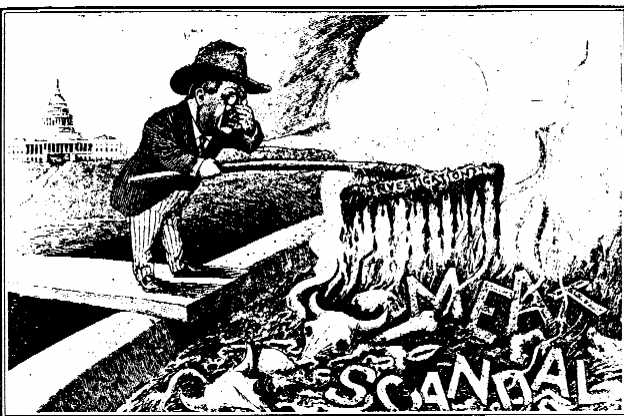
Theodore Roosevelt was president during the Progressive Era, a time of great enthusiasm for reform in government, the economy, and society. TR himself held many progressive ideals, but he also called for moderation, not extremism. The "Man with a Muck-rake" in Pilgrim's Progress never looked heavenward but instead constantly raked the filth at his feet. TR thus dubbed the journalists and activists of the day who were intent on exposing the corruption in society as "muckrakers." He felt that they did a tremendous amount of good, but needed to mitigate their constant pessimism and alarmist tone. He worried that the sensationalism with which these exposes were often presented would make citizens overly cynical and too prone to throw out the baby with the bathwater.
Worthy Excerpt:
To assail the great and admitted evils of our political and industrial life with such crude and sweeping generalizations as to include decent men in the general condemnation means the searing of the public conscience. There results a general attitude either of cynical belief in and indifference to public corruption or else of a distrustful inability to discriminate between the good and the bad. Either attitude is fraught with untold damage to the country as a whole. The fool who has not sense to discriminate between what is good and what is bad is well-nigh as dangerous as the man who does discriminate and yet chooses the bad. There is nothing more distressing to every good patriot, to every good American, than the hard, scoffing spirit which treats the allegation of dishonesty in a public man as a cause for laughter.
Such laughter is worse than the crackling of thorns under a pot, for it denotes not merely the vacant mind, but the heart in which high emotions have been choked before they could grow to fruition.
Read full text of speech here.
11. Franklin Delano Roosevelt, "First Inaugural Address"
March 4, 1933; Washington, D.C.
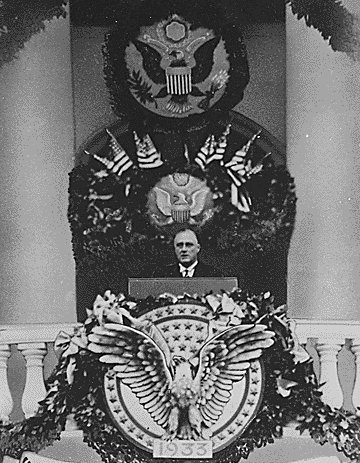
Franklin Delano Roosevelt handily beat incumbent Herbert Hoover in the 1932 presidential election. The country was deep into the Great Depression, and the public felt that Hoover did not fully sympathize with their plight and was not doing enough to alleviate it. No one was quite clear on what FDR's plan was, but as in today's election season, "change" was enough of an idea to power a campaign. In his First Inaugural Address, Roosevelt sought to buoy up the injured psyche of the American people and present his case for why he would need broad executive powers to tackle the Depression.
Worthy Excerpt:
I am certain that my fellow Americans expect that on my induction into the Presidency I will address them with a candor and a decision which the present situation of our Nation impels. This is preeminently the time to speak the truth, the whole truth, frankly and boldly. Nor need we shrink from honestly facing conditions in our country today. This great Nation will endure as it has endured, will revive and will prosper. So, first of all, let me assert my firm belief that the only thing we have to fear is fear itself-nameless, unreasoning, unjustified terror which paralyzes needed efforts to convert retreat into advance. In every dark hour of our national life a leadership of frankness and vigor has met with that understanding and support of the people themselves which is essential to victory. I am convinced that you will again give that support to leadership in these critical days.
Read the full text here.
12. Charles de Gaulle, "The Appeal of 18 June"
June 18, 1940; London
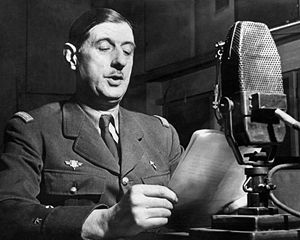
In June of 1940, it was clear that France was losing their country to the German invasion. Refusing to sign an armistice, Prime Minister Paul Reynaud was forced to resign. He was succeeded by Marshal Philippe Petain who made clear his intention to seek an accommodation with Germany. Disgusted with this decision, General Charles de Gaulle, leader of the Free French Forces, escaped to England on June 15. De Gaulle asked for, and obtained permission from Winston Churchill to make a speech on BBC radio. De Gaulle exhorted the French to not give up hope and to continue the fight against the German occupation and the Vichy Regime.
Worthy Excerpt:
But has the last word been said? Must hope disappear? Is defeat final? No!
Believe me, I who am speaking to you with full knowledge of the facts, and who tell you that nothing is lost for France. The same means that overcame us can bring us victory one day. For France is not alone! She is not alone! She is not alone! She has a vast Empire behind her. She can align with the British Empire that holds the sea and continues the fight. She can, like England, use without limit the immense industry of the United States.
This war is not limited to the unfortunate territory of our country. This war is not over as a result of the Battle of France. This war is a worldwide war. All the mistakes, all the delays, all the suffering, do not alter the fact that there are, in the world, all the means necessary to crush our enemies one day. Vanquished today by mechanical force, in the future we will be able to overcome by a superior mechanical force. The fate of the world depends on it.
Read full text of speech here.
13. Socrates, "Apology"
399 B.C.; Athens
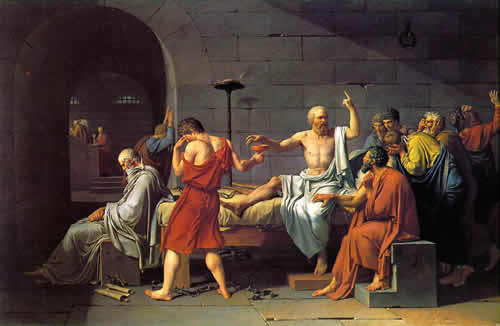
Socrates is perhaps the greatest teacher in the history of the Western world. He wandered around Athens engaging in dialogues with his fellow citizens that focused on discovering the truth of all things. He taught his pupils that the "unexamined life is not worth living."
The Athenians saw Socrates as a threat, especially to the Athenian youth. Socrates acquired quite a following among the young men of Athens. He taught these impressionable minds to question everything, even Athenian authority. Eventually, Socrates was arrested and put on trial for corrupting the youth, not believing the gods, and creating new deities.
The "Apology" is Socrates' defense to these charges. Instead of crying and pleading for mercy, Socrates accepts his charges and attempts to persuade the jury with reason. He argued that it was his calling from the gods to seek knowledge and that it was through his questions he uncovered truth. To not fulfill his calling would be blasphemy. In the end, Socrates lost and was sentenced to death by hemlock. Socrates accepted this fate willingly and without grudge against his condemners, thus dying as a martyr for free thinking.
Worthy Excerpt:
Some one will say: Yes, Socrates, but cannot you hold your tongue, and then you may go into a foreign city, and no one will interfere with you? Now I have great difficulty in making you understand my answer to this. For if I tell you that to do as you say would be a disobedience to the God, and therefore that I cannot hold my tongue, you will not believe that I am serious; and if I say again that daily to discourse about virtue, and of those other things about which you hear me examining myself and others, is the greatest good of man, and that the unexamined life is not worth living, you are still less likely to believe me.
Check out our article on the philosophy of Plato.
14. George Washington, "Resignation Speech"
December 23, 1784; Annapolis, Maryland
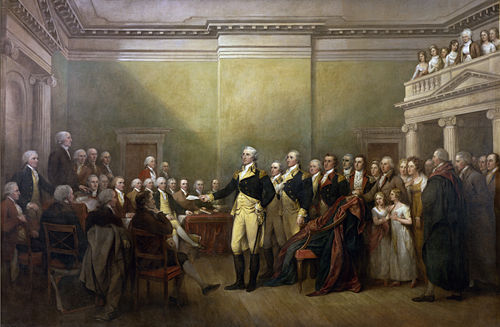
As the Revolutionary War drew to a close, there was much speculation that George Washington, then Major General and Commander-in-Chief, would follow in the footsteps of former world leaders by making a grab for supreme power. Some even wished he would do so, hoping he would become the king of a new nation. Yet Washington knew that such a move would wither the fragile beginnings of the new republic. Looking to the Roman general Cincinnatus an exemplar, Washington rejected the temptations of power and resigned his position as Commander-in-Chief. Choosing the right is almost never easy, and as Washington read his speech in front of the Continental Congress, the great statesman trembled so much that he had to hold the parchment with two hands to keep it steady. "The spectators all wept, and there was hardly a member of Congress who did not drop tears. His voice faltered and sunk, and the whole house felt his agitations." When finished, Washington bolted from the door of the Annapolis State House, mounted his horse, and galloped away into the sunset.
Worthy Excerpt:
While I repeat my obligations
to the Army in general, I should do injustice to my own feelings not to acknowledge in this place the peculiar Services and distinguished merits of the Gentlemen who have been attached to my person during the War. It was impossible the choice of confidential Officers to compose my family should have been more fortunate. Permit me Sir, to recommend in particular those, who have continued in Service to the present moment, as worthy of the favorable notice and patronage of Congress.
I consider it an indispensable duty to close this last solemn act of my Official life, by commending the Interests of our dearest Country to the protection of Almighty God, and those who have the superintendence of them, to his holy keeping.
Having now finished the work assigned me, I retire from the great theater of Action; and bidding an Affectionate farewell to this August body under whose orders I have so long acted, I here offer my Commission, and take my leave of all the employments of public life.
Read the full text here.
Check out my podcast about the self-education of George Washington.
15. Mahatma Gandhi, "Quit India"
August 8, 1942; India
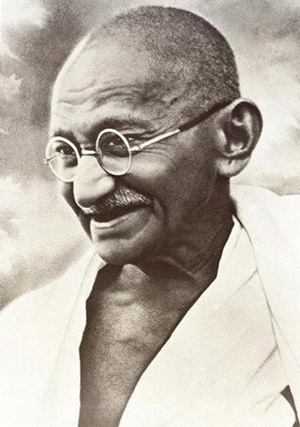
While the battle for freedom and democracy raged across the world, the people of India were engaged in their own fight for liberty. For almost a century, India had been under the direct rule of the British crown, and many Indians had had enough. Mahatma Gandhi and the National Indian Congress pushed for a completely non-violent movement aimed at forcing Britain to "Quit India." Gandhi, pioneer of the tactics of non-violent civil disobedience, called for their use on August 8, 1942 with the passing of the Quit India Resolution demanding complete independence from British rule.
Worthy Excerpt:
I believe that in the history of the world, there has not been a more genuinely democratic struggle for freedom than ours. I read Carlyle's French Resolution while I was in prison, and Pandit Jawaharlal has told me something about the Russian revolution. But it is my conviction that inasmuch as these struggles were fought with the weapon of violence they failed to realize the democratic ideal. In the democracy which I have envisaged, a democracy established by non-violence, there will be equal freedom for all. Everybody will be his own master. It is to join a struggle for such democracy that I invite you today. Once you realize this you will forget the differences between the Hindus and Muslims, and think of yourselves as Indians only, engaged in the common struggle for independence.
Read full text of speech here.
16. Winston Churchill, "Their Finest Hour"
June 18, 1940; House of Commons, London
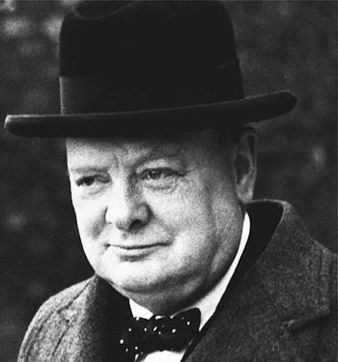
On May 10, 1940, the Germans began their invasion of France. On June 14 Paris fell. In a matter of days, France would surrender and England would stand as Europe's lone bulwark against the twin evils of Fascism and Nazism. At this critical moment, Churchill gave his third and final speech during the Battle of France, once again imparting words meant to bring hope in this dark hour.
Worthy Excerpt:
What General Weygand called the Battle of France is over. I expect that the Battle of Britain is about to begin. Upon this battle depends the survival of Christian civilization. Upon it depends our own British life, and the long continuity of our institutions and our Empire. The whole fury and might of the enemy must very soon be turned on us.
Hitler knows that he will have to break us in this Island or lose the war. If we can stand up to him, all Europe may be free and the life of the world may move forward into broad, sunlit uplands. But if we fail, then the whole world, including the United States, including all that we have known and cared for, will sink into the abyss of a new Dark Age made more sinister, and perhaps more protracted, by the lights of perverted science.
Let us therefore brace ourselves to our duties, and so bear ourselves that if the British Empire and its Commonwealth last for a thousand years, men will still say, 'This was their finest hour.'
Read full text of speech here.
Check out my podcast about how Churchill led during the Blitz.
17. William Faulkner, "Nobel Prize Acceptance Speech"
December 10, 1950; Stockholm, Sweden
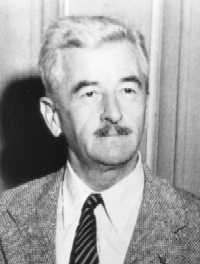
A true master of the written word, William Faulkner did not often make public his gift for the spoken variety. So there was some interest as to what he would say when accepting the Nobel Peace Prize for his "powerful and artistically unique contribution to the modern American novel." The year was 1950, the Soviet Union had tapped the potential of the atomic bomb, and the atmosphere in the the United States crackled with the fear of them using it. Faulkner challenged poets, authors, and all mankind to think beyond the questions of "When will I be blown up?" and instead continue to "create out of the materials of the human spirit something which did not exist before."
Worthy Excerpt:
I decline to accept the end of man. It is easy enough to say that man is immortal because he will endure: that when the last ding-dong of doom has clanged and faded from the last worthless rock hanging tideless in the last red and dying evening, that even then there will still be one more sound: that of his puny inexhaustible voice, still talking. I refuse to accept this. I believe that man will not merely endure: he will prevail. He is immortal, not because he alone among creatures has an inexhaustible voice, but because he has a soul, a spirit capable of compassion and sacrifice and endurance. The poet's, the writer's, duty is to write about these things. It is his privilege to help man endure by lifting his heart, by reminding him of the courage and honor and hope and pride and compassion and pity and sacrifice which have been the glory of his past. The poet's voice need not merely be the record of man, it can be one of the props, the pillars to help him endure and prevail.
18. Dwight D. Eisenhower, "Farewell Address"
January 17, 1961; Washington, D.C.

The 1950's were a time of ever increasing military spending, as the United States sought to fight communism abroad and prevent it at home. As President Dwight D. Eisenhower left office, more than half of the federal budget was allocated for defense purposes. Eisenhower, former General of the Army, was certainly not opposed to the use of military power to keep the peace. Still, he saw fit to use his "Farewell Address" to warn the nation of the dangers posed by the "military-industrial complex," referring to the relationship between the armed forces, the government, and the suppliers of war materials. Eisenhower was wary of the large role defense spending played in the economy, and understood the political and corporate corruption that could result if the public was not vigilant in checking it.
Worthy Excerpt:
In the councils of government, we must guard against the acquisition of unwarranted influence, whether sought or unsought, by the military-industrial complex. The potential for the disastrous rise of misplaced power exists and will persist. We must never let the weight of this combination endanger our liberties or democratic processes. We should take nothing for granted. Only an alert and knowledgeable citizenry can compel the proper meshing of the huge industrial and military machinery of defense with our peaceful methods and goals, so that security and liberty may prosper together.
Read full text of speech here.
19. Marcus Tullius Cicero, "The First Oration Against Catiline"
63 BC; Rome
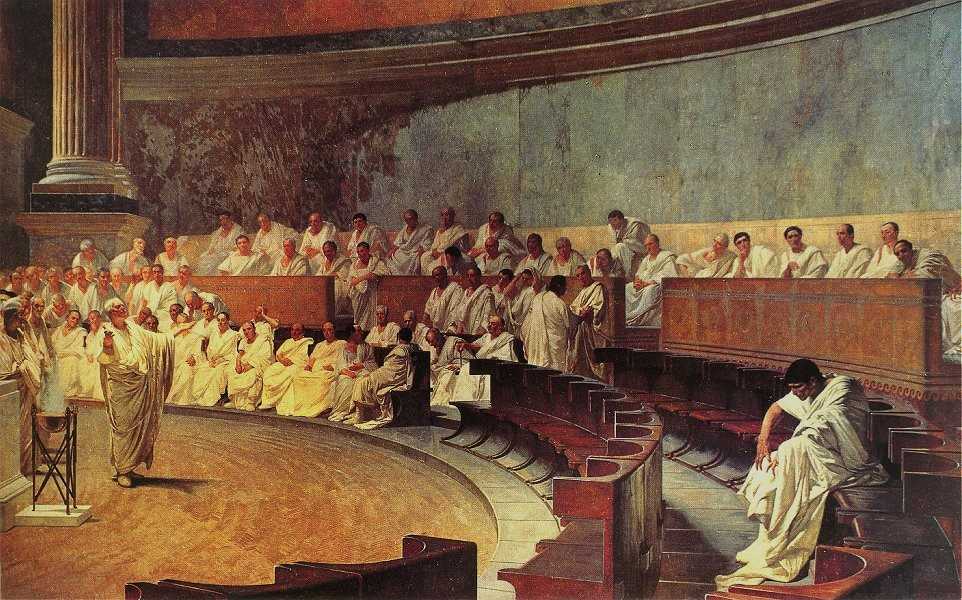
Lucius Sergius Catilina (Catiline to his friends) was a very jealous man. Having once run against Cicero for the position of consul and lost, he became determined to win the next election by any devious method necessary. Plan A was to bribe people to vote for him, and when that didn't work, he decided to go for bust and simply knock Cicero off on election day. This plan was ferreted out by the ever vigilant Cicero, the election was postponed, and the Senate established marital law. When the election finally was held, the murderer-cum-candidate was surprisingly trounced at the polls. Now it was time for Catiline's Plan C: raise an army of co-conspirators, create insurrection throughout Italy, overthrow the government, and slice and dice as many Senators as they could get their coo-ky hands on. But Cicero was again one step ahead and discovered the plan. He called the Senate together for a meeting at the Temple of Jupiter in the Capitol, an orifice only used in times of great crisis. Catiline, who seriously didn't know when he was not welcome, decided to crash the party. With his archenemy in attendance, Cicero began his Catiline Orations, a series of speeches covering how he saved Rome from rebellion, the guilt of Catiline, and the need to whack he and his cronies.
Worthy Excerpt:
I wish, O conscript fathers, to be merciful; I wish not to appear negligent amid such danger to the state; but I do now accuse myself of remissness and culpable inactivity. A camp is pitched in Italy, at the entrance of Etruria, in hostility to the republic; the number of the enemy increases every day; and yet the general of that camp, the leader of those enemies, we see within the walls-aye, and even in the senate-planning every day some internal injury to the republic. If, O Catiline, I should now order you to be arrested, to be put to death, I should, I suppose, have to fear lest all good men should say that I had acted tardily, rather than that any one should affirm that I acted cruelly. But yet this, which ought to have been done long since, I have good reason for not doing as yet; I will put you to death, then, when there shall be not one person possible to be found so wicked, so abandoned, so like yourself, as not to allow that it has been rightly done. As long as one person exists who can dare to defend you, you shall live; but you shall live as you do now, surrounded by my many and trusty guards, so that you shall not be able to stir one finger against the republic; many eyes and ears shall still observe and watch you, as they have hitherto done, tho you shall not perceive them.
Read full text of speech here.
20. Ronald Reagan, "Remarks at the Brandenburg Gate"
June 12, 1987; Brandenburg Gate, Berlin
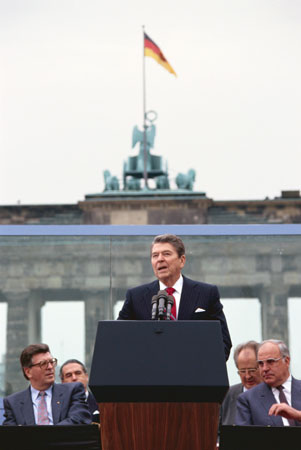
Since the end of World War II, Germany had been a divided country, the West free and democratic, the East under authoritarian communist control. When President Reagan took office, he was committed not only to uniting that country, but to bringing down the entire "Evil Empire." While the importance of Reagan's role in successfully doing so is endlessly debated, it beyond dispute that he exerted some influence in bringing the Cold War to an end. There is no more memorable and symbolic moment of this influence then when Reagan stood at the Berlin wall, the most visible symbol of the "Iron Curtain," and challenged Gorbachev to "tear down this wall!"
Worthy Excerpt:
We welcome change and openness; for we believe that freedom and security go together, that the advance of human liberty can only strengthen the cause of world peace. There is one sign the Soviets can make that would be unmistakable, that would advance dramatically the cause of freedom and peace. General Secretary Gorbachev, if you seek peace, if you seek prosperity for the Soviet Union and eastern Europe, if you seek liberalization, come here to this gate. Mr. Gorbachev, open this gate. Mr. Gorbachev, tear down this wall!
Read full text of speech here.
21. Pericles, "Funeral Oration"
431 BC; Athens
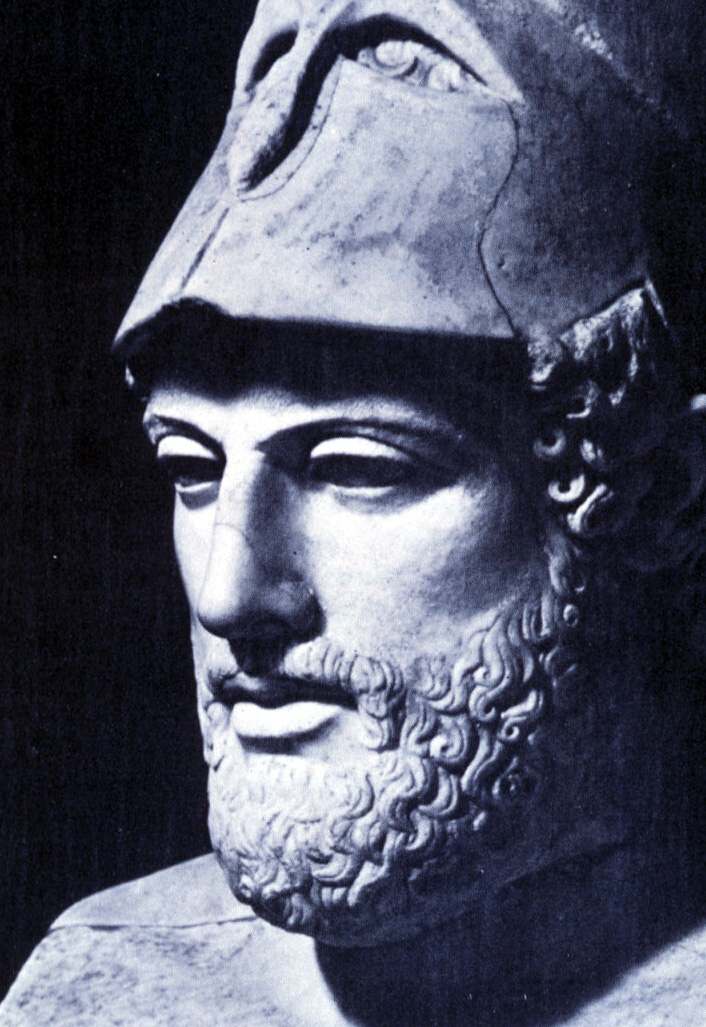
Pericles, master statesman, orator, and general, was truly, as Thuciydies dubbed him, "the first citizen of Athens." Pericles was a product of the Sophists and had been personally tutored by the great philosopher Anaxagoras. His study with the Sophists made Pericles a highly persuasive orator. Through his speeches, he galvanized Athenians to undertake an enormous public works project that created hundreds of temples, including the Pantheon.
Pericles' gift of oration was put to the test during the epic battles of the Peloponnesian War, a civil war between Athens and Sparta. His speeches inspired Athenians to fight to become the number one power in Greece. In February of 431 B.C., Athens had their annual public funeral to honor all those who died in war. Pericles was asked to give the traditional funeral oration. Rather than focus his speech on enumerating the conquests of Athens' fallen heroes, Pericles instead used his funeral oration to laud the glory of Athens itself and inspire the living to make sure the soldiers had not died in vain.
Over 2,000 years later, Pericles' funeral oration inspired Abraham Lincoln's "Gettysburg Address." Like Pericles, Lincoln was a leader during a time of civil war. Like Pericles, Lincoln focused on exhorting the living to live their lives in a way that would make the sacrifice of fallen warriors worthwhile.
Worthy Excerpt:
So died these men as became Athenians. You, their survivors, must determine to have as unfaltering a resolution in the field, though you may pray that it may have a happier issue. And not contented with ideas derived only from words of the advantages which are bound up with the defense of your country, though these would furnish a valuable text to a speaker even before an audience so alive to them as the present, you must yourselves realize the power of Athens, and feed your eyes upon her from day to day, till love of her fills your hearts; and then, when all her greatness shall break upon you, you must reflect that it was by courage, sense of duty, and a keen feeling of honor in action that men were enabled to win all this, and that no personal failure in an enterprise could make them consent to deprive their country of their valor, but they laid it at her feet as the most glorious contribution that they could offer.
Read the full text here.
22. General Douglas MacArthur, "Farewell Address to Congress"
April 19, 1951, Washington; D.C.
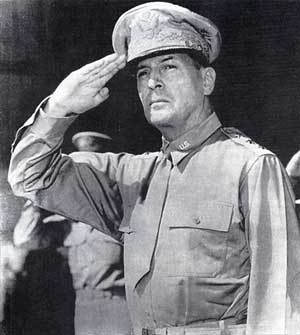
During the Korean War, General MacArthur and President Truman clashed over the threat posed by the Chinese People's Liberation Army and their incursion into Korea. MacArthur continually pressed Truman for permission to bomb bases in Manchuria, believing the war needed to be extended in area and scope. Truman refused the General's requests, arguing that directly drawing China into the war would arouse the Soviet Union to action. MacArthur continued to press his case, and Truman, accusing the General of insubordination, made the decision to relieve MacArthur of his command. After serving for 52 years and in three wars, the General's military career was over. MacArthur returned to the United States and gave this farewell address to Congress.
Worthy Excerpt:
I am closing my 52 years of military service. When I joined the Army, even before the turn of the century, it was the fulfillment of all of my boyish hopes and dreams. The world has turned over many times since I took the oath on theplain at West Point, and the hopes and dreams have long since vanished, but I still remember the refrain of one of the most popular barrack ballads of that day which proclaimed most proudly that "old soldiers never die; they just fade away."
And like the old soldier of that ballad, I now close my military career and just fade away, an old soldier who tried to do his duty as God gave him the light to see that duty.
Good Bye.
Read full text of speech here.
23. Theodore Roosevelt, "Strength and Decency"
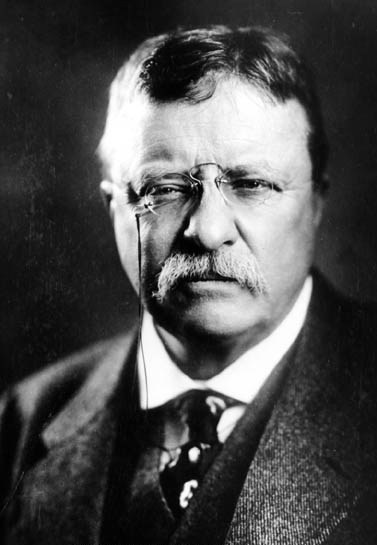
Roosevelt was an advocate of having many children and making sure the next generation would continue to uphold the great virtues of civilization. He was always concerned that young men not be coddled or cowardly, and grow up to live rugged, strenuous, and thoroughly manly lives. But he also strongly believed that being ruggedly manly and being refined in mind and spirit were not incompatible and should in fact go hand and hand. In this speech, he exhorts young men to pursue virtuous manliness. Amen, brother, amen.
Worthy Excerpt:
It is peculiarly incumbent upon you who have strength to set a right example to others. I ask you to remember that you cannot retain your self-respect if you are loose and foul of tongue, that a man who is to lead a clean and honorable life must inevitably suffer if his speech likewise is not clean and honorable. Every man here knows the temptations that beset all of us in this world. At times any man will slip. I do not expect perfection, but I do expect genuine and sincere effort toward being decent and cleanly in thought, in word, and in deed. As I said at the outset, I hail the work of this society as typifying one of those forces which tend to the betterment and uplifting of our social system. Our whole effort should be toward securing a combination of the strong qualities with those qualities which we term virtues. I expect you to be strong. I would not respect you if you were not. I do not want to see Christianity professed only by weaklings; I want to see it a moving spirit among men of strength. I do not expect you to lose one particle of your strength or courage by being decent. On the contrary, I should hope to see each man who is a member of this society, from his membership in it become all the fitter to do the rough work of the world; all the fitter to work in time of peace; and if, which may Heaven forfend, war should come, all the fitter to fight in time of war. I desire to see in this country the decent men strong and the strong men decent, and until we get that combination in pretty good shape we are not going to be by any means as successful as we should be. There is always a tendency among very young men and among boys who are not quite young men as yet to think that to be wicked is rather smart; to think it shows that they are men. Oh, how often you see some young fellow who boasts that he is going to "see life," meaning by that that he is going to see that part of life which it is a thousandfold better should remain unseen!
Read full text of speech here.
24. Abraham Lincoln, "2nd Inaugural Address"
March 4, 1865; Washington, D.C.

The Union's victory was but a month away as Abraham Lincoln began his second term as president of a bitterly ruptured United States. Like the Gettysburg Address, Lincoln keeps this speech only as long as needful. While there are those who still debate whether the Civil War was truly fought over slavery or not, Lincoln certainly believed so. To him, slavery was a great national sin, and the blood shed during the war was the atoning sacrifice for that evil.
He does not relish the prospect of coming victory; instead, he appeals to his countrymen to remember that the war was truly fought between brothers. When the war was over and the Confederacy forced to return to the Union, Lincoln was prepared to treat the South with relative leniency. He did not believe secession was truly possible, and thus the South had never truly left the Union. Reconstruction would not mean vengeance, but the return home of a terribly errant son.
Worthy Excerpt:
Fondly do we hope, fervently do we pray, that this mighty scourge of war may speedily pass away. Yet, if God wills that it continue until all the wealth piled by the bondsman's two hundred and fifty years of unrequited toil shall be sunk, and until every drop of blood drawn with the lash shall be paid by another drawn with the sword, as was said three thousand years ago, so still it must be said "the judgments of the Lord are true and righteous altogether."
With malice toward none, with charity for all, with firmness in the right as God gives us to see the right, let us strive on to finish the work we are in, to bind up the nation's wounds, to care for him who shall have borne the battle and for his widow and his orphan, to do all which may achieve and cherish a just and lasting peace among ourselves and with all nations.
Read full text of speech here.
25. Patrick Henry, "Give Me Liberty or Give Me Death!"
March 23, 1775; Richmond, VA
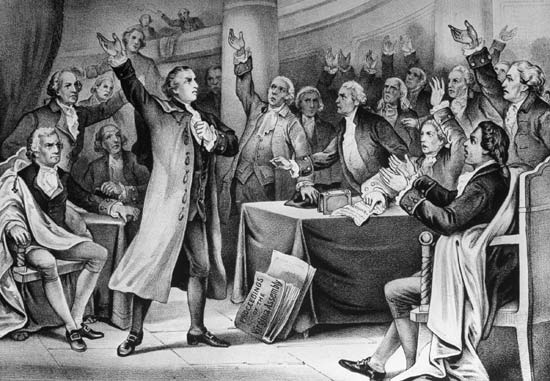
For a decade, revolutionary sentiments had been brewing in Virginia and Patrick Henry had always been in the thick of it, stirring the pot. Henry became particularly enflamed by the Stamp Act of 1764, which prompted him to give his so-called "treason speech," spurring the Burgesses to pass the Virginia Resolves banning the act. Tensions between the colonies and the Crown continued to build, and in 1775, Massachusetts patriots began making preparations for war. Henry believed that Virginia should follow suit. At a meeting held in St. John's Church in Richmond, Henry presented resolutions to make ready Virginia's defenses. Seeking to persuade his fellow delegates of the urgency of his message, he gave a rousing and memorable speech, climaxing is that now famous line, "Give me liberty of give me death!"
Worthy Excerpt:
The battle, sir, is not to the strong alone; it is to the vigilant, the active, the brave. Besides, sir, we have no election. If we were base enough to desire it, it is now too late to retire from the contest. There is no retreat but in submission and slavery! Our chains are forged! Their clanking may be heard on the plains of Boston! The war is inevitable -- and let it come! I repeat it, sir, let it come!
It is in vain, sir, to extenuate the matter. Gentlemen may cry, "Peace! Peace!" -- but there is no peace. The war is actually begun! The next gale that sweeps from the north will bring to our ears the clash of resounding arms! Our brethren are already in the field! Why stand we here idle? What is it that gentlemen wish? What would they have? Is life so dear, or peace so sweet, as to be purchased at the price of chains and slavery? Forbid it, Almighty God! I know not what course others may take; but as for me, give me liberty, or give me death!
Read full text of speech here.
26. Ronald Reagan, "40th Anniversary of D-Day"
June 6, 1984; Pointe du Hoc, France
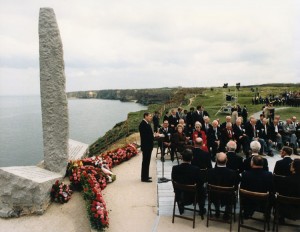
What the Army Rangers did on D-Day at Pointe Du Hoc is a tale every man worth his salt should be familiar with. Pointe du Hoc was a sheer 100 foot cliff located in-between Omaha and Utah beaches. Perched atop the cliff sat six casemates capable of being manned, armed, and taking out the men on the beaches. As the Germans fired upon them, the Rangers scaled the cliff using ropes and ladders, found the guns (which had been moved from the casemates) and destroyed them. Without reinforcements for two days, the Rangers alone held their position and fended off German counterattacks. These skirmishes proved deadly; only 90 of the original 225 Ranger landing force survived.
On the 40th anniversary of D-Day, President Reagan gave a moving tribute to these men, many of whom were present at the occasion.
Worthy Excerpt:
These are the boys of Pointe du Hoc. These are the men who took the cliffs. These are the champions who helped free a continent. These are the heroes who helped end a war.
Gentlemen, I look at you and I think of the words of Stephen Spender's poem. You are men who in your 'lives fought for life...and left the vivid air signed with your honor'...
Forty summers have passed since the battle that you fought here. You were young the day you took these cliffs; some of you were hardly more than boys, with the deepest joys of life before you. Yet you risked everything here. Why? Why did you do it? What impelled you to put aside the instinct for self-preservation and risk your lives to take these cliffs? What inspired all the men of the armies that met here? We look at you, and somehow we know the answer. It was faith, and belief; it was loyalty and love.
The men of Normandy had faith that what they were doing was right, faith that they fought for all humanity, faith that a just God would grant them mercy on this beachhead or on the next. It was the deep knowledge -- and pray God we have not lost it -- that there is a profound moral difference between the use of force for liberation and the use of force for conquest. You were here to liberate, not to conquer, and so you and those others did not doubt your cause. And you were right not to doubt.
Read full text of speech here.
27. John F. Kennedy, "The Decision to Go to the Moon"
May 25, 1961; Houston, TX
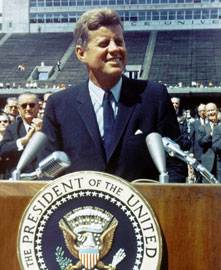
On April 12, 1961, the Soviets launched the first man into space. Khrushchev used this triumph as prime evidence of communism's superiority over decadent capitalism. Embarrassed, the United States feared it was falling behind the Soviet Union and losing the "space race." After consulting with political and NASA officials, Kennedy decided it was time for America to boldly go where no man had gone before by putting a man on the moon. The feat would not only catapult the nation over the Soviet Union, but also allow man to more fully explore the mysteries of space. And this mission would be accomplished by the end of the 1960's. When was the last time a president had the cajones to publicly issue a straightforward, ambitious goal and set a timeline for its success?
Worthy Excerpt:
There is no strife, no prejudice, no national conflict in outer space as yet. Its hazards are hostile to us all. Its conquest deserves the best of all mankind, and its opportunity for peaceful cooperation many never come again. But why, some say, the moon? Why choose this as our goal? And they may well ask why climb the highest mountain? Why, 35 years ago, fly the Atlantic? Why does Rice play Texas?
We choose to go to the moon. We choose to go to the moon in this decade and do the other things, not because they are easy, but because they are hard, because that goal will serve to organize and measure the best of our energies and skills, because that challenge is one that we are willing to accept, one we are unwilling to postpone, and one which we intend to win, and the others, too.
Read full text of speech here.
28. Frederick Douglass, "What to the Slave is the Fourth of July?"
July 5, 1852; Rochester, NY
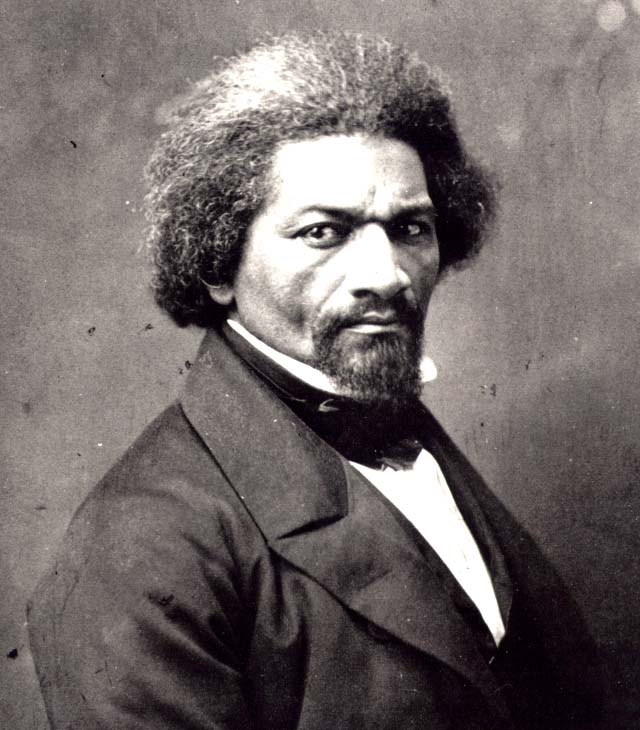
Frederick Douglass, former slave, abolitionist, and engineer on the underground railroad, was a popular speaker on the anti-slavery circuit. He traveled thousands of miles each year, giving hundreds of speeches. Yet the money he earned from lecturing was not enough to become financially comfortable, and he and his family struggled. Douglass was disillusioned by the repercussions of the Fugitive Slave Act, and his abolitionist leanings grew more strident and bold. If the citizens of Rochester, New York had expected to be flattered by Douglass when they asked him to speak on the Fourth, they were soon disavowed of that idea. Douglass took the opportunity to defiantly point out the ripe hypocrisy of a nation celebrating their ideals of freedom and equality while simultaneously mired in the evil of slavery. While the speech surely made even the most liberal audience members squirm; nonetheless, the crowed let loose in "universal applause" when Douglass finished.
Worthy Excerpt:
I am not included within the pale of this glorious anniversary! Your high independence only reveals the immeasurable distance between us. The blessings in which you this day rejoice are not enjoyed in common. The rich inheritance of justice, liberty, prosperity, and independence bequeathed by your fathers is shared by you, not by me. The sunlight that brought life and healing to you has brought stripes and death to me. This Fourth of July is yours, not mine. Youmay rejoice, I must mourn. To drag a man in fetters into the grand illuminated temple of liberty, and call upon him to join you in joyous anthems, were inhuman mockery and sacrilegious irony. Do you mean, citizens, to mock me, by asking me to speak today?
Read full text of speech here.
Read what books had the biggest influence on Frederick Douglass.
29. General Douglas MacArthur, "Duty, Honor, Country"
May 12, 1962; West Point, New York
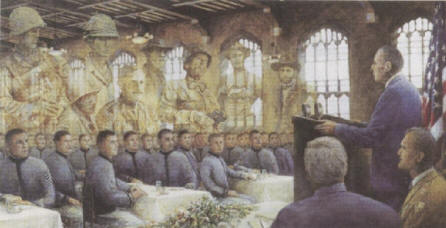
General Douglas MacArthur, General of the Army and a man who fought in three wars, knew something of "Duty, Honor, Country." In 1962, MacArthur was in the twilight of his life and came to West Point to accept the Sylvanus Thayer Award and participate in his final cadet roll call. His address reflects upon and celebrates the brave and courageous men who came before, men he personally led, men who embodied "Duty, Honor, Country."
There are many great speeches in this list, but I hope you will pause to read the entirety of this one. Picking an excerpt was quite difficult, as so many of the passages are inspiring. A must read for all men.
Worthy Excerpt:
You are the leaven which binds together the entire fabric of our national system of defense. From your ranks come the great captains who hold the nation's destiny in their hands the moment the war tocsin sounds. The Long Gray Line has never failed us. Were you to do so, a million ghosts in olive drab, in brown khaki, in blue and gray, would rise from their white crosses thundering those magic words: Duty, Honor, Country.
This does not mean that you are war mongers.
On the contrary, the soldier, above all other people, prays for peace, for he must suffer and bear the deepest wounds and scars of war.
But always in our ears ring the ominous words of Plato, that wisest of all philosophers: "Only the dead have seen the end of war."
The shadows are lengthening for me. The twilight is here. My days of old have vanished, tone and tint. They have gone glimmering through the dreams of things that were. Their memory is one of wondrous beauty, watered by tears, and coaxed and caressed by the smiles of yesterday. I listen vainly, but with thirsty ears, for the witching melody of faint bugles blowing reveille, of far drums beating the long roll. In my dreams I hear again the crash of guns, the rattle of musketry, the strange, mournful mutter of the battlefield.
But in the evening of my memory, always I come back to West Point.
Always there echoes and re-echoes: Duty, Honor, Country.
Read full text of speech here.
30. Theodore Roosevelt, "Citizenship in a Republic"
April 23, 1910; Paris, France
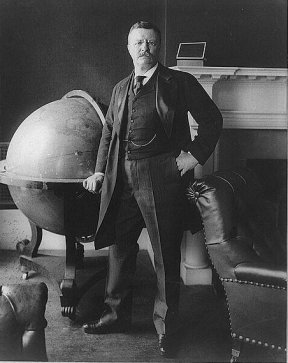
At the end of Theodore Roosevelt's second term in office, he set out to tour Africa and Europe, hoping to allow his successor, President Taft, to step into the enormous shoes TR had left and become his own man. After a safari in Africa, he traveled throughout Europe. While in France, he was invited to speak at the historic University of Paris. Roosevelt used the opportunity to deliver a powerful address on the requirements of citizenship, the characteristics which would keep democracies like France and the United States robust and strong. This speech is famous for the "man in the arena" quote, but the entire speech is an absolute must read.
Worthy Excerpt:
Let the man of learning, the man of lettered leisure, beware of that queer and cheap temptation to pose to himself and to others as a cynic, as the man who has outgrown emotions and beliefs, the man to whom good and evil are as one. The poorest way to face life is to face it with a sneer. There are many men who feel a kind of twister pride in cynicism; there are many who confine themselves to criticism of the way others do what they themselves dare not even attempt. There is no more unhealthy being, no man less worthy of respect, than he who either really holds, or feigns to hold, an attitude of sneering disbelief toward all that is great and lofty, whether in achievement or in that noble effort which, even if it fails, comes to second achievement. A cynical habit of thought and speech, a readiness to criticise work which the critic himself never tries to perform, an intellectual aloofness which will not accept contact with life's realities - all these are marks, not as the possessor would fain to think, of superiority but of weakness. They mark the men unfit to bear their part painfully in the stern strife of living, who seek, in the affection of contempt for the achievements of others, to hide from others and from themselves in their own weakness. The rôle is easy; there is none easier, save only the rôle of the man who sneers alike at both criticism and performance.
It is not the critic who counts; not the man who points out how the strong man stumbles, or where the doer of deeds could have done them better. The credit belongs to the man who is actually in the arena, whose face is marred by dust and sweat and blood; who strives valiantly; who errs, who comes short again and again, because there is no effort without error and shortcoming; but who does actually strive to do the deeds; who knows great enthusiasms, the great devotions; who spends himself in a worthy cause; who at the best knows in the end the triumph of high achievement, and who at the worst, if he fails, at least fails while daring greatly, so that his place shall never be with those cold and timid souls who neither know victory nor defeat.
Read full text of speech here.
31. Winston Churchill, "Blood, Sweat, and Tears"
May 13, 1940; House of Commons, London
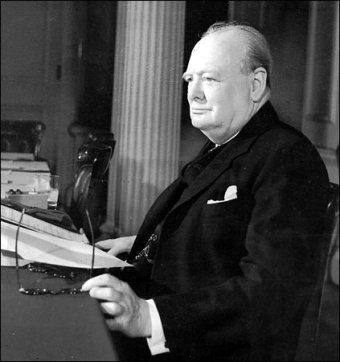
Winston Churchill's first speech to the House of Commons as Britain's new Prime Minister got off to an auspicious start. His welcome to that assembly was quite tepid, while outgoing PM Neville Chamberlain was enthusiastically applauded (the world did not yet know just how disastrous his appeasement policies would prove and did not trust Churchill). But Churchill's first speech, the first of three powerful oratories he gave during the Battle of France, would prove that England was in more than capable hands. A seemingly unstoppable Hitler was advancing rapidly across Europe, and Churchill wasted no time in calling his people to arms. While TR had actually been the first to utter the phrase, "blood, sweat and tears," it was Churchill's use of these words that would leave an inedible and inspiring impression upon the world's mind.
Worthy Excerpt
I say to the House as I said to ministers who have joined this government, I have nothing to offer but blood, toil, tears, and sweat. We have before us an ordeal of the most grievous kind. We have before us many, many months of struggle and suffering.
You ask, what is our policy? I say it is to wage war by land, sea, and air. War with all our might and with all the strength God has given us, and to wage war against a monstrous tyranny never surpassed in the dark and lamentable catalogue of human crime. That is our policy.
You ask, what is our aim? I can answer in one word. It is victory. Victory at all costs - Victory in spite of all terrors - Victory, however long and hard the road may be, for without victory there is no survival.
Read full text of speech here.
32. Franklin Delano Roosevelt, "Pearl Harbor Address to the Nation"
December 8, 1941; Washington, D.C.
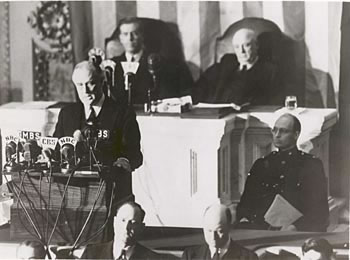
The attack on Pearl Harbor, December 7, 1941, shocked the United States to its core, outraging a nation that had hoped to stay out of the mounting turmoil in Asia and Europe. Overnight, the country united in desire to enter the war. The day after the attacks, FDR addressed the nation in a brief, but electrifying speech, declaring war on Japan and giving assurance that the United States would attain victory.
Be sure to listen to the audio of the speech. Imagine every American family, rattled and worried, listening around the radio to what their president would say. They knew their whole world was about to change forever. Listen to the reaction of Congress as they applaud and cheer FDR's words. The emotion is so very real and palatable; it truly transports you back to that critical moment in time.
Worthy Excerpt:
Mr. Vice President, Mr. Speaker, members of the Senate and the House of Representatives: yesterday, December 7, 1941-a date which will live in infamy-the United States of America was suddenly and deliberately attacked by naval and air forces of the Empire of Japan.....
But always will our whole nation remember the character of the onslaught against us. No matter how long it may take us to overcome this premeditated invasion, the American people in their righteous might will win through to absolute victory.
I believe that I interpret the will of the Congress and of the people when I assert that we will not only defend ourselves to the uttermost but will make it very certain that this form of treachery shall never again endanger us.
Hostilities exist. There is no blinking at the fact that our people, our territory and our interests are in grave danger.
With confidence in our armed forces-with the unbounding determination of our people-we will gain the inevitable triumph-so help us God.
Read the full text here.
33. Jesus Christ, "The Sermon on the Mount"
33 A.D.; Jerusalem
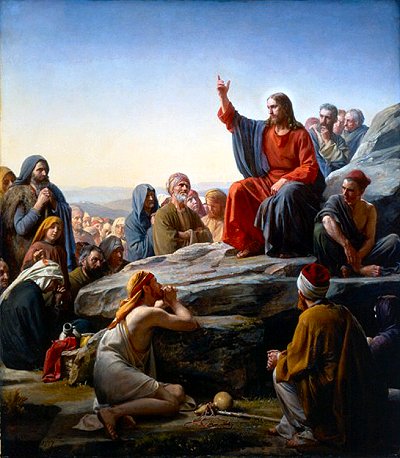
Whether one believes that Jesus of Nazareth was the Son of God or simply a wise teacher, it is impossible to deny the impact of perhaps the world's most famous speech: The Sermon on the Mount. No speech has been more pondered, more influential, or more quoted. It introduced a prayer now familiar the world over and uttered in trenches, churches, and bedsides around the globe. It introduced a code of conduct billions of believers have adopted as their lofty, if not not always attainable, goal. While much of the sermon has roots in Jewish law, the advice given in the Beatitudes represented a dramatic and radical departure from the eye for an eye system of justice known in the ancient world. The standards of behavior outlined in the sermon have given believers and non-believers alike plenty to contemplate and discuss in the two thousand years since it was given.
Worthy Excerpt:
Blessed are the poor in spirit: for theirs is the kingdom of heaven.
Blessed are they that mourn: for they shall be comforted.
Blessed are the meek: for they shall inherit the earth.
Blessed are they which do hunger and thirst after
righteousness: for they shall be filled.Blessed are the merciful: for they shall obtain mercy.
Blessed are the pure in heart: for they shall see God.
Blessed are the peacemakers: for they shall be called the
children of God.Blessed are they which are persecuted for righteousness' sake:
for theirs is the kingdom of heaven.
See Matthew Chapter 5-7 for full text.
34. Martin Luther King Jr., "I Have a Dream"
August 28, 1963; Washington, D.C.
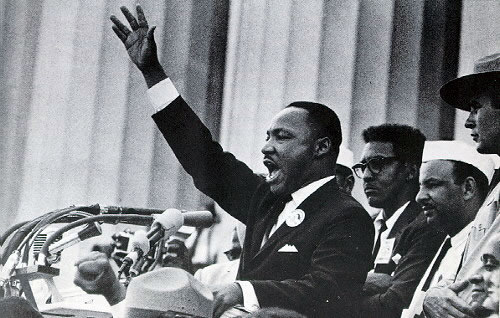
Martin Luther King Jr.'s "I Have a Dream Speech" is hands down one of the greatest, if not the greatest, pieces of oratory in American history. King's charisma, skills in rhetoric, and passion, place him in a league of his own. A century after slavery ended, a century after African-Americans were promised full equality, black children were being hosed down in the streets, spat upon, bused to separate schools, turned away from restaurants, and denied treatment as full human beings. In this midst of this egregious track record, Dr. King voiced a clear, compelling message of hope, a dream that things would not always be as they were, and that a new day was coming.
Many people have seen excerpts of the speech, but a surprisingly number of adults my age I have never sat down and watched the speech in its entirety. I challenge you to do just that. It is just as electrifying and moving today as it was in 1963.
Worthy Excerpt:
I have a dream that one day down in Alabama, with its vicious racists, with its governor having his lips dripping with the words of interposition and nullification - one day right there in Alabama little black boys and black girls will be able to join hands with little white boys and white girls as sisters and brothers.
I have a dream today.
I have a dream that one day every valley shall be exalted, and every hill and mountain shall be made low, the rough places will be made plain, and the crooked places will be made straight, and the glory of the Lord shall be revealed and all flesh shall see it together.
This is our hope. This is the faith that I go back to the South with. With this faith we will be able to hew out of the mountain of despair a stone of hope. With this faith we will be able to transform the jangling discords of our nation into a beautiful symphony of brotherhood. With this faith we will be able to work together, to pray together, to struggle together, to go to jail together, to stand up for freedom together, knowing that we will be free one day.
This will be the day, this will be the day when all of God's children will be able to sing with new meaning "My country 'tis of thee, sweet land of liberty, of thee I sing. Land where my father's died, land of the Pilgrim's pride, from every mountainside, let freedom ring!"
Read full text of speech here.
Listen to the speech here.
35. Abraham Lincoln, "The Gettysburg Address"
November 19, 1863; Gettysburg, Pennsylvania
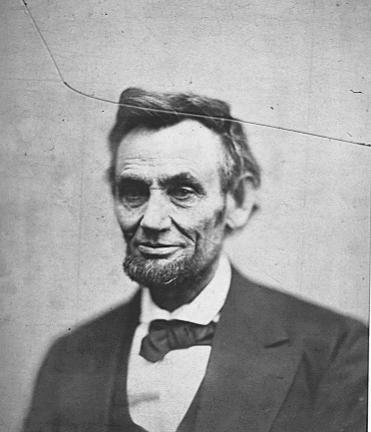
272 words. 3 minutes long. Yet, the Gettysburg Address is unarguably one of the greatest pieces of rhetoric in American history. Dr. J Rufus Fears (one of the great modern orators) argues that the Gettysburg Address, along with the Constitution and the Declaration of Independence, form the three founding documents of American freedom. And I have to agree.
The Battle of Gettysburg left 8,000 men dead. The bodies were too numerous to bury properly and many were at first placed in shallow graves. Weeks after the battle, heads and arms were sticking up through the ground and the smell of rotting flesh was sickening.
Money was raised for a proper reburial, and it was decided that the new cemetery should be dedicated, to sweeten the air of Gettysburg, to solemnize this place of death. As was traditional, a great orator, in this case, Edward Everett, was asked to give a solemn and grand speech as a memorial to the fallen men. Lincoln was asked 2 months later, almost as a causal afterthought. He was to add a few remarks to Everett's, a function much like the man with the ceremonial scissors who cuts the ribbon. Legends has it that Lincoln's remarks were the product of pure inspiration, penned on the back of an envelope on the train chugging its way to the soon-to-be hallowed grounds of Gettysburg.
On the day of the dedication, Everett kept the crowd enthralled for a full two hours. Lincoln got up, gave his speech, and sat down even before the photographer had finished setting up for a picture. There was a long pause before anyone applauded, and then the applause was scattered and polite.
Not everyone immediately realized the magnificence of Lincoln's address. But some did. In a letter to Lincoln, Everett praised the President for his eloquent and concise speech, saying, "I should be glad if I could flatter myself that I came as near to the central idea of the occasion, in two hours, as you did in two minutes."
And of course, in time, we have come to fully appreciate the genius and beauty of the words spoken that day. Dr. Fears argues that Lincoln's address did more than memorialize the fallen soldiers at Gettysburg; it accomplished nothing short of transforming the entire meaning of the Civil War. There were no details of the battle mentioned in the speech, no mentioning of soldier's names, of Gettysburg itself, of the South nor the Union, states rights nor secession. Rather, Lincoln meant the speech to be something far larger, a discourse on the experiment testing whether government can maintain the proposition of equality. At Gettysburg, the Constitution experienced a transformation. The first birth has been tainted by slavery. The men, of both North and South, lying in the graves at Gettysburg had made an atoning sacrifice for this great evil. And the Constitution would be reborn, this time living up to its promises of freedom and equality for all.
The Speech
Four score and seven years ago our fathers brought forth on this continent, a new nation, conceived in liberty, and dedicated to the proposition that all men are created equal.
Now we are engaged in a great civil war, testing whether that nation, or any nation so conceived and so dedicated, can long endure. We are met on a great battlefield of that war. We have come to dedicate a portion of that field, as a final resting place for those who here gave their lives that that nation might live. It is altogether fitting and proper that we should do this.
But in a larger sense, we cannot dedicate - we cannot consecrate - we cannot hallow - this ground. The brave men, living and dead, who struggled here, have consecrated it, far above our poor power to add or detract. The world will little note, nor long remember, what we say here, but it can never forget what they did here. It is for us the living, rather, to be dedicated here to the unfinished work which they who fought here have thus far so nobly advanced. It is rather for us to be here dedicated to the great task remaining before us - that from these honored dead we take increased devotion to that cause for which they gave the last full measure of devotion - that we here highly resolve that these dead shall not have died in vain - that this nation, under God, shall have a new birth of freedom - and that government of the people, by the people, for the people, shall not perish from the earth.