


Top

The Virtuous Life: Temperance
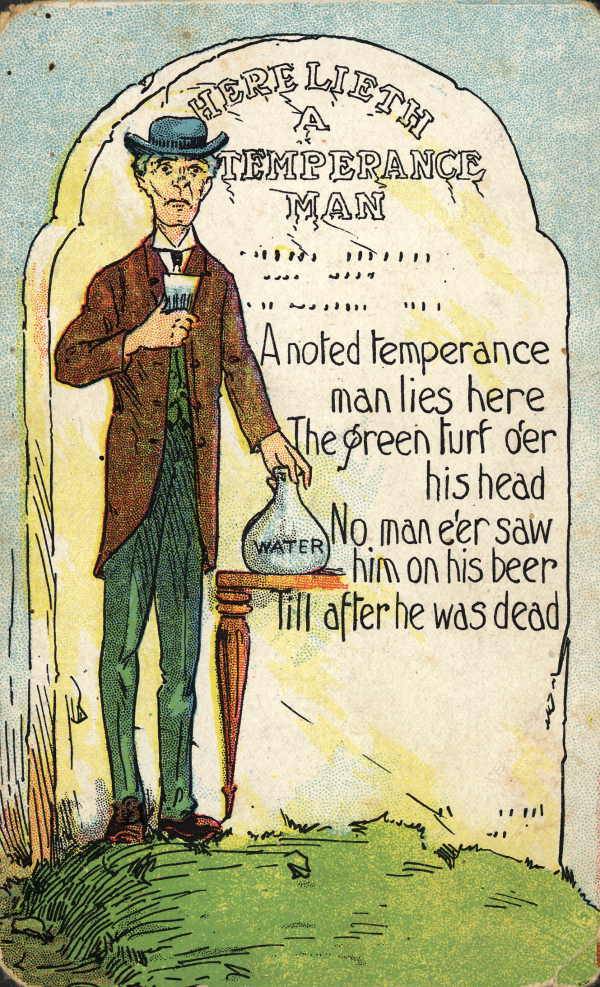
March 2, 2008

temperanceman.jpg

This is the first in a series of posts about living the virtuous life like Benjamin Franklin.

Is there a less sexy idea today than temperance? Yet when Benjamin Franklin began his pursuit of the virtuous life, it was this virtue he chose to concentrate on first. The way in which Ben ordered his 13 virtues was deliberate. He selected temperance to kick off his self-improvement program because:

…it tends to procure that coolness and clearness of head, which is so necessary where constant vigilance was to be kept up, and guard maintained against the unremitting attraction of ancient habits, and the force of perpetual temptations.

In other words, first attaining self-discipline in the area of food and drink would make adherence to all of the other virtues easier.

Why is this? Hunger and thirst are some of the most primal of urges, and thus are some of the hardest to control. Therefore, when seeking to gain self-discipline, one must start with the most basic appetites and work up from there. A man must first harness his inward urges, before tackling the more external virtues. A clear mind and a healthy body are prerequisites to the pursuit of the virtuous life.

Eat Not to Dullness

The glutton is much more than an animal and much less than a man. ~ Honore de Balzac

Have you ever noticed that the first few bites of a delicious food are the best? After chowing down on something for awhile, the vibrant tastes become significantly dulled.

Today many people shovel food into their mouths so fast that their palate never has a chance to register this transition. Yet the shift is one of the ways your stomach tries to tell you that it is full and to stop eating. Unfortunately, people ignore this signal and continue to eat far past it. The consequence is not only a far less enjoyable eating experience, but an ever expanding gut.

Many people have noticed the paradox that gourmet cooks who spend their whole day around food are often in good shape. But it is really no mystery at all. These chefs eat only the best, most delicious foods, and when they dine, they really savor each bite.

There are a million diet books out there, but the only thing a person needs to know to maintain a decent waistline is this: eat when hungry, stop when full. Don’t eat in front of the TV or on the go. Sit down for a proper meal. Savor each mouthful, and think about the flavors you are experiencing. Put your fork down in between bites. When the flavors become less vibrant, and your stomach starts to feel full, stop eating.

Drink Not to Elevation

Drinking makes such fools of people, and people are such fools to begin with, that it’s compounding a felony. ~ Robert Benchley

Many a manly man in history has enjoyed a drink or two. Yet somewhere along the way men began to think it was manly to guzzle their spirits through a funnel attached to their mouth. Yet there are truly few things less virtuous than getting tanked and passing out.

durnkpassout.jpg
Does this guy look manly? No. He looks like a douchebag.

Men should not seek to numb themselves in the pursuit of a good time. For surely there is something to be said about being fully present in every moment. At the heart of manliness is the belief in personal responsibility. But excess drinking and personal responsibility are at odds. When drunk, a person cannot be said to be 100% in control of their choices. So if something goes wrong, they often blame the alcohol. A true man is in control of himself in every situation

Men should also seek to rid themselves of any kind of dependencies. Alcohol can cause several, the most obvious one being outright alcoholism. But frequent boozing can also make a man dependent on liquor for confidence and for a good time. It becomes a crutch. True men will be confident enough to not need liquid courage and dynamic enough to create their own good time through their personality and charm.

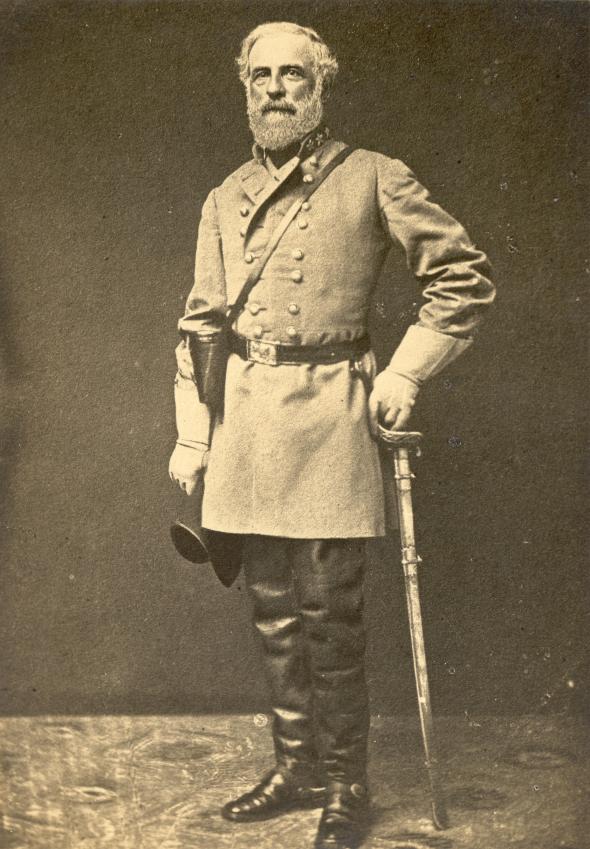
Temperance in the life of Robert E. Lee

robertelee.jpg

I like whiskey. I always did, and that is why I never drink it. ~ Robert E. Lee

The Robert E. Lee, general of the Confederate army during the American Civil War, lived the virtue of temperance. Lee was a masterful military tactician. He graduated second in his class at West Point and received no demerits while there. He led a rag tag Confederate army in outmatched battles against the Union and won several of them.

Part of Lee’s success as a military leader can be attributed to the clear thinking that came with abstaining from alcohol. Speaking to man about the need to avoid alcohol, Lee said:

Did it ever occur to you that when you reach middle life, you may need a stimulant, and if you have accustomed yourself to taking stimulants in your early life it will require so much more to have the desired effect at a time when you may need it? How much better it would be if the young man would leave intoxicants in his student days.

Conclusion

Men often try to numb themselves with food and alcohol to avoid dealing with their real problems. But manning up involves facing one’s issues head on. Gaining the self-discipline to moderate your intake of food and alcohol will give you the confidence to start making other improvements in your life.

If you liked this article, please bookmark it on del.icio.us or vote for it on Digg. I’d appreciate it.

Subscribe to Art of Manliness by RSS or email to get your FREE guide to being a gentleman in 2008.

Share and Enjoy: These icons link to social bookmarking sites where readers can share and discover new web pages.
  • Digg
  • del.icio.us
  • Reddit
  • StumbleUpon
  • Netscape

Comments

37 Responses to “The Virtuous Life: Temperance”

  1. keith rickert, jr on March 3rd, 2008 2:47 am

    “We should thank God for beer and burgundy by not drinking too much of them.” - G. K. Chesterton, Orthodoxy

  2. Alex Knapp on March 3rd, 2008 6:36 am

    While I generally agree with this article on temperance, I have to question the use of Robert E. Lee as an example. While it’s true that Lee was a great tactician, let’s not forget that he ultimately lost to U.S. Grant, who was not, by any stretch of the imagination, a temperate man.

  3. Uriah on March 3rd, 2008 6:49 am

    @Alex Knapp: I tend to disagree. If you compare the tactics employed by either general, Lee’s masterful strategies completely outclassed Grant. The only reason Grant won was because of the Northern industrial machine and steady inflow of immigrants fueling his army. Grant earned the nickname “Grant the Butcher” because his bumbling tactics killed so many of his own men. He threw men at a problem until it disappeared. More than once he was drunk while in the middle of a battle, and many men died needlessly as a result.

    Lee on the other hand, held off an army 2-5 times his size for years, often on the offensive.

  4. Brett on March 3rd, 2008 7:05 am

    @Alex-

    You make a good point. Moderation is surely no guarantee of success, nor will the love for the bottle automatically lead to failure.

    But I stand by the example of Lee nonetheless. While Grant did lead the Union to victory over the South, his lifelong legacy is far more mixed than Lee’s. While both men are still held up as great generals, Lee is remembered as being an upstanding man until his death. Grant, who continued to drink throughout his life, had his reputation tarnished by a grossly ineffectual presidency marked by scandal and corruption. He also bankrupted his family and had to be given a government pension to get by. Perhaps these things would still have happened had he quit drinking, but maybe having a clearer head would have allowed him to make better decisions.

  5. Cameron Schaefer on March 3rd, 2008 1:48 pm

    Its an amazing thing to see someone promoting temperance in a day in age where overindulgence has become almost a form of worship. Thanks for being a man among boys Brett!

  6. @Stephen | Productivity in Context on March 3rd, 2008 2:33 pm

    This is a great post, and at the risk of ‘outing’ myself, I do have an inclination against moderation. There are some pics of me in college that I would prefer not to make public.
    I also find that I get much much much more done when I am keeping myself on a “diet” from too much of anything.
    Thanks for the post!

  7. Brett on March 3rd, 2008 2:57 pm

    @@Stephen | Productivity in Context:

    I think we’ve all done things in college that we later regret.

    I agree that being on a diet from too much of anything keeps one clear and productive. Last night I gorged myself on Sunday dinner. I was pretty much useless the rest of the night.

  8. James Ahern on March 3rd, 2008 7:47 pm

    What could possibly be considered virtuous about defending a society based on the enslavement of a people based on the color of their skin? There is much to be said for practicing discipline and “virtue” in one’s life, but I’m afraid Lee is not it. There were far more virtuous people than he around in the 1860s, some of them drank, and I suppose some did not, but a lot of them stood up and said that slavery was an evil institution and should be abolished. Lee wasn’t man enough to do that.

  9. Kate on March 3rd, 2008 8:06 pm

    @Uriah-Great comment. I hope you don’t mind, but I posted it as a Digg comment to counter the historical ignoramuses over there as well.

  10. Brett on March 3rd, 2008 8:09 pm

    @James Ahern:

    If you actually read some history, Lee was not a supporter of slavery. The only reason he fought for the South was because of his loyalty to the state of Virginia. Americans during the early days of the Republic had more loyalty to their state than the nation. That’s what Federalism is all about. Lee would be like a soldier today who signs up to fight an unpopular war in Iraq out of loyalty to the US.

    And if you read more about history, the Civil War was more about the political and economic ramifications of slavery and not slavery itself. It was largely about states rights. Lincoln changed his opinion on slavery throughout his political career even during the war. So, while I think slavery was wrong, I don’t have any problems highlighting the virtues of General Lee.

  11. E on March 3rd, 2008 8:15 pm

    I do have to question the use of General Lee as the example here - there have to be many others that would be equally notable without being a general for the South. It’s sort of like listing the German general Rommel who, while not a Nazi in belief, fought for the Nazi army because he wished to fight for his country. While there’s still some redemption to be found there, it’s hard to defend. Wikipedia puts Lee’s stance on slavery in question, it should be noted.

    Despite the use of a Confederate general in the article, I believe the intention was not to promote the confederacy but rather to speak of this person in particular.

  12. Dan on March 3rd, 2008 8:21 pm

    This gave me much to think about. Thank you for taking the time to compose it.

    After reading the comments so far, I guess I am a different type of a man compared to other posters here - I wish to face this issue head-on in my own life and not resort to nitpicking the exemplars and whatnot. (You all know it is qA a not-so-clever form of misdirection.)

    Shut up and man up.

  13. Kate on March 3rd, 2008 8:26 pm

    Dan is the Man

  14. JetteroHeller on March 3rd, 2008 8:40 pm

    This is summed up in one 30-second video:
    http://www.twth.org/video/player.html?videoId=be_temperate

  15. Ben Franklin on March 3rd, 2008 10:24 pm

    Ben Franklin was a notorious party animal. He was a member of the “hellfire club”, renowned for their orgies and bacchanals. He suffered from gout, a buildup of uric acid in the joints whose primary cause is, shall we say, “intemperate” living. He even penned some prose about it:
    http://www.bartleby.com/109/3.html

    In other words, grow up and live with some gusto, nancy boys! Ben Franklin did it! Our current president did it! Just don’t be a fat drunken slob, get off the internet and go run around!

  16. Matt on March 3rd, 2008 10:30 pm

    Among the tiresome femininized features of today’s culture includes ex-boozers who wear the shawl of victimhood and seek pity for having contacted the “disease” of “alcoholism (hence no personal responsibility). Unfortunately that is so popularly accepted that when a man makes the mature decision to be temperate, he can expect to endure accusations of being a lush. Of course that’s not necessarily true at all - I, for one, made a decision to stop drinking after hearing a sermon from a baptist minister in a church I was visiting - the sermon was on “the evils of social drinking” (and he made a good case for several disadvantages, much as you do in this article). All I can say from experience is try not to trumpet your new temperance as many people will either resent it or else smear your good name with some stupid comment like “he’s a recovering alcoholic”. Be temperate, but be circumspect and don’t expect kudos or congratulations about it.

  17. Rod Homor on March 3rd, 2008 11:44 pm

    Just wanted to say thank you for this article. My mind was racing, I couldn’t sleep, and I checked my in-box. I read this, and it was exactly what I needed to hear, and to remind myself. Thanks again.

  18. C Sicks on March 4th, 2008 3:38 am

    I’ve been thinking a lot about this. Used to think it was manly to eat heaps of butter, steak and wings. Realizing now that I need to be a man for my children, so I can be around for them and my grandchildren.

    Also, I’m finding that I need to delay having my first beer of the night until after the children are in bed. Otherwise, my motivation and patience are just sapped. But it’s amazing how strong the pull of that beer can be!

  19. Brett on March 4th, 2008 5:05 am

    @Rod Homor:

    Your welcome, Rod. I’ve had plenty of those nights when I couldn’t get to sleep because of a racing mind.

  20. Brett on March 4th, 2008 5:07 am

    @C Sicks:

    I’m sure having kids definitely puts gives one perspective in life, even to the food they eat. Thanks for the comment!

  21. Rob D on March 4th, 2008 6:24 am

    So therefore, you don’t have to abstain from alcohol, just drink and be merry.

  22. Rob D on March 4th, 2008 6:26 am

    @Matt, Actually the AA program imposes that its the alcoholics fault they became alcoholics.

  23. fred weck on March 4th, 2008 3:22 pm

    Let’s not forget the famous words of Ben Franklin:” Wine is constant proof that God loves us ,and wants us to be happy.”

  24. Frank Golubski on March 5th, 2008 5:16 pm

    “All things in moderation.” Not in excess, nor even in abstinence.

    The abuse of God’s gifts is a grave error; but right behind it is the non-use of His gifts, in the hopes of avoiding their abuse — or of attaining virtue.

    God’s word plainly condemns drunkenness, and yet He also reminds us that wine — “a gift from God to gladden the hearts of men” (Psalm 104) — can have a proper place in the life of the righteous.

    “Do you suppose that abuses are eliminated by destroying the object which is abused? Men can go wrong with wine and women. Shall we then prohibit and abolish women?” ~ Martin Luther

    I commend to you Ben Merkle’s brief piece entitled (simply) “Beer,” — in an old issue of Credenda/Agenda whose theme was “Clergy in Skirts: The Effeminacy of the American Pulpit” — wherein Merkle describes “how feminism [i.e., the temperence and suffrage movements - FG] ruined beer. Our culture is lead by its pulpits. As the preachers of Christianity became emasculated, our culture was dragged into effeminacy. Part of this trend in our culture is reflected in the destruction of our beer”:

    http://www.credenda.org/issues/11-2recipio.php

    This should be of particular interest to those studying the art of manliness!

  25. Jaime on March 8th, 2008 8:17 am

    Counter arguments to the temperance of alcohol:

    Ernest Hemingway, Humphrey Bogart, and Winston Churchill.

    Score one for intemperance!

  26. Kate McKay on March 8th, 2008 8:46 am

    Hemingway and Churchill both suffered from depression.
    Hemingway shot himself in the head with a shotgun.
    Bogart was a heavy smoker who died at age 57 of cancer of the esophagus.

  27. Tyler on March 9th, 2008 5:46 am

    I’ve always wondered why so many chefs look to be in good shape, and good point about eating only when hungry. Very well written articles, thanks.

  28. Jaime on March 12th, 2008 7:35 pm

    Hemingway’s depression and suicide were most likely organic and inherited, the result of haemochromatosis, which his father had (also succumbing to suicide). He also won a nobel prize and a pulitzer.

    Churchill depressed? Sure, but he lived to age 90, and kicked ass prior to that, um, like leading the UK through WW2.

    Bogart got cancer? Yeah, he smoked, a lot. We’re not talking about tobacco in this article.

    Give me a counter list of exciting, great men who didn’t enjoy a tipple. You won’t find the founding fathers on that list, in fact, a number of them smuggled rum from the west indies and operated malting houses on their property to make ale and whiskey.

  29. Jaime on March 12th, 2008 7:59 pm

    Oh by the by, I believe your Lee quote is actually one of Stonewall Jackson’s, “I like liquor - its taste and its effects - and that is just the reason why I never drink it.” Which you can find in the Wordsworth Dictionary of Quotations: http://books.google.com/books?id=n4p0O97RntAC&pg=PA182&lpg=PA182&dq=i+like+liquor+its+taste+and+its+effects+and+that+is+just+the+reason+why+i+never+drink+it+thomas+jackson&source=web&ots=maH5c2DIrE&sig=ZRzem9SCtdabbjI_5_PWJ5KRRr8&hl=en

    Alas, there is no entry for Lee with the quote you attribute to him. Alas, also, that Stonewall Jackson died on the battlefield, the south lost, and the general that triumphed was a notorious drinker and military genius: president and fifty dollar bill pin-up, Ulysses S. Grant.

  30. Robin Jackson on April 1st, 2008 8:59 pm

    Attributing Lee’s generalship to the defense of slavery is a myopic and brainwashed attitude. The war was about State’s rights and slavery became the propaganda that Lincoln employed to justify the cause, and cause turmoil in the southern states.

    Don’t misunderstand me, I’m not defending slavery, and it’s abolition was eminent, but Lincoln and his party shied away from strong abolitionist sentiments until they became convenient. They were no heroes in this matter, and to compare a slovenly, corrupt drunkard to the likes of General Lee is anathema.

  31. Jaime on April 3rd, 2008 7:05 pm

    Robin,

    Grant was a military genius and is widely considered such. He was, however, a very lax president who didn’t keep corruption from his administration. This is granted, but, since Lee was no politician, we can only compare apples to apples, and Grant proved Lees superior in war. Generals, unfortunately, don’t make great politicians, but, fortunately, perhaps, Lee did not have to suffer the fate of politics that oft befalls leading military men in their august years.

  32. Brett McKay on April 3rd, 2008 8:42 pm

    Jaime-

    The point of the post was not absolute abstinence, but temperance. Yes, the majority of the great men of history were tipplers, but most weren’t guzzlers.

    Stonewall may have said something similar, but there are several sites that attribute the version of it we used in this post to General Lee. Simply google his name and the quote. And whether he said it or not, Lee was assuredly a famous teetolar, a fact that can be found in any biography of the general.

    It is true that Lee can’t be compared to Grant in terms of being president. Although we could compare Grant and Lincoln, the latter being another teetolar. But in interest of full disclosure there were other US presidents known to be heavy drinkers. Real all-stars, all of them:

    1. Martin Van Buren
    2. Franklin Pierce
    3. James Buchanan
    4. Andrew Johnson
    5. Ulysses S. Grant
    6. Chester A. Arthur

  33. Jaime on April 4th, 2008 7:36 pm

    From the unabridged OED:

    tippler Forms: 4­5 tipeler, 5 -ar, tippelar, -ilar, typuler, 5­8 tipler, 6 typpler, typlar, 6­7 -er, 6­ tippler.

    1. A retailer of ale and other intoxicating liquor; a tapster; a tavern-keeper. Obs.

    2. One who tipples; a habitual drinker of intoxicating liquor (implying more or less excess, but usually short of positive drunkenness).

    Notice that excess is not equated with drunkeness, necessarily. There are other presidents who were drinkers that your list, and I daresay that habitual drinking is intemperance because it implies a need on the part of the individual to engage in a given behavior (it would not be habitual otherwise,) and it seems to me that your list is woefully inadequate if it means to fully capture the depths of presidents and other eminent men who were habitual drinkers. You also know very well that temperance is a code word for abstinence, and one is served well to be suspicious of any advocate of temperance.

  34. Stephen on April 20th, 2008 7:21 am

    I, like General Lee like to drink, but choose not to. My preference in my younger days was rum. My choice to not drink except for afew rare occasions is based on a promise to my wife. We have some wine on special occasions but only together. I do not go to bars to drink with my friends becasue I know where that will end. I’ve been ridiculed for not drinking, but I laugh when guys come to work hungover. I can’t even remember what that feels like. I’ve never had a DWI or killed another person in an accident becasue I was drunk. I’ve never drank away the grocery money or the rent. I enjoy my life even though I don’t drink. I’ve been married 30 years, raised three kids, traveled all over the world and I am now back in college fulltime studying art.

Trackbacks

  1. Pages tagged "vibrant"
  2. purrl.net |** urls that purr **|
  3. The Virtuous Life: Temperance | 31915.com

Got something to say?